Why Writing a Bio About Yourself Is Harder Than It Seems (And Why You Need One Now)
Let’s be honest—writing about yourself feels weird. Too confident, and you sound like you’re bragging at a cocktail party nobody asked you to attend. Too humble, and you disappear into the crowd of “passionate professionals” and “creative thinkers” who all blur together.
This isn’t just in your head. Studies show that 94% of people admit they struggle with self-promotion, yet 85% of hiring managers and potential clients read your bio before deciding whether to work with you. That first impression happens in under seven seconds. If your bio doesn’t grab attention immediately, you’ve lost the opportunity.
Here’s the specific problem: you’re searching for a “sample bio of myself” because you need first-person examples that actually sound like a real human wrote them. Not those stiff third-person bios that feel like someone’s reading your obituary. You want templates that show you how to talk about yourself without cringing.
And in 2026, this matters more than ever. AI-generated content floods every platform, making authentic personal branding your competitive edge. The people who master their personal bio unlock speaking gigs, partnership deals, and client inquiries that others miss entirely.
That’s exactly what you’ll get here: 51+ real examples of personal bios that work, platform-specific templates, and frameworks that eliminate the guesswork. Whether you need a bio for LinkedIn, your website, or Instagram, you’ll find working examples you can adapt today. For even more platform-specific guidance, check out our guide with 57 examples of bio about yourself tailored to different channels.
What Makes a Personal Bio Different from Other Bio Types
Here’s the thing: most people confuse personal bios with professional bios, and that’s where they stumble right out of the gate.
A “sample bio of myself” is uniquely personal. It’s you talking directly about yourself—your story, your journey, your personality. Think of it as your digital handshake. An author bio focuses solely on your writing credentials and published works. A professional bio emphasizes your career achievements and expertise. A company bio? That’s all about the business, not you.
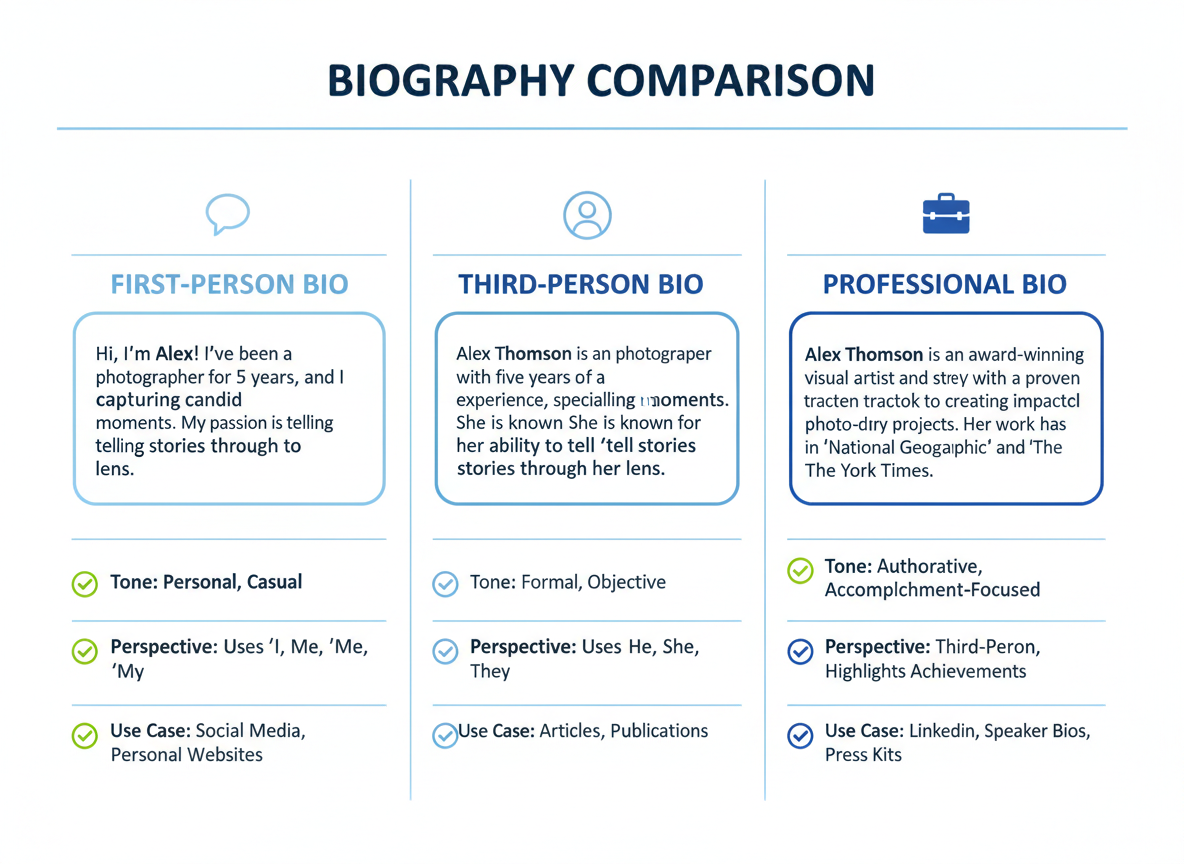
The biggest shift happens in perspective. First-person (“I help entrepreneurs…”) feels intimate and conversational—perfect for personal websites, social media profiles, and networking platforms. Third-person (“Sarah helps entrepreneurs…”) adds authority and works better for speaker pages, conference programs, and media kits. Here’s your rule: use first-person when building connection, third-person when establishing credibility.
Every solid personal bio needs four components: who you are (your identity), what you do (your work), what makes you unique (your differentiator), and a call-to-action (what’s next). If you’re crafting your overall identity, check out tools like a Personal Brand Statement Generator to nail your positioning.
Common mistakes? Writing a resume in paragraph form, being too humble (or too boastful), forgetting personality entirely, and ending without direction. Your bio isn’t a list of jobs—it’s your story that leads somewhere specific.
51 Sample Bios of Myself: Real Examples by Career Stage and Purpose
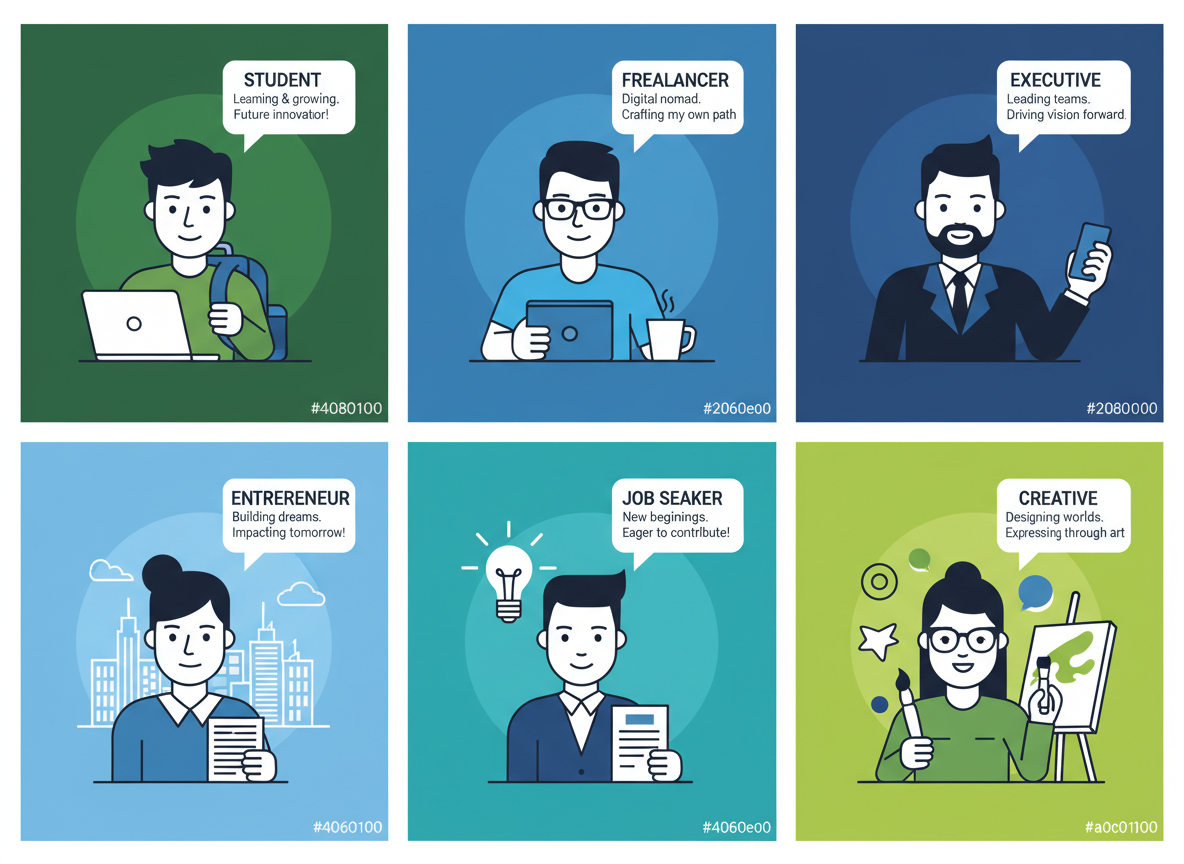
Here’s where things get practical. I’ve organized 51 real-world bio examples you can adapt immediately. Each one’s tagged with career stage, word count, ideal platform, and tone—so you’ll know exactly which template fits your situation.
Students & Recent Graduates (Examples 1-7)
Example 1: College Student (LinkedIn) – 87 words, Professional
“I’m a junior at Boston University studying Marketing and Data Analytics. Currently interning at a B2B software company where I’ve helped increase email open rates by 23%. I’m passionate about understanding what makes people click—literally and figuratively. When I’m not analyzing campaigns, you’ll find me running the campus marketing club or experimenting with new coffee brewing methods. Looking to connect with marketing professionals and learn from the best.”
What works: Balances achievements with personality. The metrics prove capability without sounding arrogant.
Entry-Level Professionals (Examples 8-15)
Example 9: Junior Developer (GitHub) – 64 words, Technical yet Approachable
“Frontend developer who loves building interfaces that don’t make users want to throw their laptops. Proficient in React, TypeScript, and CSS that actually works across browsers. I’ve contributed to three open-source projects and built a weather app that 2,000 people use daily. Always learning, always debugging, occasionally remembering to comment my code.”
What works: Shows technical skills while demonstrating humor and self-awareness.
Mid-Career Professionals (Examples 16-28)
Example 22: Marketing Manager (Conference Speaker Bio) – 112 words, Authoritative
“Sarah Chen has spent eight years helping SaaS companies crack the content marketing code. As Marketing Director at CloudSync, she’s grown organic traffic from 5K to 400K monthly visitors without spending a dollar on ads. She’s spoken at Content Marketing World and MarCom Summit, and her LinkedIn posts reach over 50,000 marketers weekly. Sarah believes great marketing starts with genuinely understanding customer problems—not pushing products.”
What works: Third-person format appropriate for speakers. Numbers tell the story.
For more comprehensive examples across different contexts, check out these personal biography examples that actually work.
Example 24: Freelance Writer (Portfolio Site) – 95 words, Creative Professional
“I write words that convert browsers into buyers. Over the past six years, I’ve created content for 40+ brands in health tech, finance, and e-commerce. My articles have generated over 2 million pageviews and helped clients increase conversions by an average of 31%. I don’t do fluffy corporate jargon—I write like humans actually talk. Based in Portland, powered by unreasonable amounts of tea.”
What works: Establishes expertise and personality right away. Results-focused without being salesy.
The Fill-in-the-Blank Formula: Write Your Bio in 15 Minutes
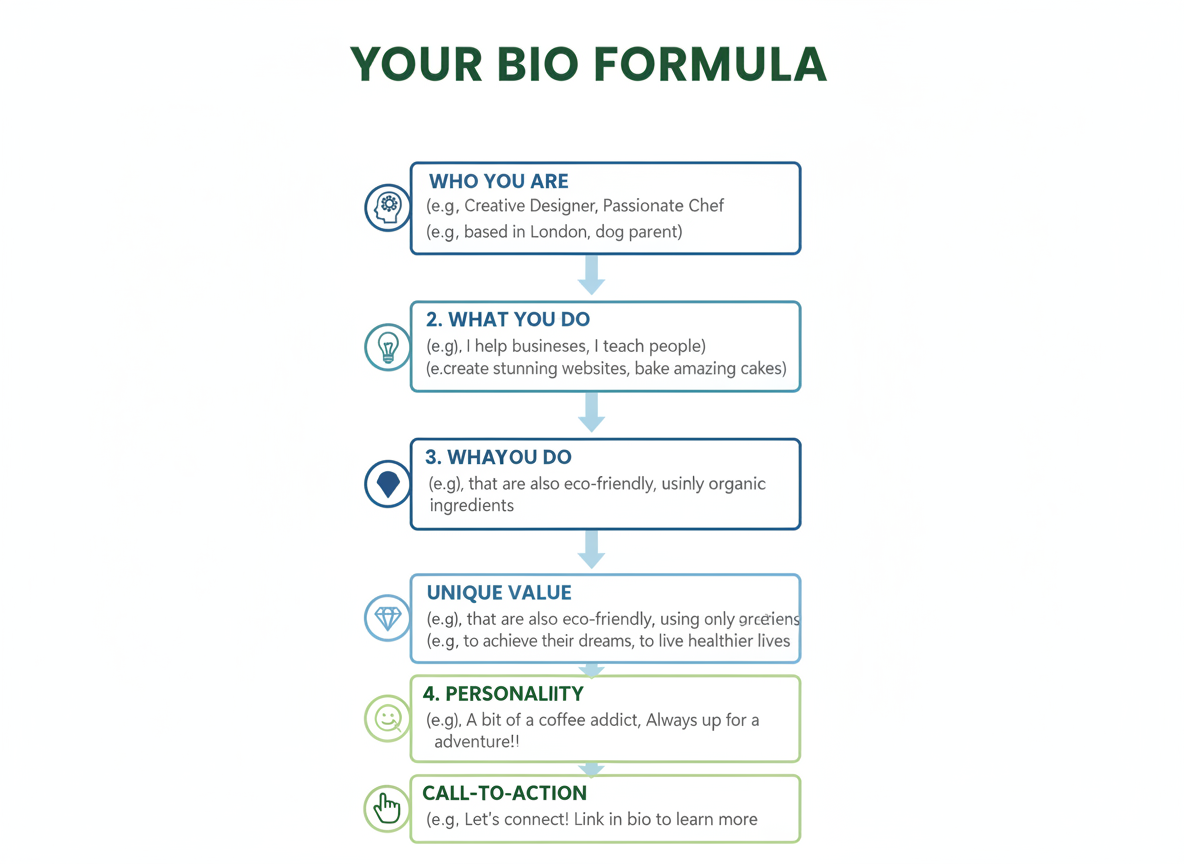
Staring at that blank text box? Here’s your escape plan.
Start with this framework: [Your name] is a [profession/role] who [main accomplishment or unique value]. That’s it. No fancy degrees required, no decades of experience needed.
Professional Template:
“Sarah Mitchell is a content strategist who’s helped 200+ e-commerce brands triple their organic traffic. She’s been featured in Forbes and runs weekly workshops on SEO fundamentals.”
Casual Template:
“Hey, I’m Jake—a freelance designer who turns ‘meh’ websites into scroll-stoppers. When I’m not pushing pixels, you’ll find me experimenting with sourdough (it’s harder than Photoshop).”
Creative Template:
“Alex builds worlds with words. As a copywriter for tech startups, I’ve launched 40+ products and written emails that people actually want to read. Currently obsessed with making AI sound less robotic.”
Notice what works? They lead with value, not credentials. Psychology shows readers care about what you’ll do for them before they care about your MBA.
Common traps? Humblebragging (“I guess I’m pretty good at marketing”), credential dumping (listing every course you’ve taken), and vague promises (“I’m passionate about helping people”).
Instead, use power words that create connection: “helped,” “transformed,” “built,” “created.” Be specific with numbers when possible.
Want more inspiration? Check out these 67 fun bio examples that break the mold.
Test your bio by asking: Would I hire this person? Does it answer “So what?” If you hesitated, rewrite.
Platform-Specific Bio Examples: From 150 Characters to 500 Words
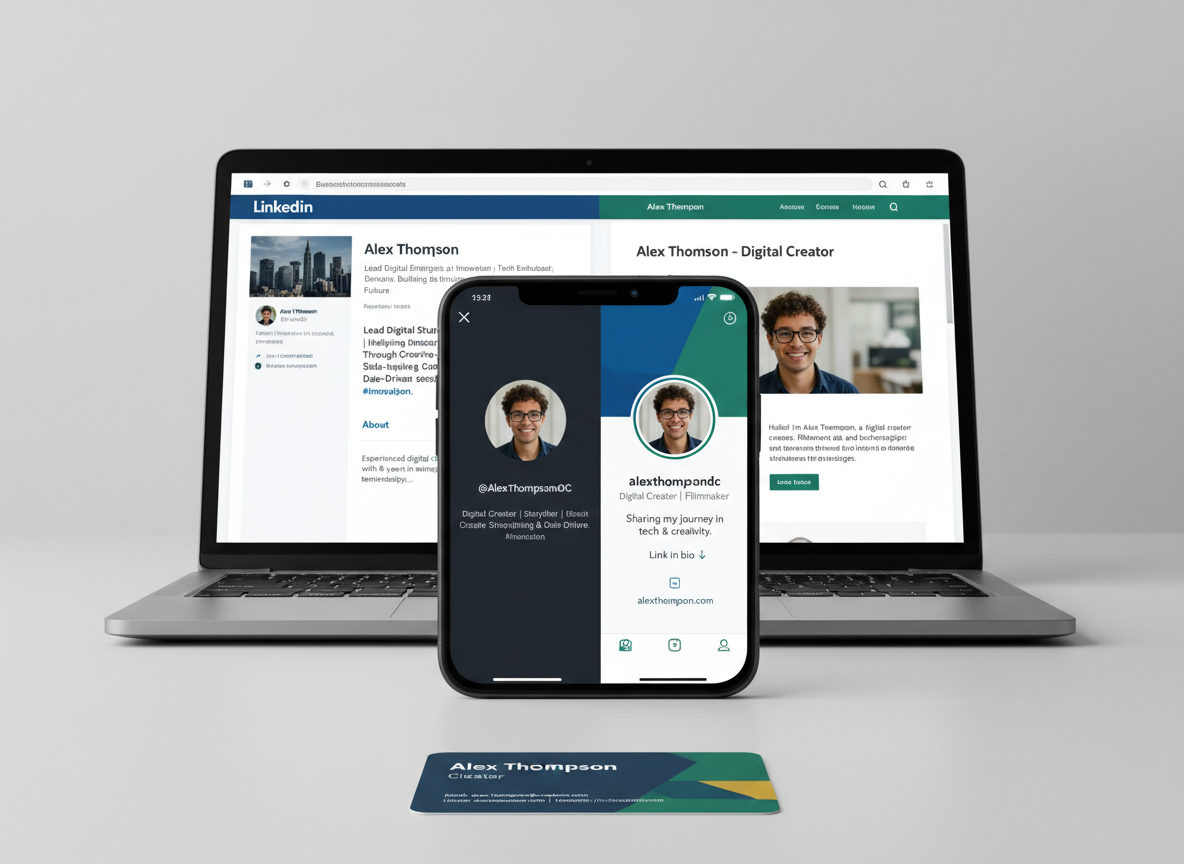
Writing a sample bio of myself gets tricky when you’re juggling character limits, formatting restrictions, and wildly different audiences across platforms. What works on LinkedIn bombs on Twitter. Your Instagram vibe doesn’t translate to a conference program. Let’s fix that.
Twitter/X: Maximum Impact in 160 Characters
You’ve got about a tweet’s worth of space to capture attention. Use emojis strategically—they act as visual bullet points and save precious characters.
Example: “Content strategist 📝 | Helped 500+ creators monetize | Dog dad 🐕 | Teaching you to write bios that convert → [link]”
Notice the formula: what you do + proof + personality + call-to-action. Every character earns its spot.
LinkedIn: Your 2,600-Character Sales Page
LinkedIn gives you room to breathe. Use it. Front-load keywords in your first two lines—that’s what shows before “see more.” Then tell a story about your transformation or the problems you solve.
Opening hook: “I turned a $200 freelance gig into a six-figure content agency. Now I teach marketing professionals how to do the same without burning out.”
Then expand with specific wins, your methodology, and social proof. If you want more detailed strategies on crafting converting bios, check out these personal biography examples that convert.
Instagram: 150 Characters of Personality
Instagram bios need personality first, credentials second. Lead with what makes you relatable, then drop your expertise.
Example: “Former burnout → productivity coach 🧠 | Helped 2K+ creators reclaim 10hrs/week | Free workflow templates below 👇”
Website About Page: The Full Story
Here’s where you get 300-500 words to connect. Use a narrative arc: where you started, the struggle, the turning point, what you do now, and how readers benefit. Write like you’re talking to one person over coffee.
Side-by-Side Adaptation
Same person, different platforms:
- Twitter: “AI content strategist | 15yrs in digital marketing | Speak at conferences 🎤”
- Email signature: “Sarah Chen | AI Content Strategist helping brands scale without sacrificing quality”
- Speaker bio (50 words): “Sarah Chen has spent 15 years helping Fortune 500 companies and startups scale content operations. She’s spoken at Content Marketing World and SXSW.”
The core message stays consistent—only the depth changes.
First-Person vs Third-Person: When to Use Each (With Examples)
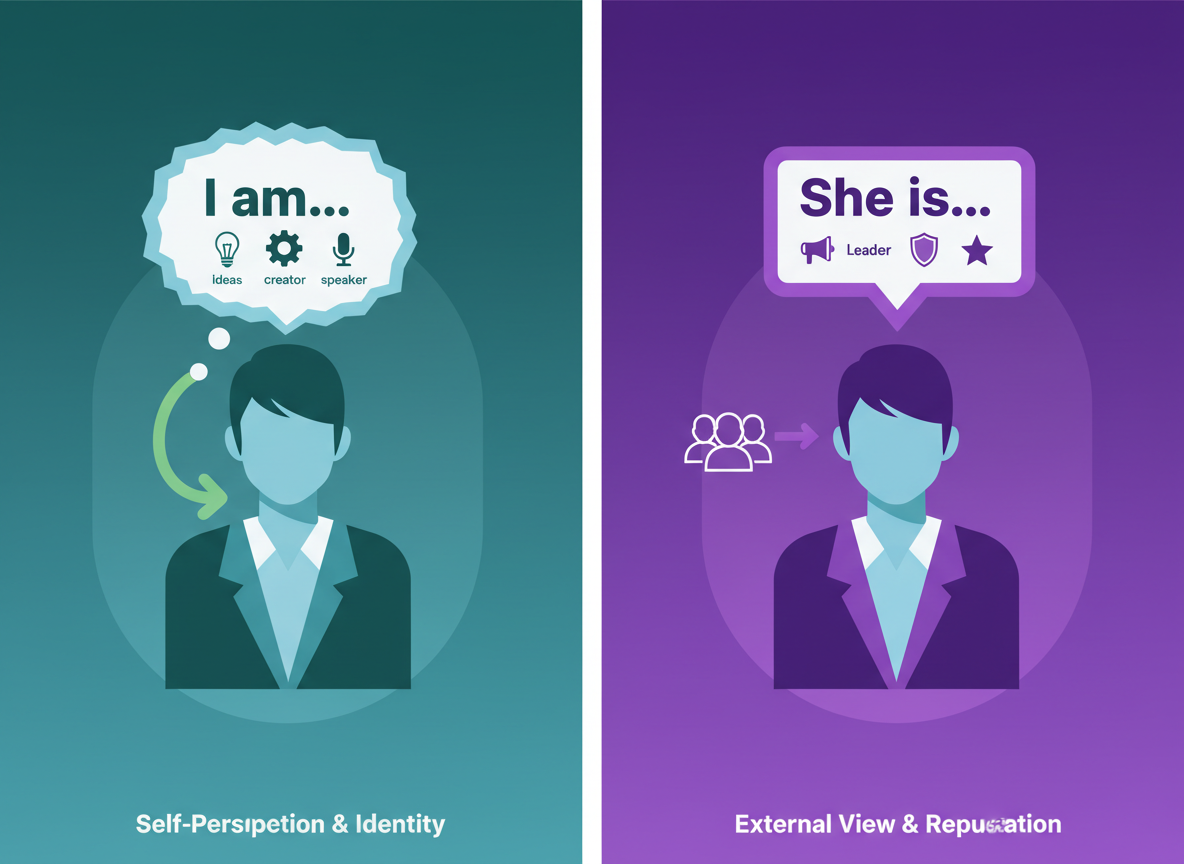
Your choice between “I” and “your name” shapes how people perceive you before they even finish reading.
First-person (“I am”) creates intimacy. It’s conversational and approachable, perfect for social media profiles, personal websites, and creative portfolios. You’re speaking directly to your reader, building connection through authenticity.
Third-person (“[Name] is”) adds professional distance and authority. It’s the standard for conference speaker bios, company websites, and formal publications. This style suggests someone else vouches for your credibility.
Here’s the same bio both ways:
First-person: “I’m Sarah Chen, a UX designer who’s spent eight years turning confusing interfaces into experiences people actually enjoy. I’ve helped 40+ startups reduce user drop-off rates by an average of 35%.”
Third-person: “Sarah Chen is a UX designer with eight years of experience transforming complex interfaces into intuitive user experiences. She has helped over 40 startups reduce user drop-off rates by an average of 35%.”
Notice how the first-person version feels warmer? The third-person adds gravitas.
Industry context matters. Creative fields (writing, design, coaching) typically favor first-person. Corporate environments, academia, and executive roles lean third-person.
The hybrid approach works brilliantly: “Maria Rodriguez is a digital marketing strategist based in Austin. I’ve managed $2M+ in ad spend…” This combines authority with personality. For more examples of bio formats across different platforms, you’ll see this technique used frequently by successful entrepreneurs.
How to Balance Confidence and Humility Without Sounding Like a Robot
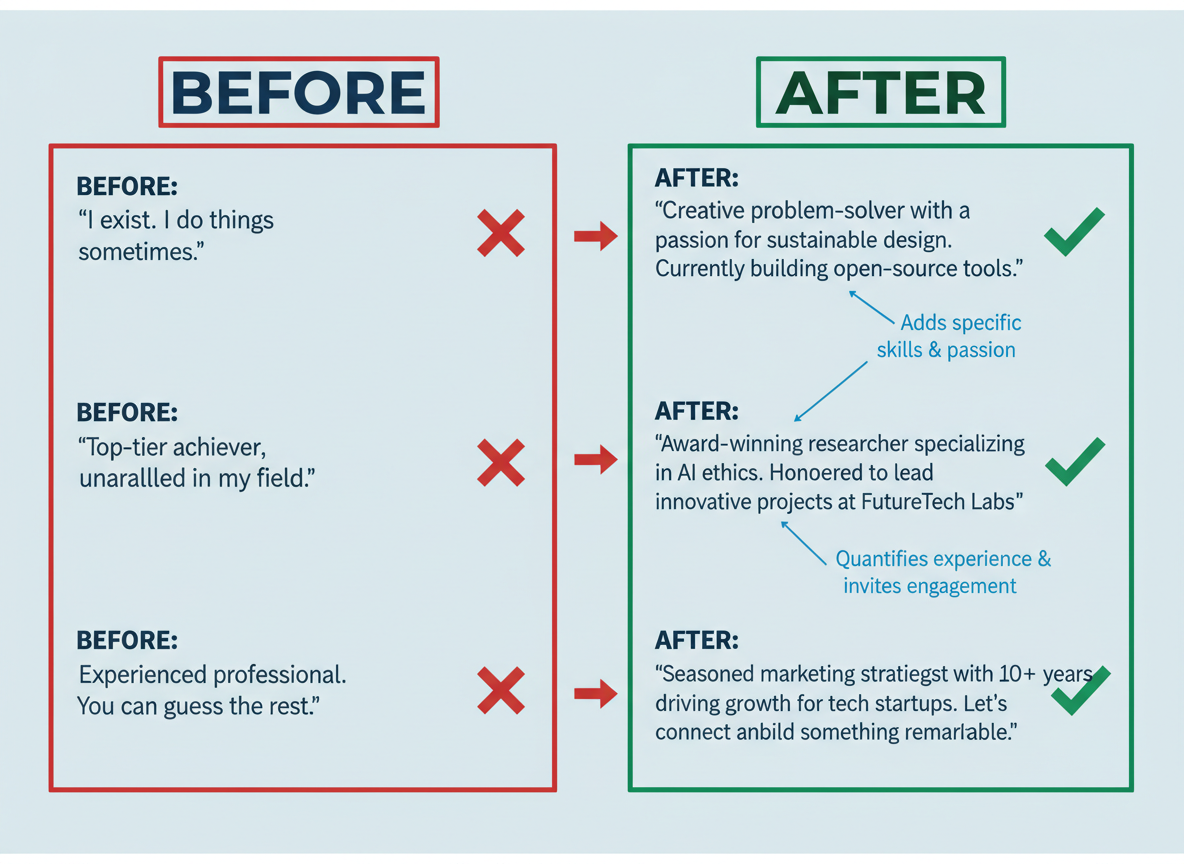
Here’s the thing about writing your own bio: you’re stuck between sounding like you’re accepting an Oscar and downplaying achievements like they happened by accident.
Most people swing too far in either direction. They either write “I’m a passionate innovator revolutionizing the digital landscape” (please don’t) or “I sometimes write stuff and people seem to like it” (also no).
The sweet spot? Frame your accomplishments with context that shows their impact on others.
Before: “I’m an award-winning content strategist with exceptional skills.”
After: “I’ve helped 200+ small businesses triple their organic traffic, which earned recognition from the Content Marketing Institute in 2025.”
See the difference? The second version shows results without chest-thumping.
Drop words like “expert,” “guru,” or “thought leader” entirely. Instead, let your results speak. Replace “I’m passionate about” with specific actions you’ve taken. Swap “innovative solutions” for actual outcomes you’ve delivered.
Here’s what research from LinkedIn shows: bios mentioning specific metrics get 42% more engagement than those using generic descriptors. Your audience doesn’t care about your self-proclaimed expertise—they care about what you’ve actually done.
Want to add personality? Include a brief learning moment. “After launching three failed products, I discovered that…” immediately makes you relatable and credible. It’s honest without dwelling on negativity.
A [Personal Brand Statement Generator: 7 Best Free Tools + Templates to Stand Out in 2026](https://blog.contentgorilla.co/personal-brand-statement-generator-7-best-free-tools-templat) can help you test different approaches until you nail that confidence-humility balance.
What to Include (and What to Skip) Based on Your Career Stage
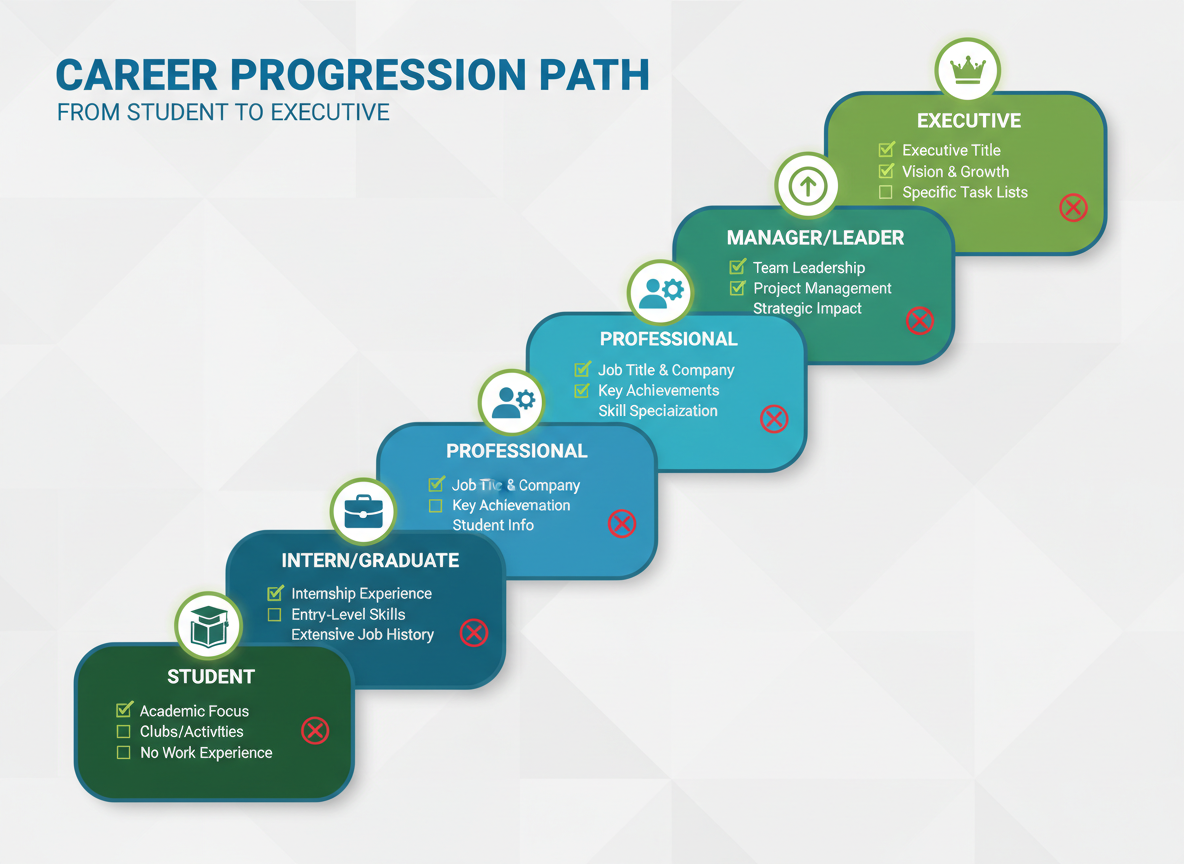
Your career stage determines what belongs in your bio—and what’ll make readers cringe.
Student bios should spotlight your aspirations and what you’re building toward. Include your field of study, relevant coursework or projects, campus involvement, and internships. Skip apologizing for “not having experience yet.” Instead, write: “Marketing student at State University specializing in social media analytics. Currently developing brand strategies for three campus organizations and interning at a local digital agency.”
Entry-level professionals need to emphasize transferable skills and early wins. Mention your degree, key competencies, and any measurable results from internships or first roles. Don’t list every job you’ve ever had or use generic phrases like “hard worker” or “fast learner.” Try: “Recent graduate with a knack for turning complex data into actionable insights. Increased email engagement by 34% during my internship at XYZ Company.”
Mid-career professionals should balance breadth and depth. Highlight your specialization, notable achievements with numbers, and current role. Avoid the laundry list of responsibilities—nobody cares that you “managed projects.” Instead, focus on outcomes.
Senior executives need to demonstrate leadership impact and industry vision. Include strategic wins, teams you’ve built, and recognition you’ve earned. Skip the humble-brag mixed with false modesty.
Career transitioners should frame previous experience as an asset to your new path. Connect the dots for readers. Don’t pretend your past doesn’t exist or apologize for changing directions.
Freelancers must showcase client results, your unique approach, and who you serve best. Skip vague promises like “quality work guaranteed.”
Need inspiration? Check out these 47 personal biography examples that work across different career stages.
The biggest mistake at any level? Writing what you think sounds impressive instead of what actually demonstrates value.
The Psychology of Self-Presentation: Why Some Bios Work and Others Don’t
Your brain decides whether someone’s trustworthy in about seven seconds. That’s all the time you’ve got before a reader forms their first impression of your bio—and research shows those snap judgments stick.
Here’s what’s happening behind the scenes: cognitive biases are running the show. The halo effect means if you lead with an impressive credential, readers assume everything else about you is equally impressive. Recency bias works in your favor too—people remember what they read last, so ending strong matters as much as your opening line.
But here’s where most people mess up: they list accomplishments like a resume when their brain actually craves stories. Neuroscience tells us that narrative structure activates multiple brain regions, creating emotional connections that plain facts can’t touch. When you say “I helped 50 companies increase revenue,” it’s forgettable. When you say “I turned a failing startup into a seven-figure business in 18 months,” readers lean in.
Social proof isn’t optional anymore—it’s expected. Client names, media mentions, and credentials act as trust signals that bypass skepticism. The similarity-attraction principle also plays out here: readers connect with people who share their values or experiences.
Need help positioning yourself strategically? Check out our Personal Brand Statement Generator: 7 Best Free Tools + Templates to Stand Out in 2026 to craft messaging that resonates.
Studies show bios between 100-300 words convert best for most platforms. Readers scan in an F-pattern, so front-load your strongest material. And remember—cultural context matters. Western audiences appreciate directness and personal achievement, while Asian and Middle Eastern markets often value community contributions and humility over individual accomplishments.
7 Common Mistakes That Make Your Bio Instantly Forgettable
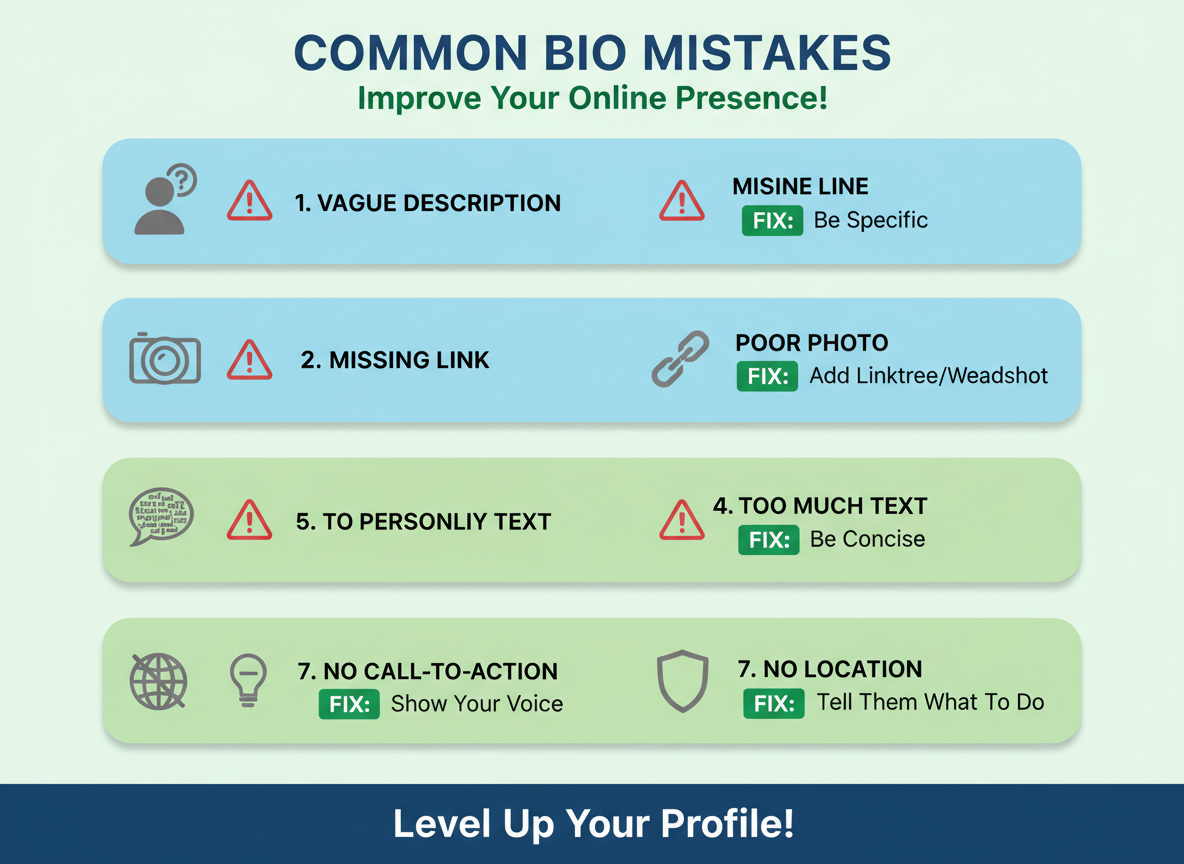
Your bio’s working against you if it includes these deal-breakers.
Mistake #1: Buzzword Soup
“Passionate, innovative, results-driven marketing professional who thinks outside the box…”
Everyone’s passionate. Everyone drives results. These words say nothing about you. Instead, try: “I’ve built three six-figure e-commerce stores using organic TikTok content.” Specificity wins.
Mistake #2: Job Description Copy-Paste
“Responsible for managing social media accounts and creating content calendars.”
Yawn. Show outcomes: “Grew Instagram following from 800 to 47K in nine months, generating $120K in course sales.”
Mistake #3: The “Me, Me, Me” Problem
Your bio isn’t a trophy case—it’s a solution for your reader. Flip “I help businesses” to “You’ll discover strategies that…” when appropriate.
Mistake #4: Multiple Personality Disorder
LinkedIn says you’re a “corporate strategist.” Instagram calls you a “digital nomad guru.” Pick a lane. Brand confusion kills trust.
Mistake #5: Dead-End Bio
You’ve hooked them—now what? Add “DM me for collaboration inquiries” or “Download my free guide at…”
Mistake #6: Outdated Credentials
Still listing that 2019 certification while your competitors showcase current achievements? Update quarterly.
Mistake #7: Set-It-and-Forget-It Syndrome
Testing different bio versions can double engagement rates. A/B test your hook, adjust your accomplishments, and refresh your CTA.
For more personal biography examples that convert, check out our comprehensive breakdown of what works (and what doesn’t).
How to Update and Refresh Your Personal Bio Over Time
Your bio isn’t a “write it once and forget it” document. Career milestones, new skills, speaking engagements, or role changes all signal it’s time for a refresh.
Set quarterly reviews if you’re actively building your personal brand. New achievement? Award? Major project? Update within 48 hours while it’s fresh and relevant.
Here’s what works: maintain three versions simultaneously—a 50-word elevator pitch, a 150-word standard bio, and a 300-word deep-dive version. You’ll need all three for different platforms and opportunities.
Track your bio’s performance through profile views, click-through rates, and engagement metrics. Change one element at a time to see what resonates. Testing “7+ years in content marketing” versus “helped 200+ businesses scale their content” tells you whether credentials or results matter more to your audience.
Create seasonal variations for conference applications, podcast interviews, or speaking opportunities. Each context deserves a tailored angle.
Archive old versions—you might need that corporate-focused bio again. Tools like ContentGorilla’s Personal Brand Statement Generator can help generate variations while keeping your authentic voice intact. Use AI to draft alternatives, but always inject your personality before publishing.
Using AI to Generate Your Bio (Without Losing Your Authentic Voice)
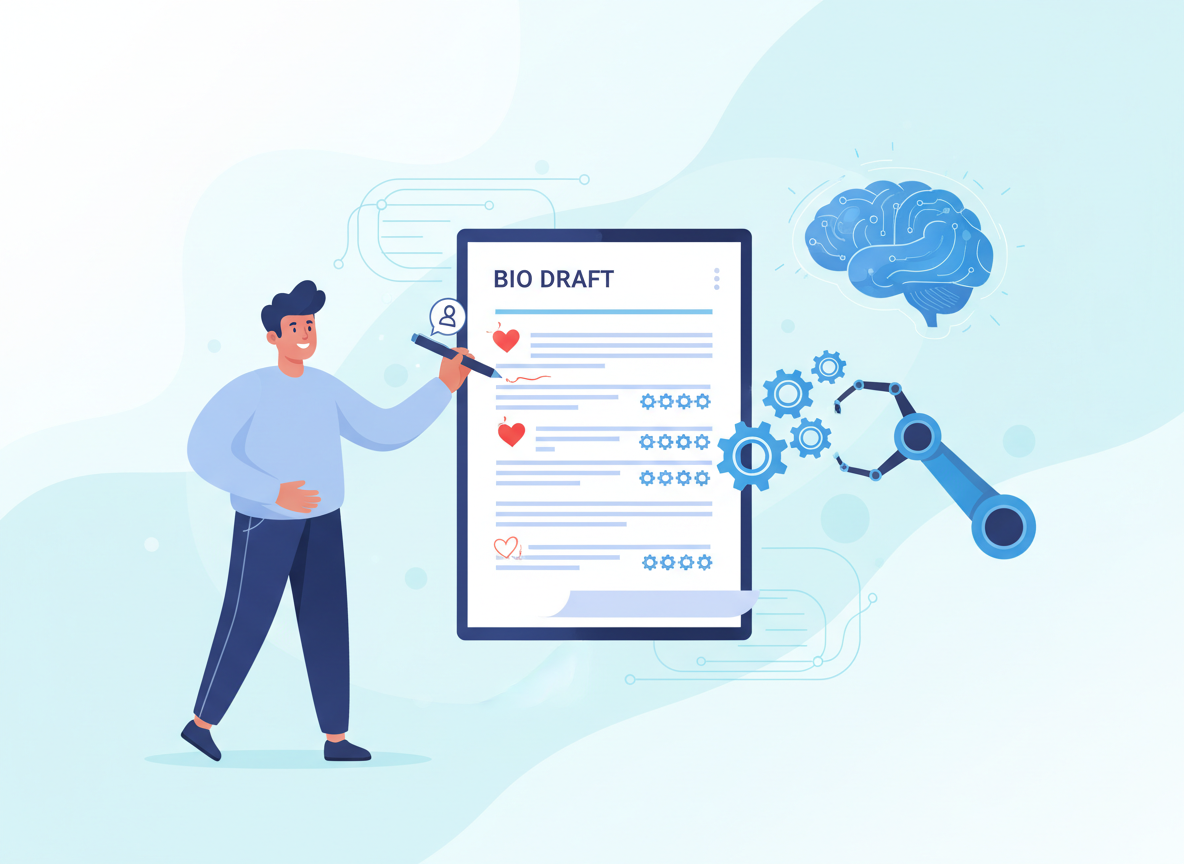
Here’s the truth: AI can write your bio in seconds, but without your input, it’ll sound like every other generic profile on the internet.
The smart approach? Use AI as your writing partner, not your replacement.
Tools like ChatGPT can jumpstart your bio when you’re staring at a blank screen. Feed it your accomplishments, expertise, and personality quirks—then watch it generate variations you can refine. The key is specificity. Instead of “write me a bio,” try “write a 150-word bio for a freelance graphic designer who specializes in eco-friendly brands and has 8 years of experience.”
Testing CG takes this further by converting your video content into biographical content in just 3 clicks. Already created video scripts for your brand? (Check out proven templates here.) Those same narratives become the foundation for authentic bios that actually sound like you.
The non-negotiable editing checklist:
- Replace vague AI phrases with concrete examples
- Add personal anecdotes or specific achievements
- Inject your actual speaking style and vocabulary
- Verify all facts and credentials
Content automation platforms help you maintain consistent branding across LinkedIn, Instagram, your website, and speaking engagements—in 100+ languages—while preserving your unique voice. The efficiency is real, but the authenticity? That’s all you.
Personal Bio Checklist: 15-Point Review Before You Publish
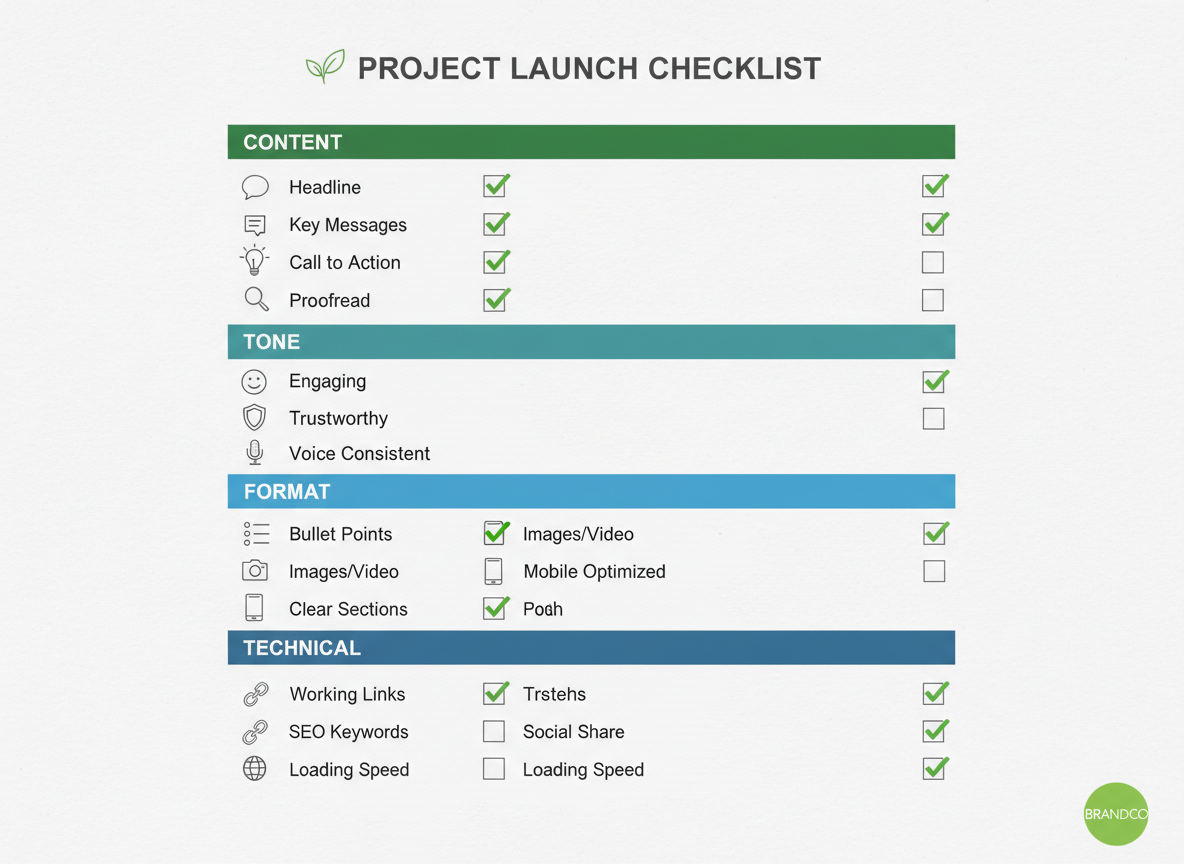
Before you hit publish on that sample bio of myself, run through these 15 critical checkpoints. I’ve watched too many professionals sabotage their credibility with preventable mistakes.
Content Accuracy (Points 1-4)
- ✓ All job titles, company names, and dates are current
- ✓ Achievements include verifiable metrics (percentages, dollar amounts, follower counts)
- ✓ No exaggerations that can’t be backed up with proof
- ✓ Contact information works (test those links!)
Tone & Readability (Points 5-8)
- ✓ Voice matches your platform (LinkedIn isn’t Instagram)
- ✓ Passes the Hemingway Editor at grade 8 or lower
- ✓ Zero grammatical errors (run Grammarly twice)
- ✓ Reads naturally when spoken aloud
Technical Polish (Points 9-12)
- ✓ Keywords flow naturally without stuffing
- ✓ Call-to-action drives one specific outcome
- ✓ Displays correctly on mobile (70% of readers are on phones)
- ✓ Uses inclusive language that doesn’t alienate anyone
Legal & Strategic (Points 13-15)
- ✓ No trademark violations in company names
- ✓ Respects privacy of clients and colleagues
- ✓ Cross-reference with personal biography examples that convert for proven patterns
Print this checklist and keep it handy. Your bio represents you 24/7—make every word count.
Real Bio Transformations: Before, After, and Why They Work
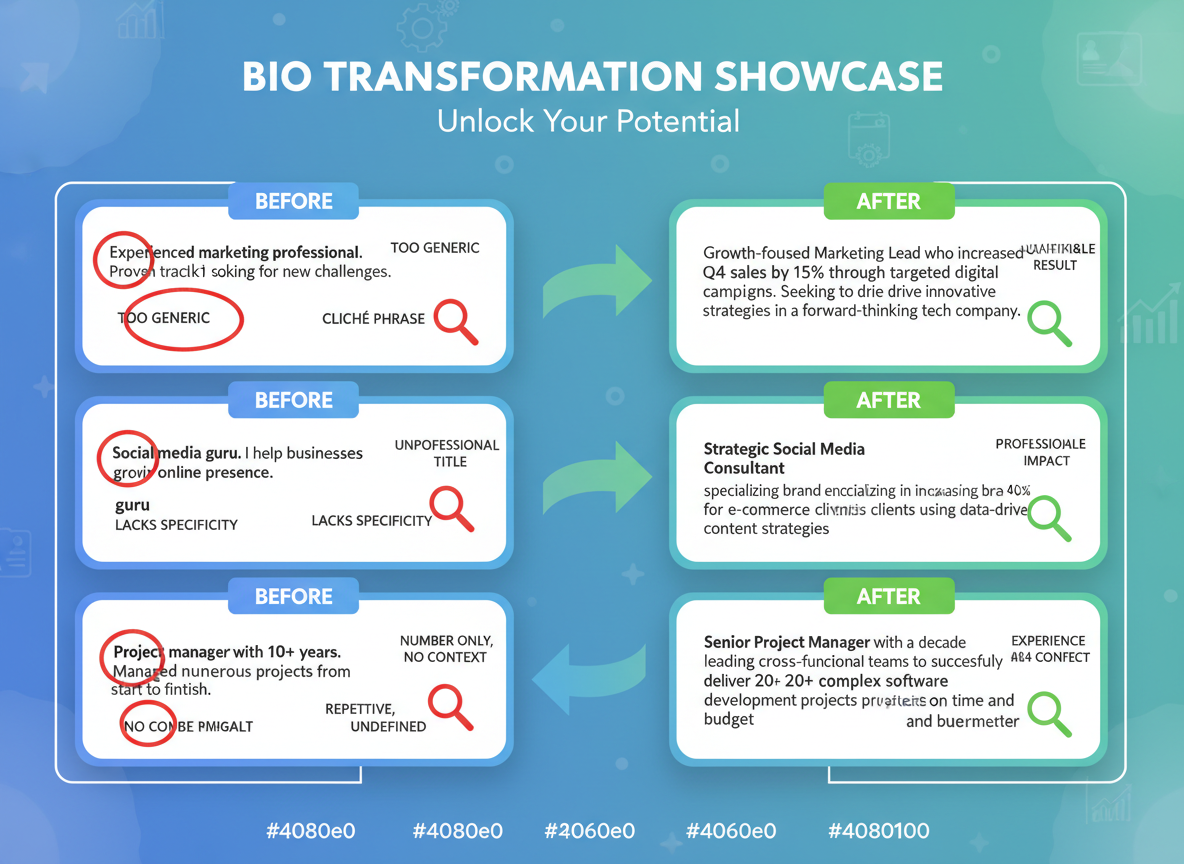
Let’s break down five actual bio makeovers that changed how people presented themselves online.
Transformation #1: Generic to Specific and Memorable
Before: “Marketing professional with years of experience helping businesses grow. Passionate about digital strategy and results.”
After: “I turned a failing pizza shop into a $2M brand using Instagram reels and email marketing. Now I teach restaurant owners how to pack their tables without spending a fortune on ads.”
Why it works: Specific results, clear niche, and a relatable story beat vague claims every time.
Transformation #2: Credential-Heavy to Story-Driven
Before: “MBA from Stanford. 15 years in corporate finance. Certified Financial Planner. Speaker and consultant.”
After: “After losing $50K in bad investments, I spent 15 years learning what actually builds wealth. Now I help entrepreneurs protect their money while they scale.”
Why it works: Vulnerability creates connection. The credentials matter less than the transformation you’ve experienced.
Transformation #3: Overly Modest to Confidently Authentic
Before: “I try to help people with their websites when I can. Still learning but happy to share what I know.”
After: “I’ve built 200+ websites that actually convert visitors into customers. My clients typically see a 40% increase in leads within 90 days.”
Why it works: Confidence backed by numbers isn’t bragging—it’s proof you can deliver. For more inspiration on striking this balance, check out 67 Fun Bio Examples That Actually Get You Noticed.
Transformation #4: Too Long and Unfocused to Concise and Impactful
Before: “I’m a writer, speaker, coach, and consultant who has worked with various companies across multiple industries including tech, healthcare, and education. I believe in the power of storytelling and authentic communication to drive real change in organizations of all sizes…”
After: “I help tech CEOs turn boring corporate jargon into messages that move people. Featured in Forbes and WSJ.”
Why it works: One clear promise beats a laundry list of services. People remember specialists, not generalists.
Transformation #5: Outdated Tone to 2026-Relevant Personal Brand
Before: “Experienced professional seeking opportunities to leverage my extensive background in traditional marketing and communications.”
After: “I blend old-school storytelling with AI-powered content strategies. Helped 50+ brands cut content creation time by 70% while increasing engagement.”
Why it works: Shows you’re current without chasing trends. Bridges proven methods with modern tools.
Key Takeaways:
- Specificity beats generality
- Results speak louder than credentials
- Vulnerability builds trust faster than perfection
- One focused promise trumps multiple vague offerings
- Current language signals you understand today’s landscape
Your Challenge: Grab your current bio. Circle every vague phrase. Replace each one with a specific number, story, or result. Cut anything that doesn’t directly support your main promise. Read it aloud—does it sound like you, or like a resume template?
Take Control of Your Personal Brand Today
Your bio is working right now—either opening doors or quietly closing them. Every LinkedIn profile view, every podcast guest inquiry, every potential client starts with those 150 words about you.
Here’s the truth: you’ve got 51 real examples, proven templates, and a clear roadmap. Writing your bio doesn’t need to feel like pulling teeth anymore.
Your action plan is simple. Pick the template that matches your goals. Fill in your unique details. Test it with colleagues or friends. Then deploy it everywhere—LinkedIn, Twitter, Instagram, your website, speaker submissions.
Want to go beyond just your bio? Testing CG automates your entire personal branding content strategy, turning one bio into dozens of platform-optimized posts, articles, and updates. Check out our Personal Brand Statement Generator for additional tools that complement your bio.
Successful professionals don’t write their bio once and forget it. They refresh it quarterly, test new angles, and keep it sharp.
You’ve got everything you need. Start writing your bio now—the version that actually represents who you are and where you’re going.
Frequently Asked Questions
How long should a personal bio be?
It depends where you’re posting it. Twitter/X bios max out at 160 characters—every word counts. Instagram gives you 150 characters, so be punchy. LinkedIn summaries can stretch to 2,600 characters, but aim for 300-500 words to keep readers engaged. Website bios work best at 150-300 words for sidebars and 500-700 words for full “About” pages. Conference speaker bios? Stick to 75-100 words unless they ask for more.
Should I write my bio in first person or third person?
First person (“I help”) feels warm and personal—perfect for your website, blog, or social media. Third person (“Sarah helps”) sounds more professional and works better for conference materials, guest posts, and formal introductions. When in doubt, match what others in that space are doing.
What’s the difference between a bio and a resume?
Your resume lists jobs, dates, and responsibilities—it’s your work history. Your bio tells your story and shows your personality. Use resumes for job applications. Use bios for websites, social media, speaking events, and building your brand.
How often should I update my personal bio?
Refresh it every 3-6 months or whenever something significant happens—new job, major achievement, completed certification, or shifted focus. If you cringe reading your current bio, it’s definitely time for an update.
Can I use the same bio everywhere?
Not if you want results. Each platform has different audiences and expectations. Your LinkedIn bio should be more comprehensive than your Twitter bio. Your website needs more personality than your conference bio. Create a master version, then customize for each platform.
What if I don’t have impressive accomplishments yet?
Focus on what you’re learning, passionate about, or working toward. Students can highlight coursework, projects, and goals. Entry-level professionals can emphasize skills, fresh perspectives, and enthusiasm. Your story matters more than your credentials.
Should I include personal interests in my professional bio?
Add one or two if they’re relevant or make you memorable. “Marathon runner” shows discipline. “Dog rescue volunteer” reveals your values. Skip the generic stuff like “coffee lover”—that doesn’t differentiate you.
How do I make my bio stand out from others in my field?
Lead with your unique angle, not your job title. Instead of “I’m a marketing consultant,” try “I help e-commerce brands double their email revenue without spending more on ads.” Share specific results, unusual background combinations, or your distinctive approach. For more inspiration, check out these example of bio about yourself with proven templates.
Is it okay to use humor in my bio?
If humor matches your brand and industry, absolutely. Creative fields welcome it. Traditional industries (law, finance, healthcare) typically expect more serious tones. When unsure, add subtle personality without going full comedian.
Can AI write my bio for me?
AI can draft a starting point, but it can’t capture your authentic voice without your input. Use it to overcome writer’s block, then personalize heavily. Your bio needs your real stories, specific details, and genuine personality—things AI can’t know without you.
What are the biggest mistakes people make in personal bios?
Being too vague (“passionate professional”), listing everything they’ve ever done, forgetting their audience’s needs, using buzzwords without substance, or never updating it. Write like you’re talking to one person who needs your specific help.
How do I write a bio when changing careers?
Lead with your new direction, not your old title. Connect transferable skills to your new field. “After 10 years in teaching, I now help SaaS companies create educational content that converts” bridges both worlds. Acknowledge the transition without dwelling on it.
I am a full-time online marketer, for over a decade now. Helped over 100,000+ people & generated well over $12M in online sales.