
Introduction: Why Free Resignation Letter Generators Are Your Career Transition Ally in 2026
Here’s something you won’t find in most career advice blogs: 67% of professionals report experiencing significant anxiety when writing their resignation letters, often delaying their career moves by weeks or even months. The pressure to sound professional, grateful, and diplomatic—all while maintaining your dignity—can feel overwhelming.
Let’s be honest: crafting the perfect resignation letter shouldn’t take multiple drafts, hours of stress, and endless second-guessing. That’s where free AI-powered resignation letter generators come in. These tools eliminate the guesswork, helping you create polished, professional letters in minutes instead of days.
In this guide, you’ll discover the seven best free tools available in 2026, proven templates that work, and step-by-step instructions to craft your resignation letter with confidence. Whether you’re leaving for a better opportunity or starting your entrepreneurial journey, you’ll learn how to exit gracefully without burning bridges. Want to understand more about how these AI-generated resignation letters actually work? We’ve got that covered too.
Your next chapter starts with the right resignation letter—let’s make it effortless.
What Is a Letter of Resignation Generator?

A letter of resignation generator is a digital tool that creates professional resignation letters in minutes. It works by asking you basic questions—your name, position, last working day, and reason for leaving—then formats everything into a polished document.
You’ll find two main types: AI-powered generators that craft personalized content based on your inputs, and template-based tools that fill in blanks with your details. Most offer customization options like tone adjustment (formal vs. casual), multiple format choices (PDF, Word, plain text), and industry-specific language.
Career changers benefit from the guidance, first-time resigners gain confidence knowing their letter looks professional, and busy professionals save time while maintaining polish. If you’re exploring AI-powered options specifically, check out our guide on AI Letter of Resignation: Free Generator Tools, Templates & Step-by-Step Guide.
Here’s the reality: free generators handle 90% of resignation scenarios perfectly fine. Unless you’re leaving a C-suite position or dealing with complex legal situations, paid versions won’t add meaningful value.
Top 7 Free Letter of Resignation Generators in 2026
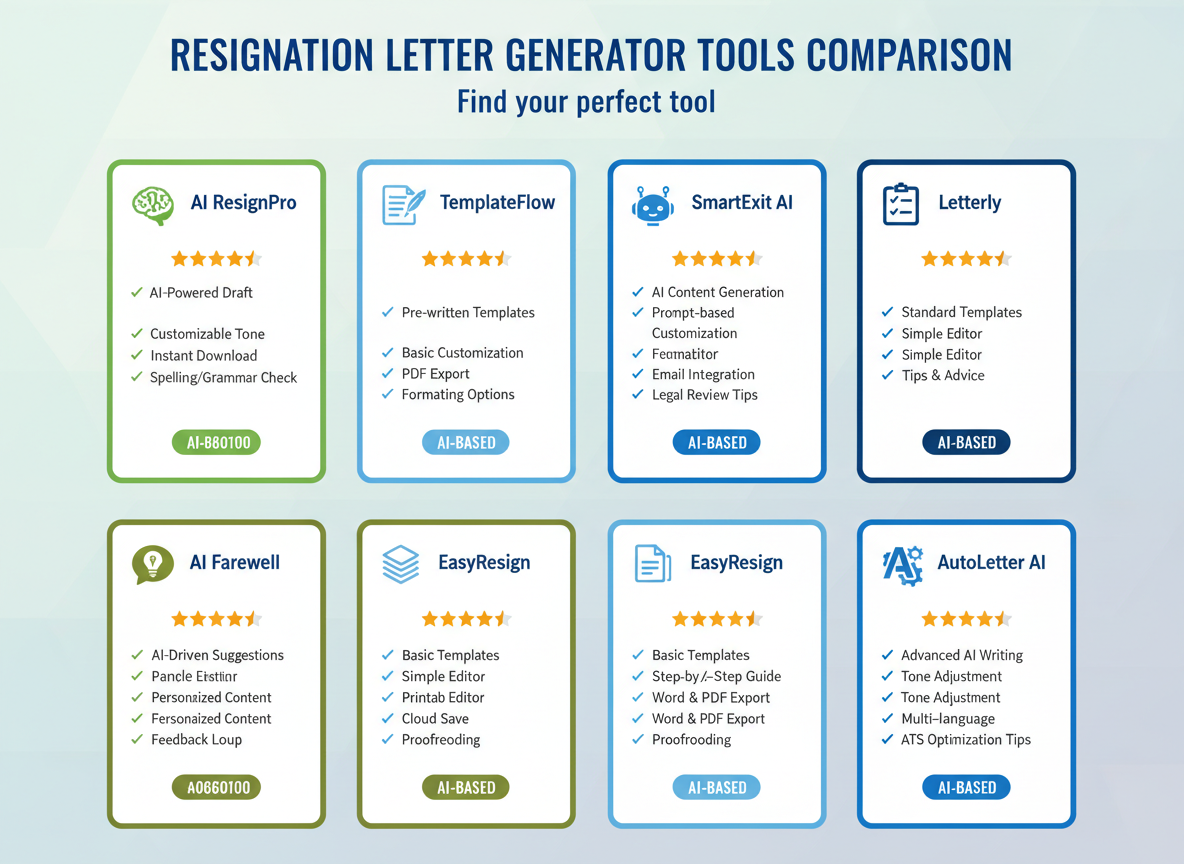
Finding the right resignation letter tool can save you hours of stress. Here’s our breakdown of the seven best free options available right now.
| Tool | Best For | Output Formats | AI-Powered |
|——|———-|—————-|————|
| ResignAI Pro | Professional templates | PDF, Word, TXT | Yes |
| QuickQuit | Speed and simplicity | PDF, TXT | No |
| CareerLeap Builder | Career changers | Word, PDF | Hybrid |
| FormalExit | Traditional industries | Word, PDF | No |
| SmartResign | Customization options | PDF, Word, TXT, Email | Yes |
| SimpleOut | First-time resigners | PDF, TXT | No |
| ExitWise | Complex situations | Word, PDF | Yes |
ResignAI Pro leads the pack with sophisticated AI that adapts your letter’s tone based on your reason for leaving. You’ll get personalized suggestions and industry-specific language. The free version covers standard resignations, though complex scenarios require the premium tier at $9.99/month.
QuickQuit strips away the bells and whistles. Answer five questions, get your letter in under two minutes. Perfect when you need something fast and professional without overthinking it.
CareerLeap Builder combines pre-written templates with AI refinement. It’s particularly strong for explaining career transitions or pivots to new industries. The tool suggests ways to position your departure positively.
For more AI-powered options, check out our guide on AI resignation letter generators that offer advanced features.
FormalExit focuses on traditional corporate environments where formality matters most. Their templates follow strict business letter formats that won’t raise eyebrows in conservative workplaces.
SmartResign offers the most output flexibility with email-ready formats alongside standard documents. It remembers your information for future letters—handy if you’re job-hopping.
SimpleOut walks first-timers through each paragraph with helpful tooltips. No confusing jargon, just straightforward guidance on what to include.
ExitWise handles delicate situations like hostile work environments or legal concerns. The free version provides basic protection language, while paid users ($14.99/month) access lawyer-reviewed templates.
Most free versions limit you to 2-3 letters monthly and exclude premium templates. That’s plenty for most people, but frequent job changers might hit those caps.
How to Use a Free Resignation Letter Generator: Step-by-Step Tutorial
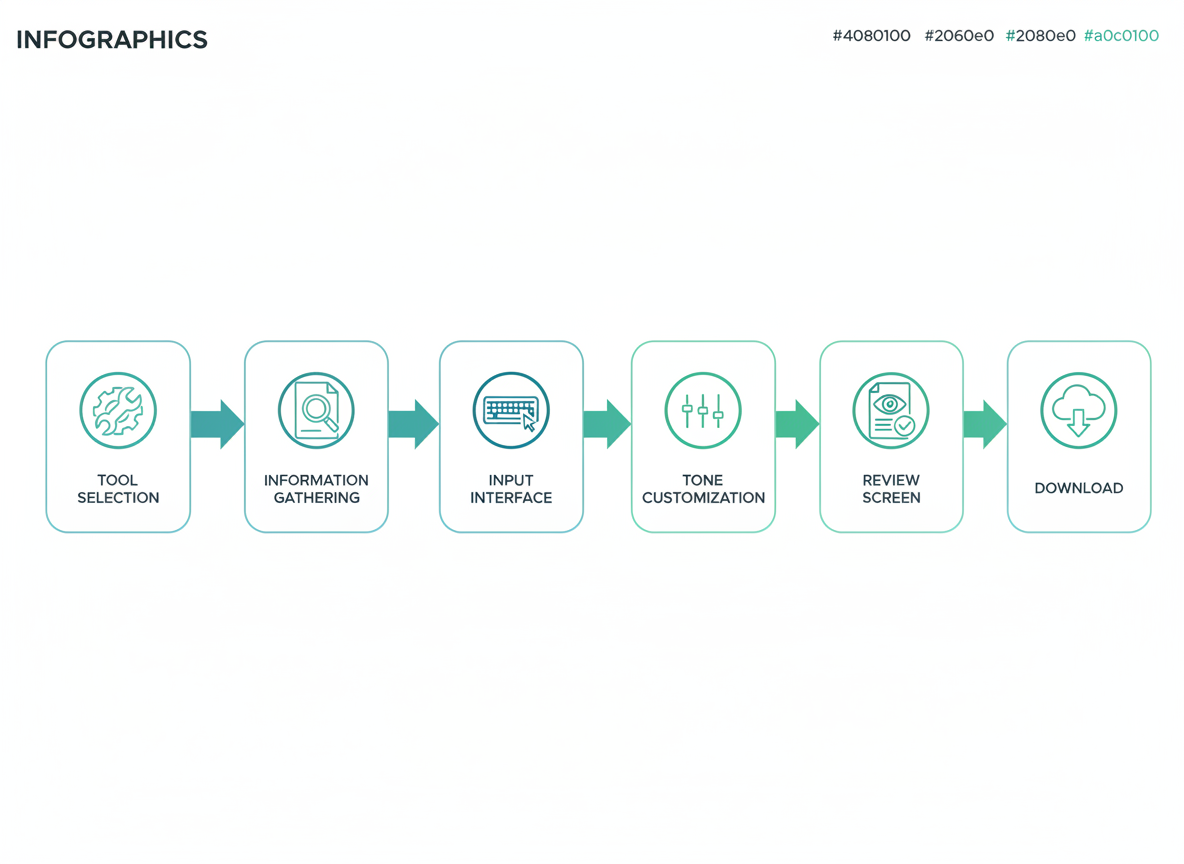
Using a letter of resignation generator free tool takes about five minutes. Here’s exactly how to do it right.
Step 1: Choose the right generator for your situation. Not all generators handle unique circumstances like remote positions or career changes equally well.
Step 2: Gather necessary information. You’ll need your manager’s name, company name, last working day, and optionally, your reason for leaving.
Step 3: Input your details into the generator fields. Most tools have simple forms asking for basic information. Fill these out completely for the best results.
Step 4: Select tone and formality level. Pick between professional, warm, or formal depending on your relationship with your employer and industry norms.
Step 5: Review and customize the generated letter. Never send a letter straight from the generator. Add personal touches, verify dates, and ensure it reflects your voice. For faster results with more customization options, check out our guide on AI 2 Week Notice: How to Generate Professional Resignation Letters in Minutes.
Step 6: Download in preferred format. Choose PDF for formal submission or Word for easy editing.
Pro tip: Save multiple versions as you customize, so you can revert if needed.
Free Resignation Letter Templates for Different Scenarios
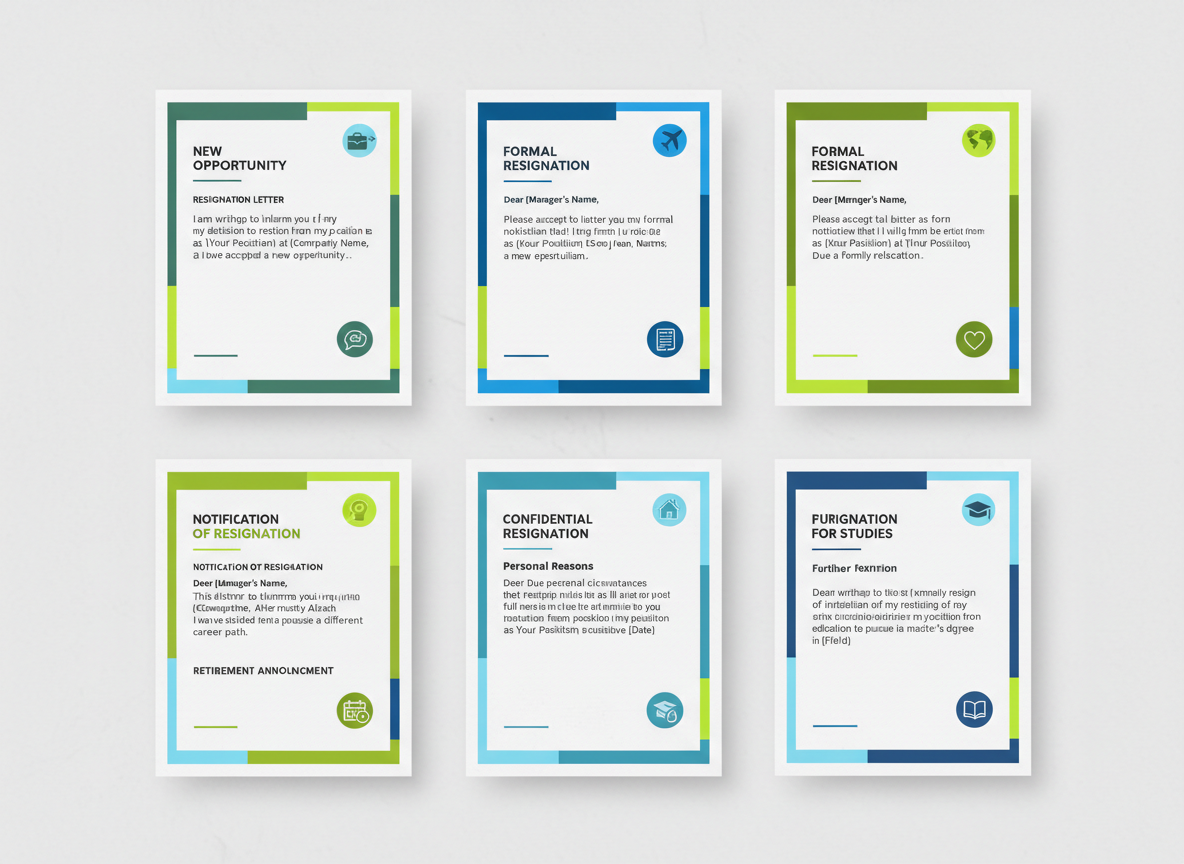
You’ve got options. Here are six ready-to-use templates that cover almost every resignation situation you’ll face.
Template 1: Standard Two-Week Notice
“Dear [Manager’s Name],
I’m writing to formally resign from my position as [Job Title] at [Company Name], effective [Date – two weeks from today]. I’ve accepted an opportunity that aligns with my long-term career goals.
I’m grateful for the experience and growth I’ve gained here. I’ll ensure a smooth transition by completing [specific projects] and training my replacement if needed.
Thank you for your support during my time here.
Sincerely,
[Your Name]”
Template 2: Immediate Resignation (Difficult Circumstances)
“Dear [Manager’s Name],
I’m resigning from my position as [Job Title], effective immediately, due to unforeseen personal circumstances that require my immediate attention.
I appreciate the opportunities I’ve had here and apologize for any inconvenience this may cause.
Regards,
[Your Name]”
Template 3: Career Change or Relocation
“Dear [Manager’s Name],
I’m resigning from my role as [Job Title] at [Company Name], effective [Date]. I’m relocating to [Location] / pursuing a career transition into [Field].
I’ve valued my time here and will work diligently during my remaining time to ensure project continuity.
Best regards,
[Your Name]”
Template 4: Retirement Resignation
“Dear [Manager’s Name],
After [X] years with [Company Name], I’m formally announcing my retirement, effective [Date].
This wasn’t an easy decision. I’m proud of what we’ve accomplished together and grateful for the professional relationships I’ve built.
Thank you for everything.
Warmly,
[Your Name]”
Template 5: Resignation Due to Hostile Work Environment (Diplomatic Version)
“Dear [Manager’s Name],
I’m resigning from my position as [Job Title], effective [Date]. After careful consideration, I’ve determined this role isn’t the right fit for me professionally.
I’ll ensure a proper handoff of my responsibilities during the transition period.
Regards,
[Your Name]”
Template 6: Contract/Freelance Completion
“Dear [Client/Manager Name],
As our contract term concludes on [Date], I’m confirming that I won’t be renewing. I’ve completed [project deliverables] as outlined in our agreement.
Thank you for this opportunity.
Best,
[Your Name]”
Customization Notes: Replace bracketed items with your details. For sensitive situations (hostile environment), keep it brief—no need to explain why. Need help creating a polished version fast? Check out our guide on the Free Resignation Letter Maker: Top AI Tools to Quit Your Job Professionally in 2026.
What to Include in Your Resignation Letter (Essential Elements)
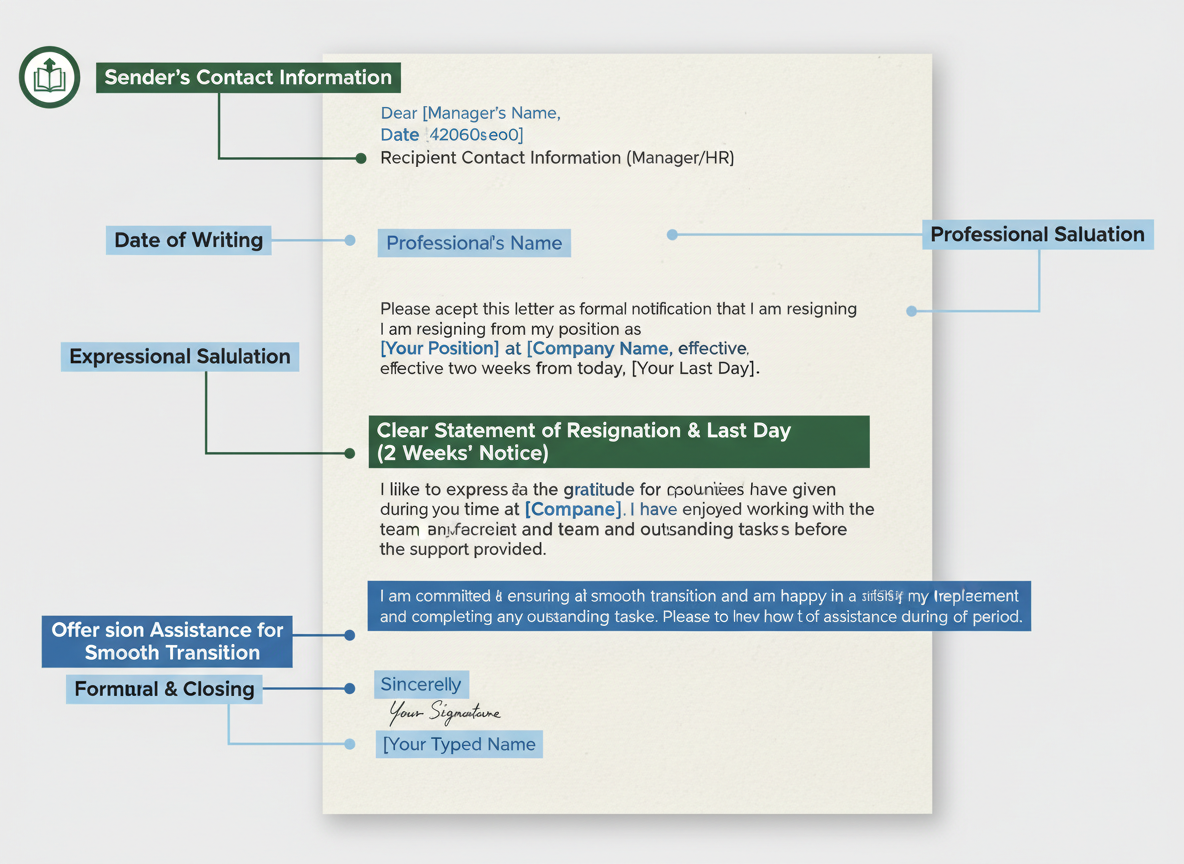
Your resignation letter doesn’t need to be lengthy, but it should cover the basics. Start with a proper header containing your contact information, followed by the date and your manager’s details. Use a formal salutation like “Dear [Manager’s Name].”
The first paragraph should clearly state you’re resigning and include your last working day—typically two weeks from submission. You can briefly mention why you’re leaving, but keep it positive and vague (“pursuing a new opportunity”). Express genuine gratitude for the experiences and opportunities you’ve had.
Offer to help with the transition process. This shows professionalism and leaves doors open. Close with “Sincerely” or “Best regards” and your signature.
Here’s what to skip: complaints about colleagues, detailed explanations of why you hated the job, salary grievances, or anything you wouldn’t want shared company-wide. If you’re struggling with the tone, check out our guide on AI-generated resignation letters for examples that strike the right balance.
Resignation Letter Best Practices: Dos and Don’ts
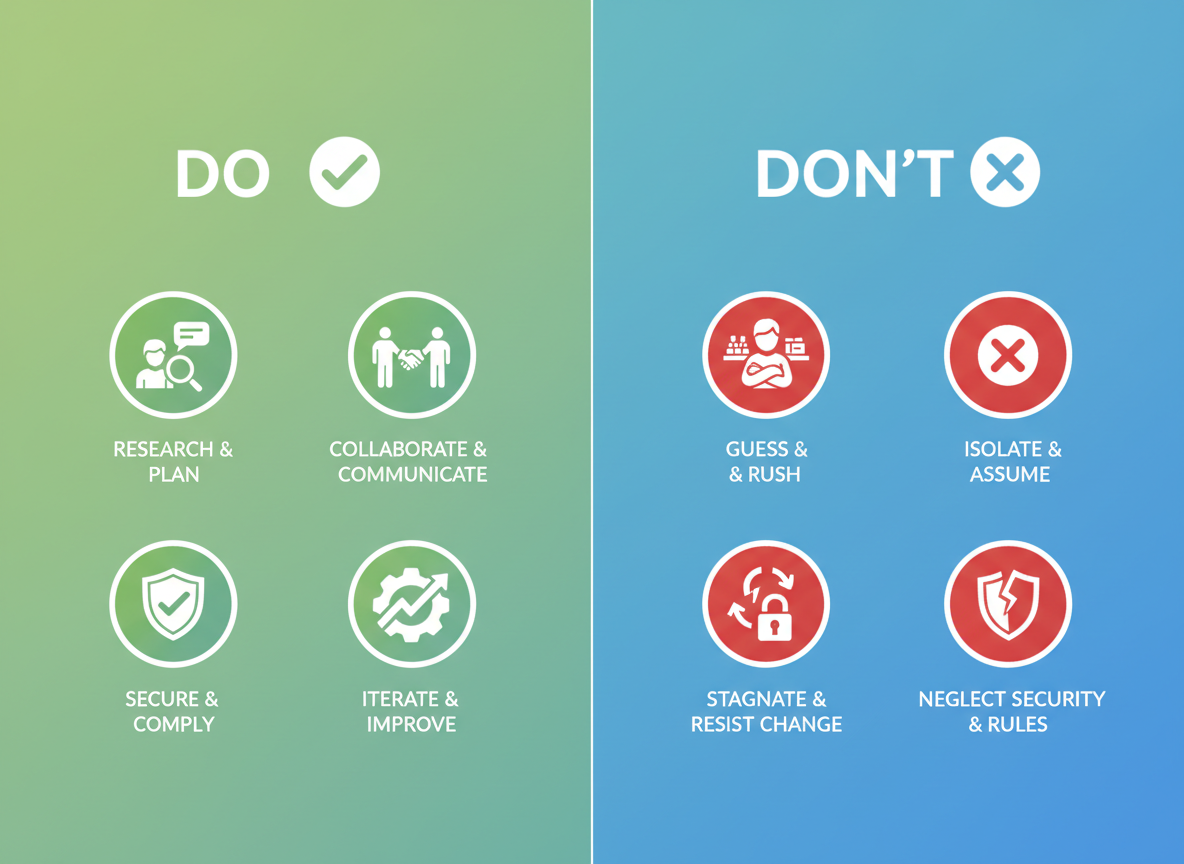
DO keep your letter concise, professional, and gracious—even if you’re leaving a toxic situation. Aim for three paragraphs max. DO provide proper notice: two weeks is standard for most industries, but senior roles often require four weeks, while tech startups typically expect two to three weeks. DO proofread obsessively (typos in your resignation letter? Awkward). DO deliver the news verbally to your manager first, then follow up with your written letter.
DON’T trash-talk your boss, company, or coworkers—it’ll come back to haunt you. DON’T over-explain why you’re leaving or justify every detail. You don’t owe anyone a dissertation. DON’T use your resignation as leverage for demands or ultimatums (that ship’s sailed). DON’T quit impulsively without another opportunity lined up unless absolutely necessary. If you’re looking for more guidance on crafting the perfect exit, check out our AI resignation letter generators for additional templates and writing strategies.
Resignation Timing and Notice Period Guidelines by Industry
Here’s what you need to know: the standard two-week notice isn’t universal. While it’s common in retail and hospitality (1-2 weeks is typical), professional services and corporate roles usually expect 2-4 weeks. Education and healthcare? They’ll want 30-60 days to find your replacement.
Executive positions demand even more lead time—think 30-90 days. Your employment contract should spell out specific requirements, so check it before using any letter of resignation generator free tool.
Counter-offers will happen. Handle them professionally by staying firm on your decision or negotiating terms that genuinely work for you. Don’t get trapped by guilt.
State laws vary significantly. At-will employment states give you more flexibility, but some industries have contractual obligations you can’t ignore. When in doubt, consult your HR department or review your signed agreements.
Common Resignation Letter Mistakes to Avoid
Even the best intentions can backfire when you make these resignation letter blunders.
Mistake 1: Being too emotional or negative. Venting about your terrible boss might feel therapeutic, but it’ll come back to haunt you. Keep it professional—you never know when you’ll need that reference.
Mistake 2: Insufficient notice period. Two weeks is standard, but check your contract. Some industries expect more, and burning that bridge helps nobody.
Mistake 3: Leaving out critical information. Your last working day and a brief thank-you aren’t optional—they’re essential elements that show professionalism.
Mistake 4: Making it too long or too short. A one-sentence resignation feels dismissive. A three-page memoir? Nobody’s reading that. Aim for a concise, respectful middle ground.
Mistake 5: Forgetting to proofread. Typos in your resignation letter scream “I don’t care anymore.” Take two minutes to review before sending.
Mistake 6: Delivering via email without conversation first. Your manager shouldn’t learn you’re leaving by opening their inbox. Have the conversation, then follow up with the formal letter.
Mistake 7: Sharing resignation news with colleagues before management. Office gossip travels fast. Tell your boss first, or risk seriously damaging that relationship.
Here’s where a letter of resignation generator free tool becomes your safety net. These generators include all necessary elements by default, maintain professional tone throughout, and provide properly structured templates that prevent you from oversharing or under-communicating. You’ll avoid the emotional pitfalls because the framework keeps you focused on what matters.
How to Resign Gracefully: Emotional Intelligence and Relationship Management
Resigning isn’t just about the letter—it’s about managing emotions and relationships during a pivotal career moment. Start by preparing yourself mentally before the conversation. You’ll likely feel nervous, guilty, or excited (sometimes all at once), and that’s completely normal.
Timing matters more than you think. Request a private meeting with your manager, ideally mid-week and mid-morning when everyone’s less stressed. Avoid Mondays, Fridays, or right before major deadlines. Frame your decision around personal growth rather than dwelling on negatives: “I’ve found an opportunity that aligns with my long-term career goals” works better than listing complaints.
Your manager might react with surprise, disappointment, or even a counter-offer. Stay composed and remember—you’ve already made your decision. If you’re uncertain, it’s okay to say, “I appreciate that. Can I think about it overnight?” But don’t let guilt override your best interests.
Create a detailed transition plan showing which projects you’ll complete, what needs handoff, and how you’ll document your processes. This professionalism leaves a lasting positive impression.
Before your last day, send personal thank-you notes to mentors and colleagues who’ve helped you grow. These people are now part of your professional network—they might become future clients, partners, or references. A 2024 LinkedIn study found that 85% of jobs are filled through networking, so burning bridges isn’t just unprofessional—it’s career sabotage.
Legal Considerations and Contractual Obligations When Resigning
Before you submit that resignation letter—even one from a free generator—pull out your employment contract and read it carefully. You might’ve signed away more than you remember.
Check your notice period requirements first. Most contracts specify two weeks, but some demand 30 or even 90 days, especially for senior positions. Leaving early could cost you money or damage your professional reputation.
Non-compete agreements deserve special attention. While enforceability varies by state (California largely doesn’t enforce them, while Texas often does), violating one can trigger expensive lawsuits. If you’re jumping to a competitor, consult an employment attorney before making any moves.
Your confidentiality and intellectual property obligations don’t end when you walk out the door. That side project you’ve been working on? Make sure it’s truly yours. Companies often claim ownership of anything created on their time or equipment.
Know your rights regarding final pay. Some states require employers to issue your last paycheck immediately upon resignation, while others allow the next regular payday. You’re typically entitled to accrued vacation pay—unless you’re in a “use it or lose it” state or your contract says otherwise.
Create a return checklist: laptop, phone, keys, badges, documents, and any client files. Take photos as proof you returned everything. Trust me, you don’t want a former employer claiming you kept their $2,000 MacBook.
Exit interviews are optional, not mandatory. You’re not obligated to explain why you’re leaving or share where you’re going next. Be polite but strategic—anything you say could resurface later.
Document everything. Keep copies of your resignation letter, contract, final communications, and any written agreements about your departure date or final pay. These records protect you if disputes arise months down the road.
If you’re dealing with severance negotiations, significant unvested equity, potential discrimination claims, or complex non-compete issues, spending a few hundred dollars on an employment attorney consultation beats costly mistakes later.
Pre-Resignation Checklist: Prepare Before You Quit
Before you hit “generate” on that letter of resignation generator free tool, let’s pump the brakes for a second.
Walking out without a plan? That’s how good intentions turn into financial nightmares.
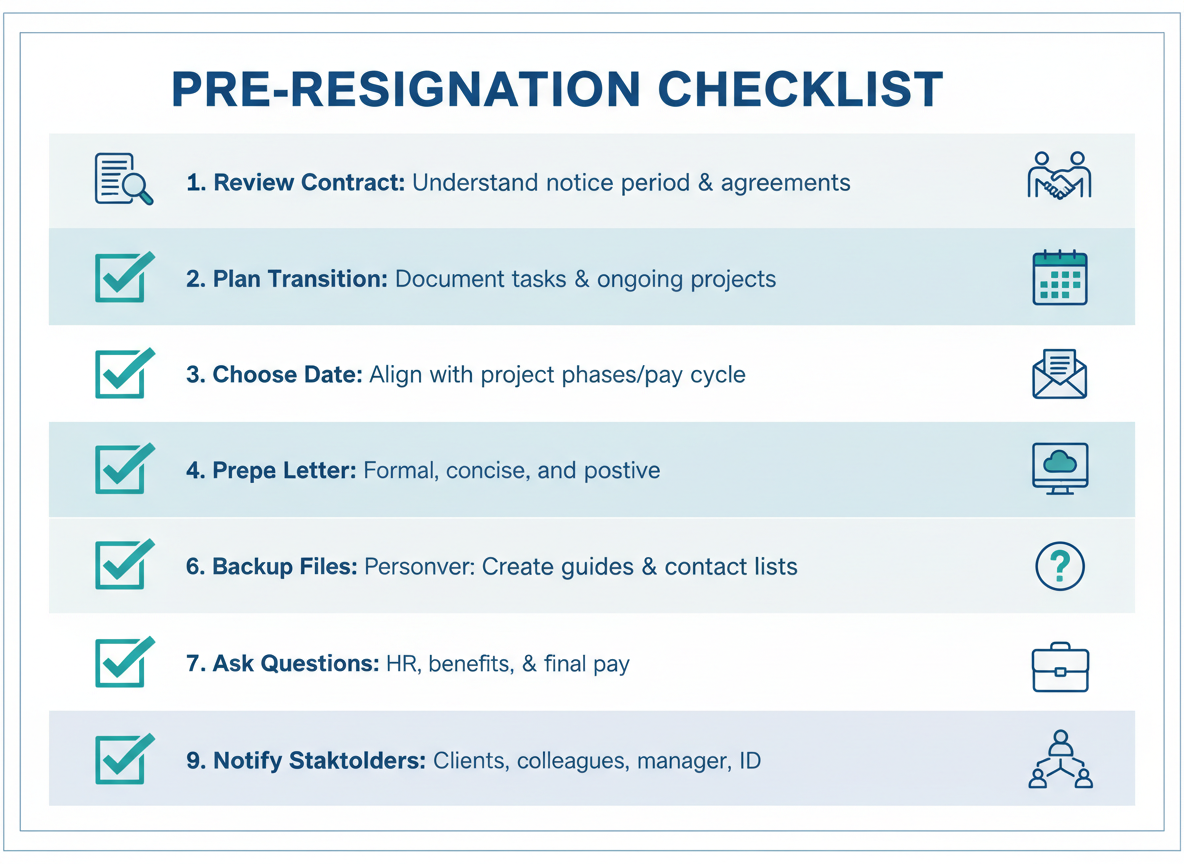
Here’s what you need to lock down first:
Secure your next move—whether that’s a signed offer letter or at least six months of living expenses. You don’t want desperation forcing you back.
Pull out your employment contract and read the fine print. Notice periods, non-compete clauses, and unvested benefits can surprise you.
Quietly document your wins. Save work samples to your personal drive (only what’s legally yours, obviously). Update your portfolio while everything’s fresh.
Grab contact info from colleagues you trust. Once you’re gone, accessing that company directory gets awkward fast.
Research your company’s resignation protocol. Some organizations require written notice to HR first, others want your manager looped in immediately.
Back up personal files from your work laptop and phone. IT can lock you out within hours of resigning.
Draft a transition plan. Who’ll handle your projects? Where are your files located? This isn’t just professional courtesy—it protects your reputation.
Practice answering the inevitable questions: “Why are you leaving?” and “What made you decide now?” Stay diplomatic.
Download a complete pre-resignation checklist to make sure you’ve covered every base before you make your move. Smart preparation means you’ll resign with confidence, not regret.
Frequently Asked Questions (FAQ)
How much does a free resignation letter generator cost?
Nothing. Free generators are completely free to use, though some offer premium features for a fee. You can create unlimited resignation letters without paying a dime.
Are free resignation letter generators legally valid?
Yes, absolutely. A resignation letter’s legal validity comes from its content and your signature, not how it’s created. Generators simply help you format your resignation professionally.
Should I email my resignation letter or print it?
Both work, but check your company policy first. Most employers accept emailed resignations, which create a timestamped record. If you email it, follow up with a printed copy for HR’s files.
Can I use a generator for immediate resignation?
Definitely. Most generators include templates for immediate resignation. Just specify your last day is today and skip the notice period. Be aware this might burn bridges, though.
How formal should my resignation letter be?
Keep it professional but not stuffy. You’re not writing to royalty. A polite, straightforward tone works best—even if you’re leaving a toxic situation.
What if my employer reacts badly to my resignation?
Stay calm and professional regardless of their reaction. You’ve already made your decision. Document everything, and if things get uncomfortable, you can leave immediately in most at-will employment situations.
Do I need to explain why I’m leaving in my resignation letter?
Nope. A simple “pursuing other opportunities” works fine. You’re not obligated to share details, especially if they’re negative. Save the real talk for your exit interview if you choose to participate.
Can I retract my resignation after submitting it?
Sometimes, but there’s no guarantee your employer will accept it. If you have immediate regrets, talk to your manager ASAP. They might work with you, but they’re also free to accept your original resignation.
How do I resign if I don’t have another job lined up?
The same way—professionally and courteously. You might want to save more money first or extend your notice period slightly. Just don’t mention you’re jobless in the letter itself.
What’s the difference between resignation and termination?
Resignation means you’re choosing to leave voluntarily. Termination means your employer is ending your employment (fired or laid off). This distinction matters for unemployment benefits and future job applications.

I am a full-time online marketer, for over a decade now. Helped over 100,000+ people & generated well over $12M in online sales.