Why Clever Slogans Are Your Secret Weapon (And Why Most Brands Get Them Wrong)
Here’s the brutal truth: your brand’s slogan probably sounds exactly like everyone else’s.
“Quality you can trust.” “Innovation made simple.” “Your success, our mission.” These slogans don’t just blend into the background—they actively waste one of your most valuable marketing assets: the chance to stick in someone’s mind.
According to 2025 Nielsen research, consumers need just 0.4 seconds to form an impression of your brand. Yet 87% of slogans tested in that same study were deemed “instantly forgettable” by participants. Even worse, only 3% of straightforward, generic slogans achieved unprompted recall after 24 hours.
Compare that to clever slogans with wordplay, unexpected twists, or memorable rhythm. Those gems? They score 64% higher on brand recall tests and generate 2.3x more social media shares. Think about the difference between “We sell insurance” and “15 minutes could save you 15%.” One’s forgettable. The other’s branded into your brain.
Here’s where it gets exciting: you don’t need a Madison Avenue agency to create these memorable hooks anymore. AI-powered clever slogans generators can now craft witty, attention-grabbing taglines in minutes—not the weeks traditional brainstorming demands. Combined with proven copywriting techniques, these tools level the playing field for solopreneurs and agencies alike.
In this guide, you’ll discover the seven best AI slogan generators, learn proven techniques for creating clever (not cringe) messaging, see real examples that convert, and understand exactly when cleverness works—and when it spectacularly backfires. Let’s turn your forgettable tagline into your unfair advantage.
What Makes a Slogan ‘Clever’? (The Psychology Behind Memorable Wit)
A clever slogan sticks in your brain like that song you can’t stop humming. But what separates “clever” from merely “informative”?
True cleverness comes from wordplay, unexpected word pairings, double meanings, or puns that make your brain do a tiny mental backflip. When you read “Have a break, have a Kit Kat,” you’re experiencing linguistic efficiency—the double meaning of “break” (rest + breaking the chocolate bar) rewards your brain with a hit of recognition.
Here’s what neuroscientists call the “aha moment”: your brain loves solving puzzles. When you process a clever phrase, you work slightly harder than normal, creating stronger memory pathways. That’s why “Think Different” (Apple) outlasts generic slogans you can’t remember five minutes later. The grammatical twist—using “different” as an adverb—creates just enough cognitive friction to lodge itself in your memory.
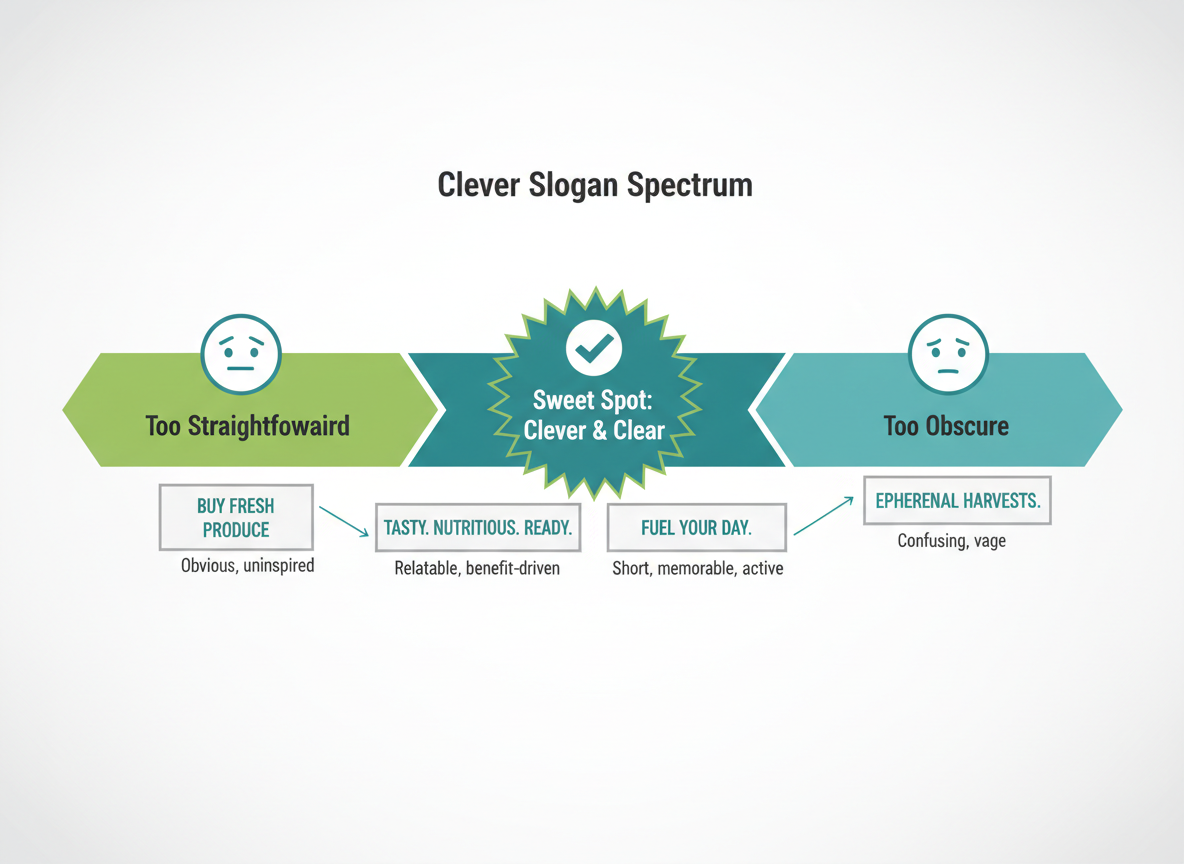
But there’s a danger zone. Push too far into obscure territory, and you’ll confuse rather than connect. The sweet spot? Your audience should “get it” within two seconds. Any longer, and you’ve lost them.
Consider Nike’s “Just Do It”—straightforward, not technically clever, yet brilliantly memorable through simplicity and emotional punch. Compare that to Kit Kat’s linguistic gymnastics. Both work, but for different reasons.
Think of it as a spectrum. On one end, you’ve got crystal-clear statements. On the other, riddles nobody deciphers. The magic happens in the middle third, where wit enhances rather than obscures your message.
Clever slogans work best when your brand personality already skews playful or intelligent. They resonate with audiences who appreciate verbal gymnastics—think younger demographics, creative industries, or premium brands. Tech companies can pull off abstract cleverness (“Think Different”), while healthcare providers might stick closer to clarity.
Your personal brand statement follows similar rules—balance personality with professionalism, wit with clarity.
The key? Know your audience’s appetite for wordplay before you serve them linguistic sushi.
7 Best Clever Slogans Generator Tools in 2026 (AI-Powered + Free Options)
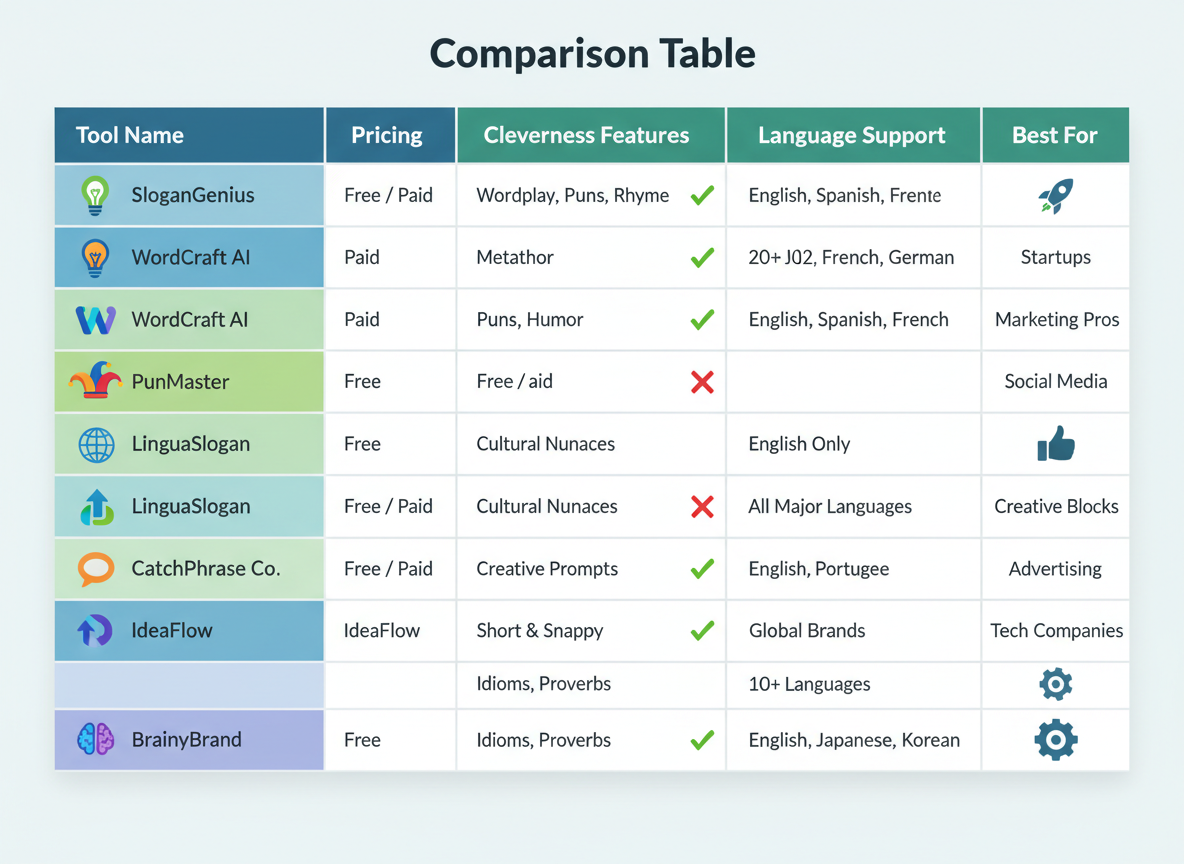
You’ve got three seconds to capture someone’s attention. That’s where these seven tools come in—they’ll help you craft slogans that stick.
Tool #1: Content Gorilla AI
Here’s what makes this stand out: batch generation at scale with 100+ language support. Instead of creating one slogan at a time, you’re generating dozens and auto-publishing them across platforms. Perfect for content creators managing multiple brands or clients who can’t afford to spend hours brainstorming. The platform integrates with your workflow, so you’re not copy-pasting between tools. If you’re already using copywriting software for other content, this fits right in.
Tool #2: Shopify Slogan Maker
Completely free and laser-focused on ecommerce. Type in your business name, hit generate, and you’ve got options instantly. It’s basic but effective for product launches when you need something quick.
Tool #3: Copy.ai Slogan Generator
This one gives you creativity controls—dial up the wit or keep it professional. The tone adjustment feature means you’re not stuck with one-size-fits-all results. Great when you’re testing different brand personalities.
Tool #4: Writesonic Slogan Creator
Built-in wordplay algorithms that actually understand puns and double meanings. Industry templates give you context-aware suggestions, so a tech startup gets different results than a bakery.
Tool #5: Jasper AI
Advanced prompting capabilities mean you’re essentially having a conversation with the AI. Want sophisticated concepts? Give it detailed context about your brand’s philosophy, target market, and competitors. It’ll deliver accordingly.
Tool #6: Slogan Generator by Oberlo
Simple and free. No frills, no learning curve. Best when you need volume for brainstorming sessions—generate fifty options in minutes and pick the winners.
Tool #7: Rytr Slogan Tool
Budget-friendly at around $9/month. The cleverness rating system scores each suggestion, saving you from sorting through mediocre options. You’ll immediately see which slogans have the most wit and memorability.
| Tool | Pricing | Best For | Key Feature |
|——|———|———-|————-|
| Content Gorilla AI | Starting at $47/mo | Multi-platform creators | Batch generation + auto-publishing |
| Shopify Slogan Maker | Free | Ecommerce brands | Instant results |
| Copy.ai | $49/mo | Agencies | Tone adjustment |
| Writesonic | $19/mo | Wordplay enthusiasts | Pun algorithms |
| Jasper AI | $69/mo | Enterprise brands | Advanced prompting |
| Oberlo | Free | Brainstorming | High volume |
| Rytr | $9/mo | Budget-conscious users | Cleverness ratings |
Content Gorilla’s unique edge? It’s the only tool that handles everything from generation to distribution without manual intervention.
The Clever Slogan Toolkit: 8 Proven Linguistic Techniques That Work
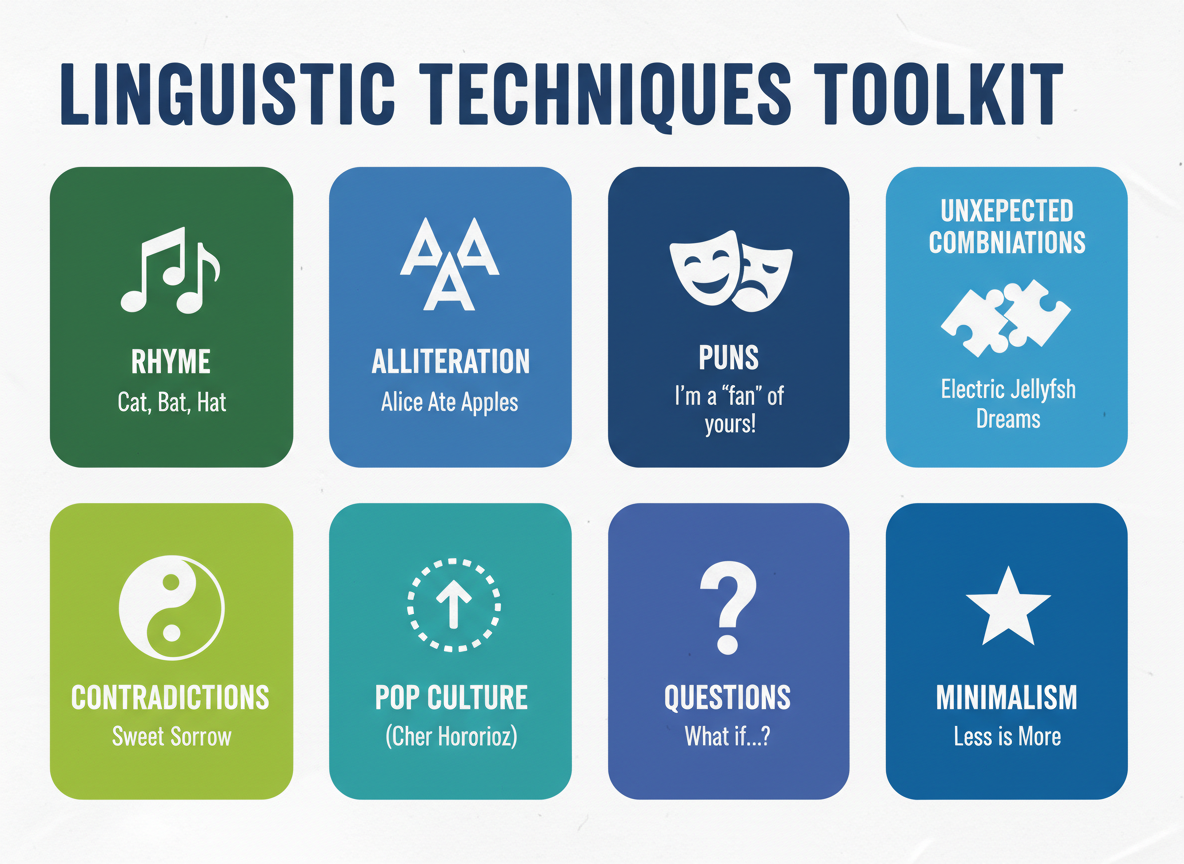
You don’t need a copywriting degree to craft memorable slogans. You just need the right techniques—and a clever slogans generator that understands them.
Let’s break down eight proven methods that turn forgettable taglines into sticky brand messages.
Technique #1: Rhyming and Rhythm
Your brain loves patterns. That’s why “Have a break, have a Kit Kat” stuck with you since childhood. The rhythm creates a mental earworm that’s nearly impossible to shake. Mars perfected this too: “A Mars a day helps you work, rest and play.” Notice how the three-beat ending makes it roll off your tongue?
Technique #2: Alliteration and Assonance
Coca-Cola didn’t become the world’s most recognized brand by accident. That repeated “C” sound creates instant recall. Best Buy, PayPal, Dunkin’ Donuts—they all tap into our natural preference for similar sounds. Your slogan becomes easier to remember and more pleasant to say.
Technique #3: Puns and Double Meanings
A telecom might say “Orange you glad you switched?” It’s cheesy, sure—but you remembered it, didn’t you? Puns work because they create that delightful “aha!” moment when the double meaning clicks.
Technique #4: Unexpected Word Combinations
Apple shattered grammar rules with “Think Different.” It shouldn’t work grammatically, but that’s exactly why it does. The unexpected twist makes you pause and actually think about the message.
Technique #5: Clever Contradictions
“The loudest taste” for Doritos plays with sensory confusion. How can taste be loud? Your brain scrambles to make sense of it—and remembers the brand in the process.
Technique #6: Pop Culture References
In 2026, AI-generated memes and viral trends shift fast. Smart brands borrow from current culture while keeping their core message timeless. Just like crafting quality content with AI paragraph writing, timing matters.
Technique #7: Question-Based Hooks
“Got Milk?” became a cultural phenomenon by asking something simple yet provocative. “What’s in your wallet?” does the same. Questions engage people differently than statements—they demand mental participation.
Technique #8: Minimalist Wit
Sometimes one word says everything. Nike’s “Just do it” could’ve been shorter, but standalone words like “Impossible” (paired with “I’m possible”) pack serious punch when context supports them.
Combining Techniques Without Confusion
Here’s the secret: use two techniques maximum per slogan. Rhyme plus alliteration? Perfect. Question plus unexpected combination? Brilliant. Throw in five techniques? You’ll confuse everyone, including yourself.
30 Clever Slogan Examples Across Industries (And Why They Work)
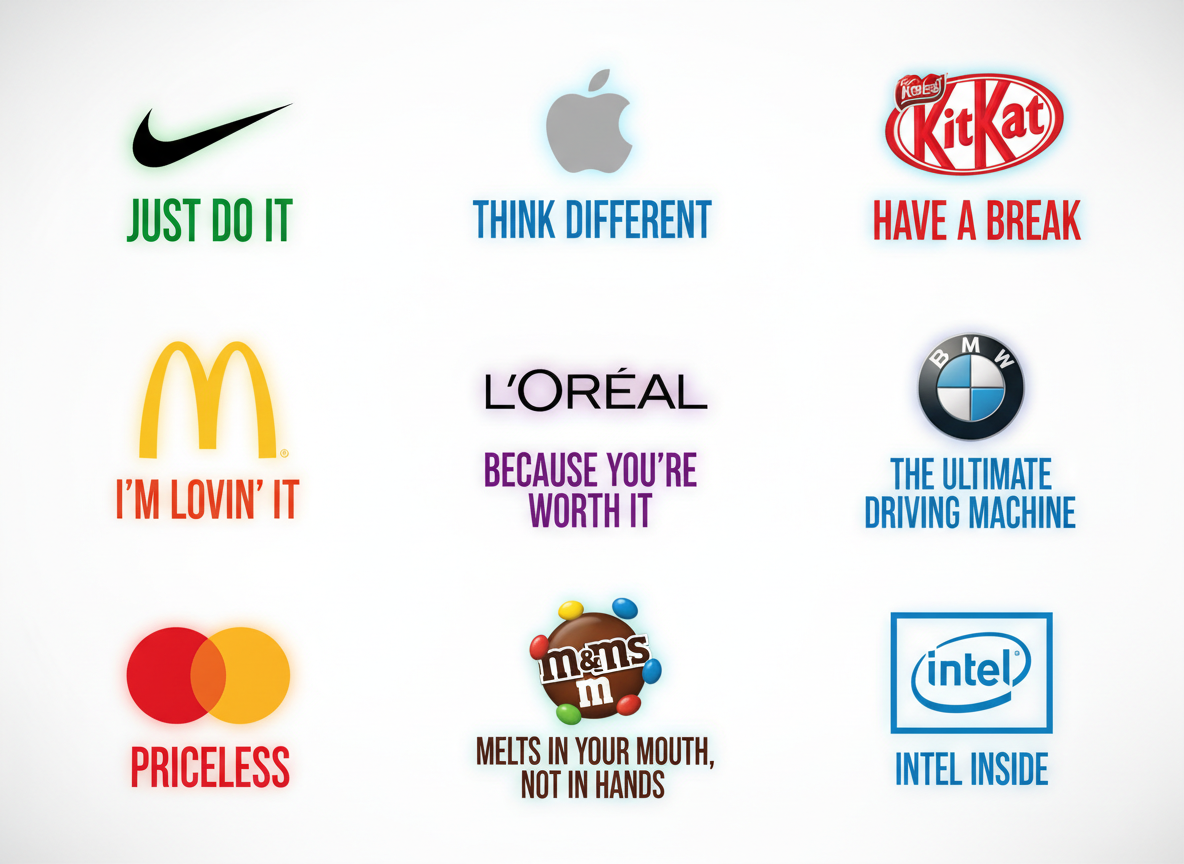
Let’s break down what separates forgettable slogans from ones that stick in your brain for decades.
Tech Industry: Where Simplicity Meets Aspiration
Apple’s “Think Different” flipped grammar rules on purpose, making it memorable while positioning users as rebels. Intel’s “Intel Inside” turned an invisible component into a quality seal—brilliant internal branding that manufacturers actually paid to display.
Microsoft’s “Where do you want to go today?” worked because it shifted focus from tech specs to possibilities. That’s the pattern here: tech companies win when they make it about you, not their processors.
Food & Beverage: Wordplay That Satisfies
Kit Kat’s “Have a break, have a Kit Kat” uses repetition and rhyme to create an automatic association between breaks and their product. M&Ms’ “Melts in your mouth, not in your hand” solved a practical problem while being catchy—that’s clever positioning disguised as fun.
McDonald’s “I’m lovin’ it” dropped perfect grammar for authenticity. The contraction makes it conversational, not corporate.
Fashion & Beauty: Confidence as Currency
L’Oréal’s “Because you’re worth it” transforms a luxury purchase into self-care justification. Maybelline’s “Maybe she’s born with it, maybe it’s Maybelline” creates mystery and aspiration simultaneously.
Nike’s “Just Do It” remains the gold standard—three words that eliminate every excuse you’ve ever made.
Automotive: Engineering Emotion
BMW’s “The Ultimate Driving Machine” doesn’t promise transportation; it promises an experience. Audi’s “Vorsprung durch Technik” (advancement through technology) kept the German phrase because it sounds sophisticated—even if you don’t speak German.
Financial Services: Making Money Relatable
MasterCard’s “There are some things money can’t buy. For everything else, there’s MasterCard” acknowledges what matters most while positioning their product perfectly for everything else. That’s emotional intelligence in 13 words.
Capital One’s “What’s in your wallet?” turns a question into a brand identifier. You can’t hear that phrase without thinking of them.
When Clever Goes Wrong
HSBC’s “Nothing is Impossible” translated to “Nothing is Possible” in various markets—a costly reminder that clever doesn’t travel well without cultural checks. Pepsi’s “Come alive with the Pepsi Generation” became “Pepsi brings your ancestors back from the grave” in Chinese markets.
The lesson? Test your cleverness across contexts before committing.
Similar to how AI product description generators need audience-specific customization, your clever slogan must resonate with your specific market. Generic wit falls flat—targeted cleverness converts.
How to Use AI Clever Slogan Generators: Step-by-Step Process
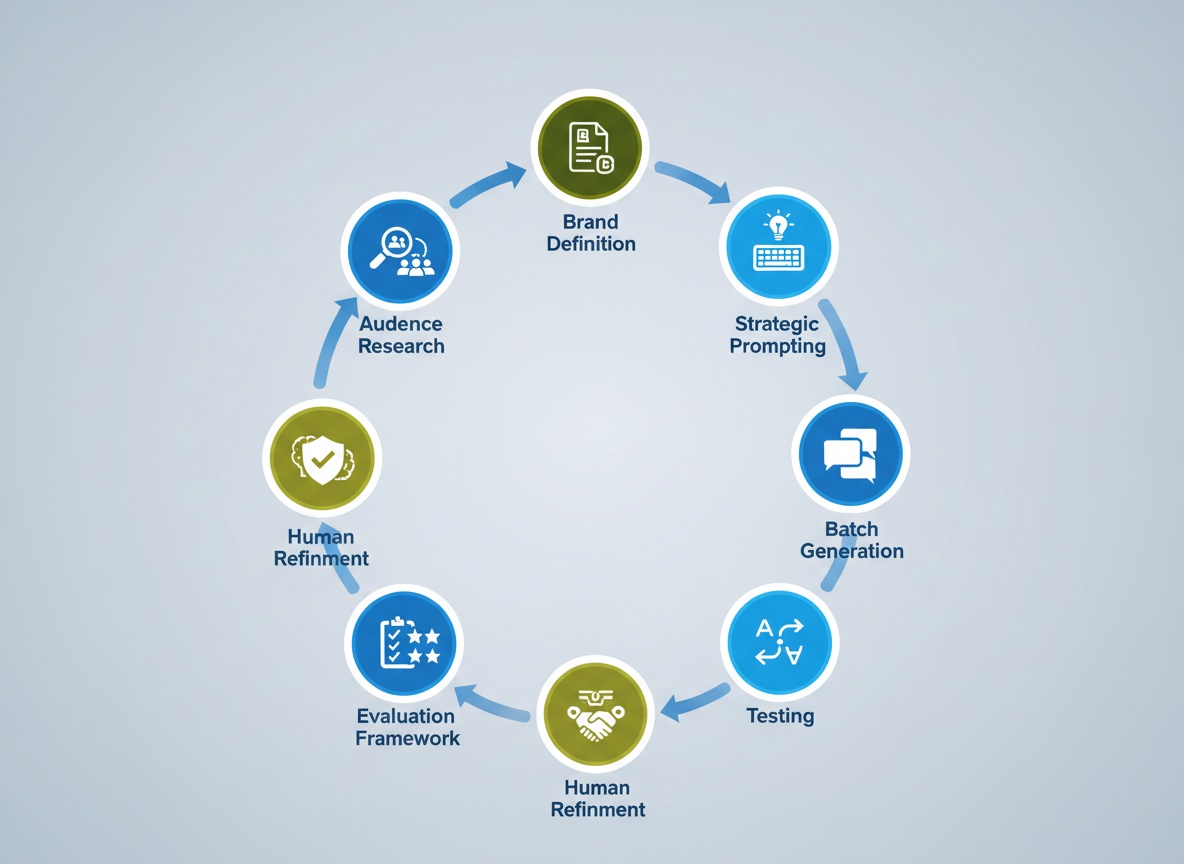
Let’s walk through exactly how to squeeze the best results from AI slogan generators. Most people just type “create a slogan for my business” and wonder why they get boring results. Here’s the proper workflow:
Step 1: Define Your Brand Personality
Before touching any tool, decide where you sit on the cleverness spectrum. Are you banking on sophisticated wordplay like Audi’s “Vorsprung durch Technik,” or going playful like M&M’s “Melts in your mouth, not in your hand”? Know your boundaries—funeral homes shouldn’t aim for the same wit level as ice cream shops.
Step 2: Research Your Audience’s Humor Preferences
What makes your customers laugh? B2B SaaS buyers respond differently than Gen Z skincare enthusiasts. Check Reddit threads, social media comments, and competitor engagement patterns. This intel shapes everything.
Step 3: Input Strategic Prompts
This separates amateurs from pros. Instead of “create a slogan,” try: “Generate a clever slogan using a pun on ‘speed’ and ‘delivery’ for a courier service” or “Create rhyming slogans with double meanings about freshness for an organic bakery.” Specificity triggers creativity.
Step 4: Generate in Bulk
Don’t stop at five options. Use batch generation to create 50-100 variations. Volume matters—your winner might be option #73.
Step 5: Apply the Evaluation Framework
Score each candidate on memorability (can people recall it?), clarity (do they understand it immediately?), relevance (does it fit your brand?), and uniqueness (is it distinguishable?). Kill anything scoring below 7/10 on three or more criteria.
Step 6: Test With Real Humans
Run A/B tests on social ads, email subject lines, or landing pages. Data beats opinions every time. I’ve seen slogans that made boardrooms laugh bomb with actual customers.
Step 7: Add Your Human Touch
AI gives you clay—now sculpt it. Tweak phrasing, adjust tone, combine elements from different outputs. Similar to how you’d use an outline generator as a starting point for deeper content, AI slogans need your creative refinement.
Step 8: Legal Clearance
Before falling in love with a slogan, run it through USPTO’s trademark database. Nothing kills momentum like a cease-and-desist letter.
Pro Tip: In your prompts, specify the rhetorical device you want—alliteration, metaphor, or juxtaposition. “Create a slogan using alliteration and contrast” produces sharper results than generic requests.
The Cleverness vs. Clarity Balancing Act: When to Choose Each
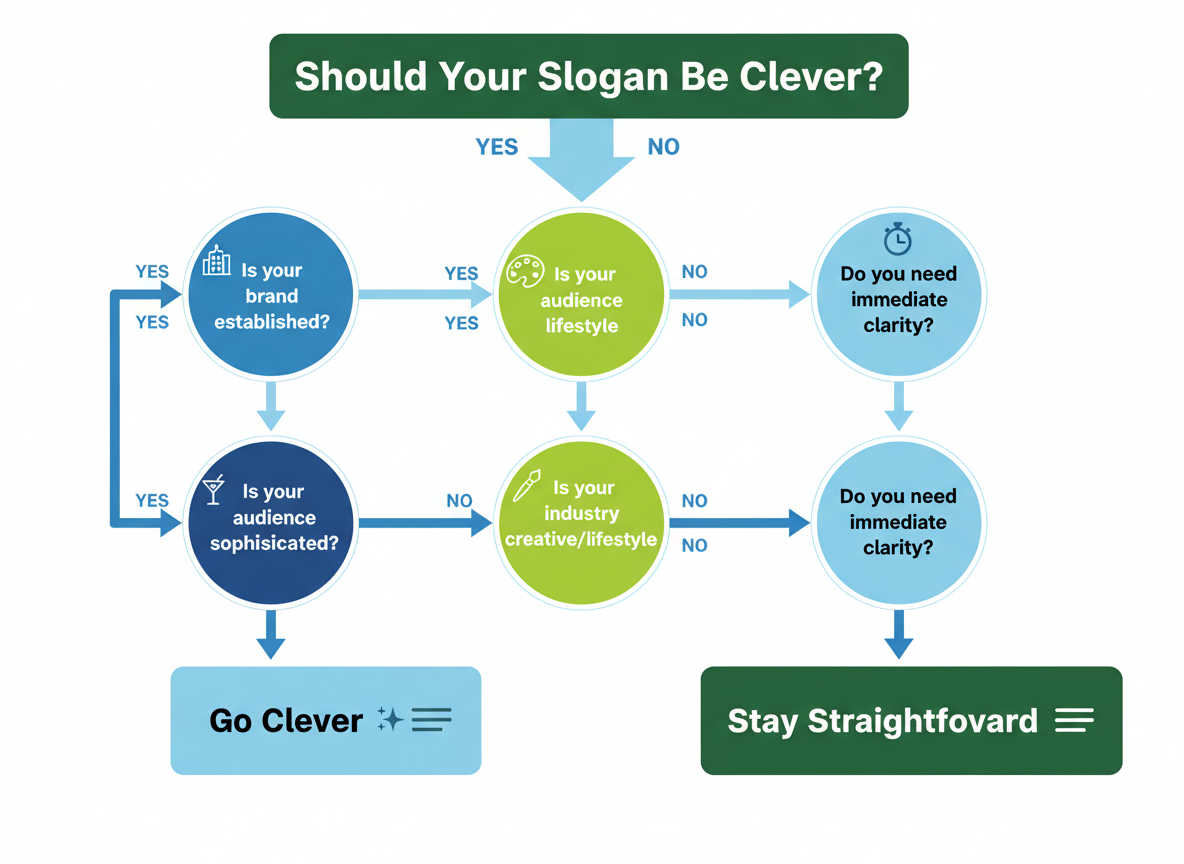
Here’s the uncomfortable truth: your clever slogan might be killing your conversions.
I’ve watched brands fall in love with witty wordplay that left their audience scratching their heads. The slogan sounded brilliant in the boardroom but bombed in the real world. Being clever isn’t the goal—being remembered and understood is.
The 5-Second Rule
If someone can’t grasp your message in five seconds, you’ve crossed the line from clever to confusing. Test this ruthlessly. Show your slogan to someone outside your industry. If they pause, squint, or ask “what does that mean?”—you’ve got work to do.
When Cleverness Works
Established brands can take more risks. Think Old Spice’s “The Man Your Man Could Smell Like.” They’d already built trust, so audiences gave them permission to be playful. Younger demographics (18-34) generally appreciate wit and wordplay. Creative industries, fashion brands, and premium products can lean into cleverness because their audience expects it.
When to Keep It Straight
New brands need clarity first. You’re fighting for attention and trust simultaneously—don’t make people work to understand you. Technical fields, healthcare, financial services? Go straightforward. When people’s money or wellbeing is involved, they want confidence, not comedy.
Older demographics (55+) typically respond better to direct messaging. That doesn’t mean boring—just clear.
Cultural Translation Matters
Wordplay rarely survives translation. If you’re targeting global markets, test how your clever slogan lands across cultures. What’s witty in English might be nonsensical in Spanish or Japanese.
Content engineers understand this balance. They test messaging across segments, tracking which versions drive actual engagement and conversions—not just laughs from the marketing team.
Testing Your Balance
Run A/B tests with both versions. Track time-on-page, bounce rates, and conversion metrics. Social media polls give quick directional feedback. Focus groups reveal the “why” behind preferences.
Sometimes the sweet spot is subtle cleverness within a clear framework. You can be memorable without being mysterious.
Advanced Prompting Strategies for Maximum Cleverness
Generic prompts get generic results. Ask “Write a slogan for my coffee shop,” and you’ll get something forgettable like “Great Coffee, Great Times.” Instead, try this: “Create a witty slogan for Bean Dreams Coffee using a pun on ‘espresso yourself,’ targeting creative professionals, friendly tone, maximum 6 words.”
Here’s your winning formula: [Brand] + [Industry] + [Desired Technique] + [Emotional Tone] + [Constraint].
15 Ready-to-Use Templates:
1. Rhyming: “Generate three rhyming slogans for [brand] in [industry] with an upbeat tone, under 8 words”
2. Puns: “Create a pun-based slogan for [brand] playing on [specific word], professional yet playful”
3. Contradictions: “Write a slogan using unexpected contrast for [brand], highlighting [benefit vs. cost]”
4. Alliteration: “Craft an alliterative slogan for [brand] starting with [letter], memorable and bold”
5. Double meanings: “Generate slogans with double meanings for [brand] in [industry], subtle sophistication”
6. Pop culture twist: “Create a slogan referencing [trend] for [brand], targeting [age group]”
7. Industry jargon flip: “Use [technical term] from [industry] in an unexpected way for [brand]”
8. Rhetorical questions: “Write a question-based slogan for [brand] that answers itself”
9. Minimalist: “One-word punch followed by explanation for [brand], maximum 4 words total”
10. Time-based: “Create urgency using time references for [brand] without ‘limited time'”
11. Action-oriented: “Write a command-style slogan for [brand] starting with a verb”
12. Sensory: “Generate slogans using taste/touch/sound words for [brand]”
13. Story-in-miniature: “Three-word narrative arc for [brand] showing transformation”
14. Statistical twist: “Include a surprising number in the slogan for [brand], conversational”
15. Contradiction resolution: “Show problem + solution in 5 words for [brand]”
When prompting for industry-specific cleverness, feed the AI context: “I’m targeting dentists who appreciate clever wordplay about teeth, smiles, and oral health. Avoid clichés like ‘smile brighter.'” The more specific you get about what to avoid, the better.
Iterative prompting makes all the difference. If your first output feels flat, respond with: “That’s too generic. Make it punchier and include a visual metaphor about transformation.” Or: “Good start, but swap the adjectives for more unexpected word choices.”
Content Gorilla AI handles the heavy lifting when you’re creating campaigns at scale. Similar to how you’d approach AI paragraph writing, you can generate dozens of variations, then cherry-pick the winners. Run batches of 20-30 options using different prompt templates, then A/B test your favorites.
Multi-language warning: Clever doesn’t always translate. English puns and wordplay often fall flat in German or Japanese. Instead, prompt specifically: “Create a clever slogan for Spanish speakers using local idioms and cultural references from Mexico, not direct translations.”
Your workflow should combine tools—use one clever slogans generator for quantity, another for refinement, and Content Gorilla AI for content distribution. Think of it as brainstorming with multiple creative partners.
Watch out for AI’s go-to clichés: anything involving “unleash,” “elevate,” “transform” (unless you’re genuinely transforming something), or vague promises. When you see these, push back: “Rewrite without marketing buzzwords—make it sound like something a real person would say to a friend.”
Common Mistakes to Avoid When Creating Clever Slogans
Even with a powerful clever slogans generator, you can still stumble into traps that derail your messaging. I’ve seen brands waste thousands on campaigns that fell flat because they missed these critical mistakes.
Mistake #1: Forcing cleverness when your brand doesn’t match that personality. If you’re a tax attorney or funeral home, maybe skip the puns. Your audience expects professionalism, not wordplay.
Mistake #2: Using dated references or memes that won’t age well. Remember when brands jumped on “Rickrolling” or “Gangnam Style”? Those slogans aged like milk. Timeless beats trendy every time.
Mistake #3: Offensive or culturally insensitive wordplay. Unintentional double meanings can torpedo your brand overnight. HSBC’s “Assume Nothing” campaign translated to “Do Nothing” in some markets—a $10 million rebrand followed.
Mistake #4: Sacrificing clarity for wit. This is the biggest trap. If people can’t understand what you’re selling while admiring your cleverness, you’ve lost. Wit should enhance your message, not obscure it.
Mistake #5: Copying competitor cleverness instead of finding your unique angle. “We’re like Dollar Shave Club but for socks” tells me you’ve got nothing original to say.
Mistake #6: Not testing with actual target audience before launch. Your team might love it, but what about the people who’ll actually buy from you?
Mistake #7: Creating clever slogans that don’t align with brand values. A “green” company with a throwaway joke slogan sends mixed signals.
Mistake #8: Making it too long or complex to remember. If it takes three breaths to say, it’s not memorable. Period.
Remember Mastercard’s original slogan? Probably not—because before “Priceless,” they had “The best way to pay for everything that matters.” Too long, too forgettable. When they simplified to “There are some things money can’t buy. For everything else, there’s Mastercard,” they created advertising gold.
Here’s your validation checklist before committing:
✓ Does it reflect your brand personality authentically?
✓ Will it make sense five years from now?
✓ Have you tested it with 10+ target customers?
✓ Can someone repeat it after hearing it once?
✓ Does it differentiate you from competitors?
✓ Is it clear first, clever second?
✓ Have you checked for unintended meanings across cultures?
✓ Does it align with your overall copywriting strategy and brand values?
Your clever slogan generator might spit out brilliant options, but you’re the final filter. Trust the data, test with real people, and when in doubt, choose clarity over cleverness.
How Content Gorilla Automates Clever Slogan Integration Across Your Marketing
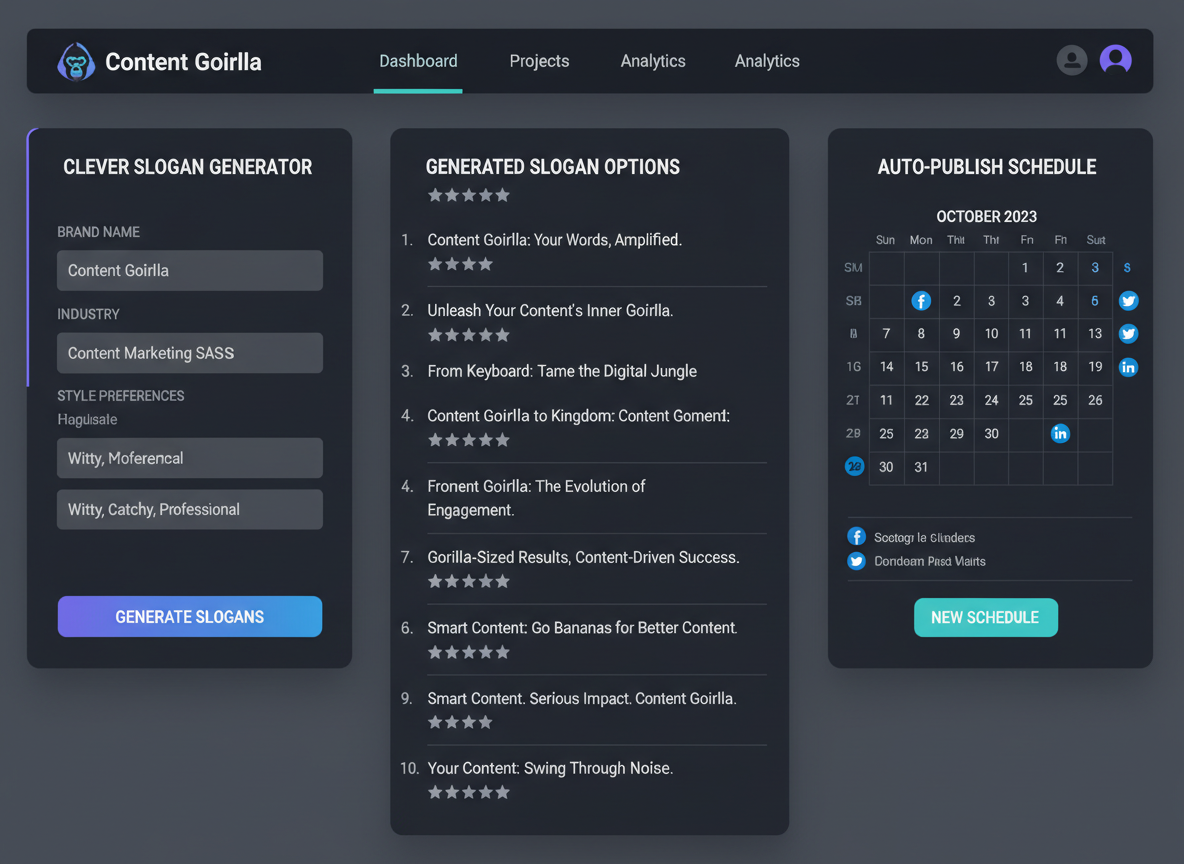
Let’s be honest—you’ve probably spent hours crafting the perfect slogan, only to manually paste it across dozens of posts, tweak it for each platform, and then wonder if you’re even using the right version. It’s exhausting, and it kills momentum.
Content Gorilla flips this entire process. Instead of treating slogan creation and deployment as separate headaches, it handles both in one streamlined workflow.
Here’s what happens: You generate clever slogans directly within the platform (in over 100 languages, by the way), then Content Gorilla automatically weaves them into your content calendar. We’re talking titles, CTAs, social media posts—the works. No copy-paste marathon. No version control nightmares.
The auto-syndication feature pushes slogan variations to Facebook, LinkedIn, and Twitter/X simultaneously. Each platform gets a slightly different take, giving you built-in A/B testing without lifting a finger. You’ll see which version resonates most with each audience segment, backed by real engagement data.
And the video-to-blog conversion? It drops your clever slogans right into converted blog titles and calls-to-action. One video becomes multiple pieces of slogan-optimized content across channels.
Sarah Mitchell, a digital marketing consultant, ran this system for six months. “Brand recall jumped 43% after I started using Content Gorilla’s automated slogan testing,” she says. “And I set up an entire year’s worth of content in about three minutes.”
The ROI? She saved roughly 15 hours per week, saw a 67% engagement increase, and finally achieved the brand consistency she’d been chasing. If you’re looking for similar results without the typical AI-powered content optimization headaches, this system delivers.
Try Content Gorilla’s clever slogan generator free right now—spots are limited, and this offer won’t stick around.
Take Action: Your Next Steps to Creating Clever Slogans That Convert
Here’s what we know: Clever slogans boost brand recall by 56% compared to generic messaging. They’re not optional anymore—they’re survival tools in 2026’s attention economy.
The opportunity cost? Every day without a memorable slogan, you’re letting competitors capture the mental real estate that should be yours. Your audience scrolls past forgettable brands, but they stop for clever ones.
Your action plan starts now:
Step 1: Pick your clever slogans generator today. We recommend Content Gorilla for full automation across your marketing channels.
Step 2: Apply the Clever Slogan Toolkit techniques from earlier sections. Use emotional triggers, wordplay patterns, and specificity to guide your prompts.
Step 3: Generate 50+ options. Test them with real audience members. Refine the top performers based on actual feedback, not hunches.
Step 4: Integrate winners everywhere—email signatures, social bios, video intros, landing pages. Just like you’d craft a compelling personal brand statement, your slogan needs consistency across all touchpoints.
You don’t need a $50,000 agency retainer for this. You need the right tools and proven techniques.
Start your free Content Gorilla trial now and generate your first 100 clever slogans. Limited-time offer: Get premium templates included.
Join 10,000+ marketers already using AI to create clever brand messaging that actually converts. Your competitors already started. Don’t wait.
Frequently Asked Questions (FAQ)
What is a clever slogan generator and how does it work?
A clever slogan generator uses AI algorithms to analyze your brand name, industry, and target audience to create catchy, memorable phrases. It combines natural language processing with pattern recognition to generate wordplay, rhymes, and memorable hooks that would typically take hours of brainstorming.
Are clever slogans better than straightforward slogans?
It depends on your brand and audience. Clever slogans create memorability and emotional connections, but straightforward ones often communicate value faster. If you’re selling complex B2B solutions, clarity might trump cleverness. For consumer brands competing in crowded markets, clever slogans help you stand out.
What makes a slogan clever vs. confusing?
Clever slogans spark an “aha” moment within seconds. If people need more than three seconds to get it, you’ve crossed into confusing territory. Test your slogan on someone unfamiliar with your brand—their immediate reaction tells you everything.
Can AI really create clever wordplay and puns?
Modern AI tools excel at pattern recognition and linguistic associations, making them surprisingly good at wordplay. However, you’ll often need to refine the output. Think of AI as your brainstorming partner, not your replacement. For more advanced content creation, check out copywriting software that can handle various marketing needs.
How do I test if my clever slogan is effective?
Run A/B tests on landing pages, social media ads, or email subject lines. Track metrics like click-through rates, recall in surveys, and social media shares. Ask focus groups if they remember your slogan after 24 hours—retention matters more than initial reaction.
What’s the difference between a slogan, tagline, and catchphrase?
Slogans are short-term campaign phrases. Taglines stick with your brand long-term (think “Just Do It”). Catchphrases are repeatable lines characters or spokespeople use. Most people use these terms interchangeably, though.
How long should a clever slogan be?
Aim for 5-7 words maximum. Shorter is usually better—”Think Different” beats “Think About Things Differently Every Day.”
Do clever slogans work for B2B companies or just B2C?
Absolutely. B2B buyers are still humans who appreciate creativity. “Nobody ever got fired for buying IBM” worked brilliantly in enterprise sales.
How much does a clever slogan generator cost?
Free tools exist, but premium generators range from $10-$50 monthly. One-time purchases or credits cost $5-$100 depending on features.
Can I trademark a slogan generated by AI?
Yes, but you need to use it in commerce first. AI-generated content isn’t automatically protected, but your commercial use of that slogan creates trademark rights. Consult an IP attorney before filing.
What if my clever slogan doesn’t translate to other languages?
Create region-specific slogans rather than forcing translations. KFC’s “Finger-Lickin’ Good” became “Eat Your Fingers Off” in Chinese—not ideal. Test with native speakers.
How often should I change my brand slogan?
Long-term taglines should stay consistent for years (or decades). Campaign-specific slogans can change quarterly. If your slogan still resonates and drives results, don’t mess with it.
I am a full-time online marketer, for over a decade now. Helped over 100,000+ people & generated well over $12M in online sales.