
Why Your Personal Bio Matters More Than Ever in 2026
Here’s a sobering truth: 70% of hiring managers and clients check your online profiles before they’ll even consider working with you. That’s not happening next week or next month—it’s happening right now, while you’re reading this.
And here’s the kicker: you’ve got 3-5 seconds to make that first impression count.
Three seconds. That’s less time than it takes to reheat your coffee.
In those three seconds, your bio either opens doors or slams them shut. It’s the difference between landing that dream client and watching them scroll past to your competitor. Between building authority and blending into the background noise.
Yet there you sit, staring at that blinking cursor on a blank screen. Writing about yourself feels weird, doesn’t it? Too boastful, and you sound like an egomaniac. Too humble, and nobody knows what you actually do. Most people would rather have a root canal than write their own bio.
That’s exactly why we’ve compiled 57+ real examples of bio about yourself that actually work—complete with templates and platform-specific strategies you can customize in minutes, not hours.
Because here’s what’s changed: In an age where AI can write anything, your personal story matters more than ever. Automation can’t replicate your unique journey, your specific wins, or the real problems you’ve solved. Your bio isn’t just words anymore—it’s your competitive edge.
Ready to stop stalling and start converting? Let’s get you a bio that actually works.
What Makes a Personal Bio Effective? (The 6 Core Elements)
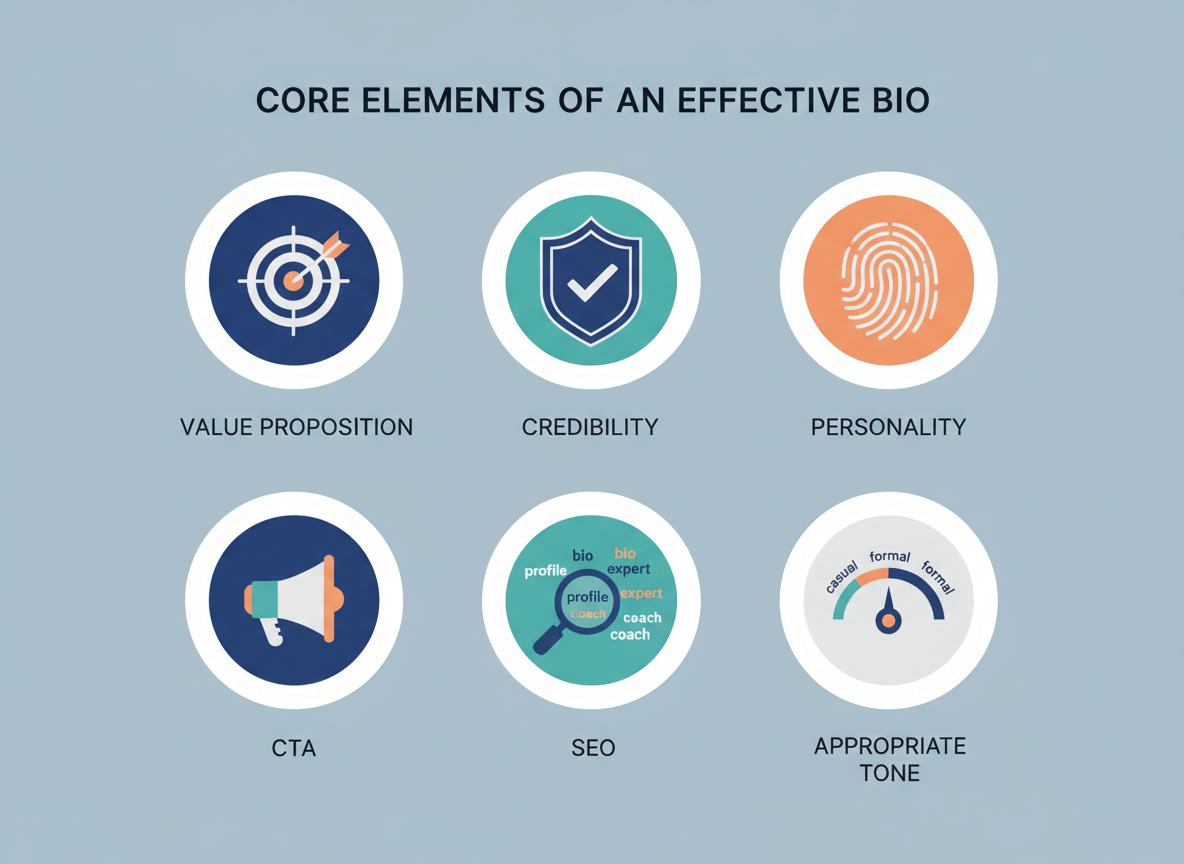
You’ve probably stared at that blinking cursor, wondering why writing about yourself feels harder than launching a product campaign. Here’s the thing: effective bios follow a formula. Master these six elements, and you’ll never second-guess your bio again.
Element 1: Clear Value Proposition
Tell people exactly what you do and who you help. “I’m a content strategist who helps SaaS companies turn boring blog posts into customer-generating machines” beats “passionate marketer and creative thinker” every time. Specificity sells.
Element 2: Credibility Markers
Your audience needs proof you can deliver. Drop your credentials, years of experience, notable clients, or measurable results. “Generated $2M in affiliate revenue” or “Featured in Forbes and Entrepreneur” gives readers a reason to trust you.
Element 3: Personality and Authenticity
This is where most bios die. Don’t just list accomplishments like a resume. Inject who you actually are. Maybe you’re a night owl who codes at 2 AM, or you started your business from a coffee shop in Bangkok. These details make you memorable.
Element 4: Strategic Call-to-Action
What should people do after reading your bio? Book a call? Download your guide? Follow you on LinkedIn? Don’t leave them hanging. One clear next step increases conversions by up to 371%, according to recent conversion studies.
Element 5: Keywords for Searchability
If you’re a conversion copywriter, say so. If you specialize in email automation for e-commerce brands, use those exact phrases. Search engines and platform algorithms reward specific terminology.
Element 6: Platform-Appropriate Tone
Your LinkedIn bio shouldn’t sound like your Instagram bio. LinkedIn wants professional authority. Instagram thrives on personality. Twitter demands punchy brevity. Adjust accordingly.
Your Bio Audit Checklist:
- ✓ Value proposition stated in first 10 words?
- ✓ At least one credibility marker included?
- ✓ Unique personality trait mentioned?
- ✓ Clear call-to-action present?
- ✓ Relevant keywords naturally integrated?
- ✓ Tone matches platform expectations?
First-Person vs. Third-Person: Which Should You Use?
Your bio’s perspective shapes how people perceive you, and choosing wrong can cost you opportunities.
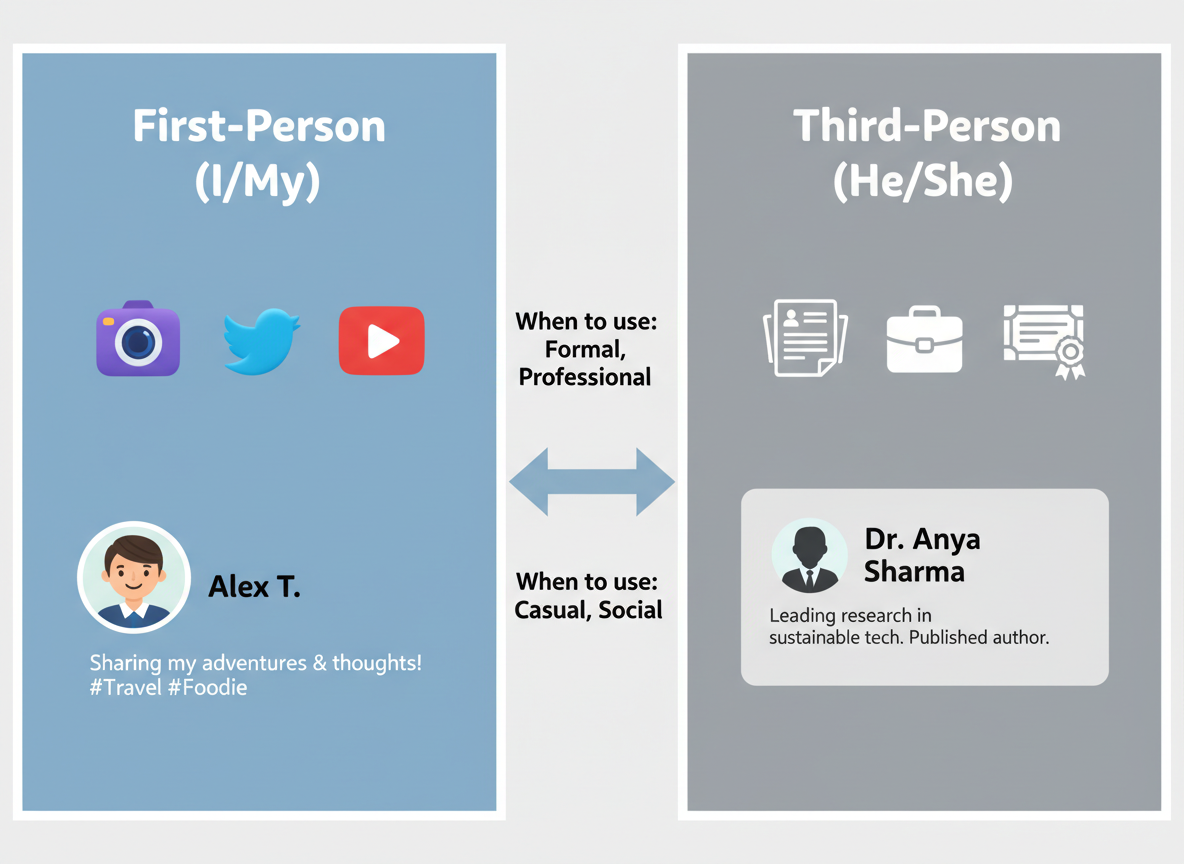
First-person (I/my) works best for:
- Personal websites and blogs
- Instagram, TikTok, and Twitter profiles
- Creative portfolios and artist statements
- LinkedIn summaries (where conversational tone feels natural)
- Newsletters and email signatures
First-person creates intimacy. You’re talking directly to your audience, building connection. “I help marketing teams triple their content output” feels warm and approachable.
Third-person (he/she/they) shines in:
- Speaker bios for conferences and events
- Author bios in books and articles
- Corporate websites and press releases
- Professional directories and awards submissions
- Company team pages
Third-person establishes authority. “Sarah has helped over 500 businesses scale their content marketing” sounds more credible than “I’ve helped…”
Here’s the psychology: first-person feels personal but can seem less authoritative. Third-person builds credibility but creates distance.
Converting between perspectives is simple. Change “I specialize in SEO” to “She specializes in SEO.” Replace “my clients” with “her clients.”
The exception? Some entrepreneurs use third-person on their homepage for authority, then switch to first-person in their blog. It’s not traditional, but if it serves your brand strategy, break the rules.
Bottom line: match your perspective to the platform’s expectations and your relationship with the reader.
Platform-Specific Bio Length Guide: From Twitter to LinkedIn
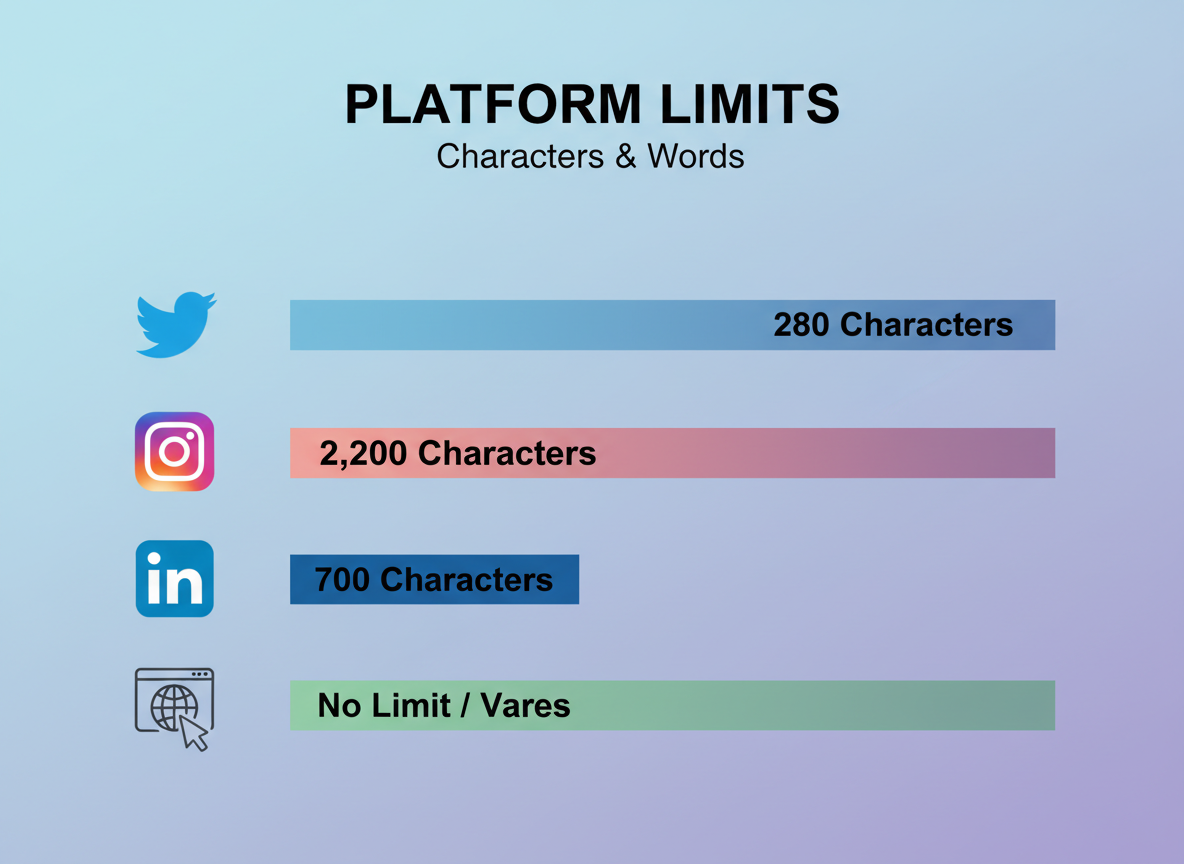
Here’s the reality: what works on LinkedIn will bomb on Twitter. Each platform has different character limits and audience expectations, so let’s break down exactly what you’re working with.
Twitter/X: 160 Characters
You’ve got less space than a text message. Focus on one clear message: who you are and what you do. Skip the fluff. “Content strategist helping SaaS companies 10x their organic reach | Forbes contributor | Coffee snob ☕” clocks in at 115 characters and tells people everything they need to know.
Instagram: 150 Characters
This is where personality wins. Your audience scrolls fast, so grab attention with emojis and a clear value proposition. “📈 Teaching creators to build $10k/mo businesses | 47k students | Link below 👇” uses visual breaks and social proof effectively.
LinkedIn: 2,600 Characters
Finally, room to breathe. Use this space to tell your professional story. You can fit 400-450 words here, so include your expertise, achievements, and what makes you different. This isn’t a resume—it’s your chance to connect.
Professional Website: 200-300 Words
Think of this as your extended elevator pitch. You’ve got space to showcase specific results, share your journey, and build credibility without overwhelming visitors.
Email Signature Bio: 50-75 Words
Quick credibility builder. Include your role, company, one achievement, and a call-to-action. “Sarah Chen | Marketing Director at Testing CG | Helped 200+ agencies scale their content operations | Let’s connect.”
Conference Speaker Bio: 100-150 Words
Achievement-focused and third-person. Highlight speaking experience, credentials, and relevant wins.
| Platform | Character/Word Limit | Primary Focus |
|———-|———————|—————|
| Twitter/X | 160 characters | Clarity + impact |
| Instagram | 150 characters | Personality + value |
| TikTok | 80 characters | Hook + niche |
| LinkedIn | 2,600 characters | Professional story |
| Facebook | 101 characters | Personal connection |
| Pinterest | 500 characters | Keywords + benefits |
| YouTube | 1,000 characters | Channel value |
| Professional website | 200-300 words | Credibility |
| Email signature | 50-75 words | Quick credentials |
| Conference bio | 100-150 words | Achievements |
15 Professional Bio Examples for Different Career Stages
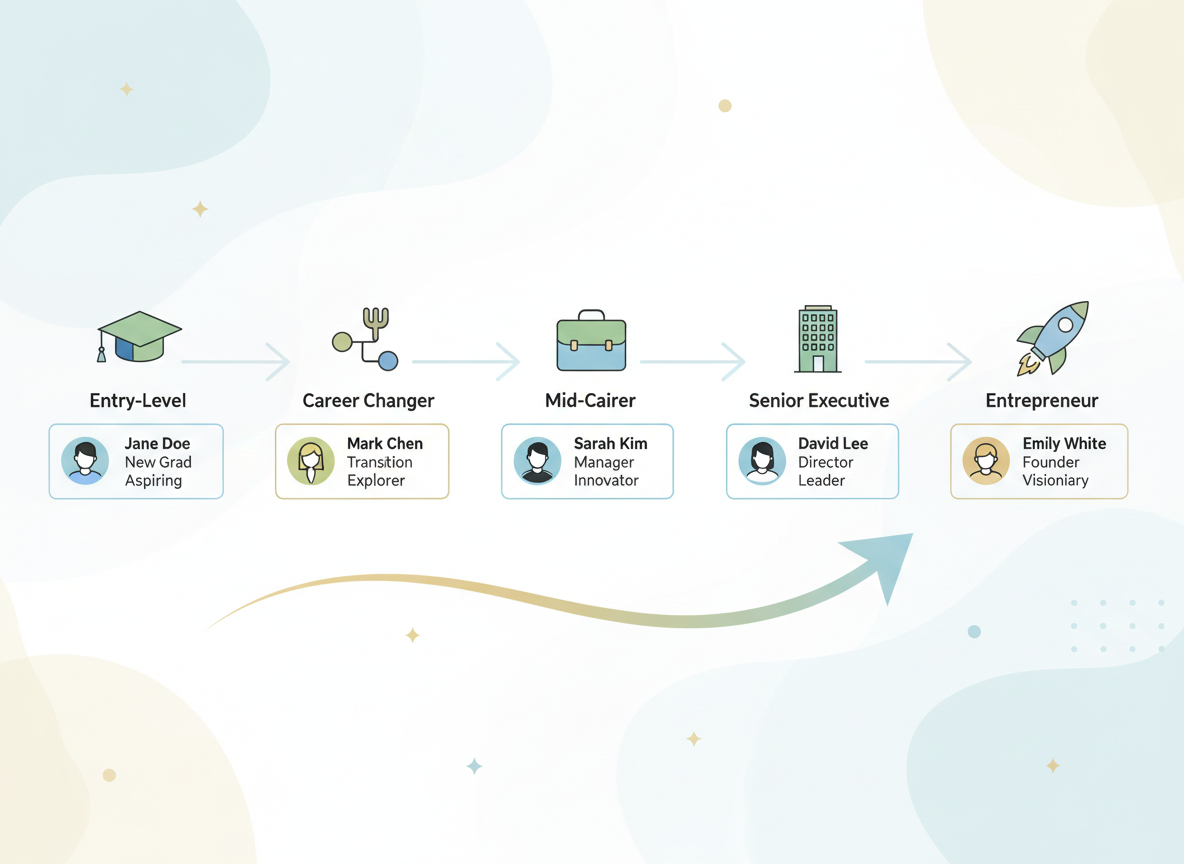
Entry-Level Professional (Recent Graduate)
Before:
“Recent college graduate seeking opportunities in digital marketing. Passionate about social media and content creation. Hard worker with strong communication skills.”
After:
“Digital marketing coordinator who turned a campus blog into a 15K-follower community. I combine analytics training from my Marketing degree at UCLA with hands-on experience managing social campaigns for three local businesses. When I’m not analyzing engagement metrics, I’m testing new content strategies on my personal brand—currently averaging 2,500 monthly impressions across platforms.”
What makes it work: This bio transforms “limited experience” into tangible results. Notice the specific numbers (15K followers, 2,500 impressions) and real projects. Even as an entry-level professional, you’ve got accomplishments—you just need to frame them right.
Career Changer Highlighting Transferable Skills
“Former high school teacher bringing 8 years of presentation expertise and curriculum design to freelance copywriting. I’ve spent thousands of hours crafting messages that engage skeptical teenagers—now I write copy that converts skeptical customers. My teaching background means I explain complex products simply, something my tech clients at StartupHub appreciate. Featured contributor to Marketing Weekly.”
What makes it work: The career change becomes a strength, not a liability. The bio connects teaching skills directly to copywriting value, making the transition feel intentional and advantageous.
Mid-Career Professional with Established Expertise
“Content strategist who’s built organic traffic strategies for 40+ SaaS companies. Over the past 6 years, I’ve helped clients like DataFlow and CloudSync increase their blog traffic by an average of 280%. I specialize in turning technical features into stories that actually resonate with decision-makers. Regular speaker at Content Marketing Summit and contributor to MarketingProfs.”
What makes it work: Specific client wins, measurable outcomes (280% increase), and industry credibility through speaking engagements. This bio establishes authority without sounding arrogant.
Senior Executive (C-Suite Leader)
“CEO of TechBridge Solutions, where we’ve grown from 5-person startup to 150-employee company serving Fortune 500 clients. With 20 years in enterprise software, I’ve learned that the best products solve real problems—not imaginary ones. Previously led product development at two successful exits (acquired by Microsoft and Salesforce). I mentor early-stage founders and believe transparency builds better companies.”
What makes it work: Demonstrates leadership through company growth and exits while maintaining approachability through mentorship mention.
Entrepreneur or Business Founder
Before:
“Founder of a digital marketing agency. We help businesses grow online through various marketing strategies. Passionate about helping clients succeed.”
After:
“Founder of GrowthLab Agency, where we’ve helped 200+ online businesses scale from five-figure to six-figure monthly revenue. After bootstrapping my first e-commerce store to $2M in sales, I realized most entrepreneurs don’t need more tactics—they need someone who’s actually built what they’re trying to build. I turn real-world experience into repeatable systems.”
What makes it work: The transformation shows credibility through personal success before pitching services. The philosophy (“don’t need more tactics”) demonstrates understanding of the audience’s actual pain points.
12 Bio Examples for Freelancers, Creators, and Non-Traditional Professionals
When you don’t have corporate credentials to lean on, your bio becomes even more valuable. Here’s how independent professionals craft compelling narratives that convert browsers into clients.
Freelance Writer/Copywriter
“I turn product descriptions into profit machines. Over the past 5 years, I’ve written sales copy that’s generated $2.3M+ for health and wellness brands. My email sequences average 18% open rates (industry standard is 11%), and I’ve never missed a deadline. Currently accepting 2 new clients per quarter.”
Notice how results replace job titles. Numbers tell the story.
Graphic Designer
“Brand designer helping sustainable fashion startups stand out on Instagram. Featured in 99designs’ Top 50 Designers of 2023. I’ve created visual identities for 40+ eco-conscious brands that increased their social engagement by an average of 127%. Let’s make your brand unforgettable.”
Content Creator/YouTuber
“Tech reviewer with 247K subscribers who actually reads the fine print so you don’t have to. My unboxing videos have racked up 15M views, and brands pay me $5K+ per integration because my audience trusts my recommendations. Collaboration inquiries: [email]”
Here’s what works: specific audience size, clear niche, and social proof.
Business Consultant
“I help overwhelmed course creators scale from $5K to $50K months without burning out. Former marketing director turned consultant. 89% of my clients hit their revenue goals within 6 months. Free strategy call available for serious entrepreneurs.”
Photographer
“Wedding photographer who captures the moments you’ll actually want to relive. Based in Portland, shooting love stories across the Pacific Northwest. 150+ couples married, zero Bridezillas (okay, maybe one). My couples say I make them forget the camera exists.”
The secret? Personality sells as much as skill.
For creators producing regular content, maintaining fresh bios across platforms becomes another task on an endless list. AI content creation tools help you adapt your core message for different audiences without starting from scratch each time—freeing you up to do the creative work only you can do.
10 Bio Examples for Students, Academics, and Researchers
When you’re building your career in academia, your bio needs to showcase potential alongside proven achievements. Here’s how students and researchers at different stages can craft compelling examples.
Undergraduate Student (Internship Application)
“I’m a junior at Boston University studying Environmental Science with a 3.8 GPA. Currently researching microplastic filtration systems with Dr. Sarah Chen’s lab team. Last summer, I helped develop a campus composting program that reduced waste by 23%. Looking to apply my research skills and environmental passion to hands-on conservation work this summer.”
PhD Candidate
“Maria Rodriguez | PhD Candidate in Neuroscience, Stanford University. My research focuses on sleep patterns in Alzheimer’s patients, with findings published in Nature Neuroscience and Brain Research. I’ve presented at 12 international conferences and received the NSF Graduate Research Fellowship. When I’m not analyzing brain scans, I mentor undergrads through their first research projects.”
Academic Researcher
“Dr. James Liu, Associate Professor of Computer Science at MIT. I specialize in machine learning applications for healthcare diagnostics. My team’s algorithms have helped detect early-stage cancers with 94% accuracy. Author of 47 peer-reviewed publications and two textbooks. I also run a YouTube channel breaking down complex AI concepts for 50K+ subscribers.”
Recent Graduate
“Recent Columbia grad with a B.A. in Marketing and a minor in Data Analytics. Spent four years managing social campaigns for three student organizations, growing combined followers from 800 to 12,000. My senior capstone on Gen Z consumer behavior was featured in the university research symposium. Ready to turn academic insights into real-world marketing wins.”
The key? Balance credentials with personality—you’re qualified and human.
8 Industry-Specific Bio Examples (Tech, Marketing, Healthcare, Finance & More)
Your industry shapes how people perceive your expertise. Here’s how professionals in different fields craft bios that actually work.
Tech Professional Bio
“Full-stack developer specializing in React and Node.js. Built scalable applications for three Y Combinator startups, including a payment platform processing $2M monthly. Previously led development at TechCorp, where I reduced page load times by 73%. When I’m not coding, I contribute to open-source projects and mentor junior developers through Code Academy.”
Notice the specific technologies, quantifiable results, and social proof? That’s what converts.
Digital Marketer Bio
“SEO specialist who’s generated 15M+ organic visitors for SaaS clients. I’ve helped 40+ companies rank on page one for competitive keywords, with an average traffic increase of 312% within six months. My strategies focus on content optimization and link-building that actually moves the needle. Featured in Search Engine Journal and Moz.”
Marketing bios need numbers. Period. Vague claims about “driving growth” won’t cut it.
Healthcare Professional Bio
“Board-certified family physician with 12 years of experience in preventive care and chronic disease management. Graduated from Johns Hopkins School of Medicine. I’ve treated over 8,000 patients and believe in creating personalized treatment plans that address root causes, not just symptoms. Outside the clinic, I volunteer at community health fairs.”
Healthcare bios must establish credentials immediately while showing genuine care.
Finance Professional Bio
“CPA with 15 years helping small businesses maximize tax savings. I’ve saved clients an average of $47,000 annually through strategic planning and deduction optimization. Specializing in e-commerce and SaaS financial strategy. Member of AICPA and regular contributor to Forbes Finance Council.”
Finance professionals need certifications upfront and specific value propositions.
Real Estate Agent Bio
“Sold 150+ homes in Austin’s competitive market with an average of 94% of asking price. Top 5% agent at Realty Group for three consecutive years. I specialize in helping first-time buyers navigate the process stress-free, with 89% of my business coming from referrals.”
Real estate thrives on local expertise and transaction volume.
Want your bio to rank better in search results? Understanding basic SEO optimization can increase your profile visibility by 200% or more.
12 Social Media Bio Examples That Convert Followers to Clients
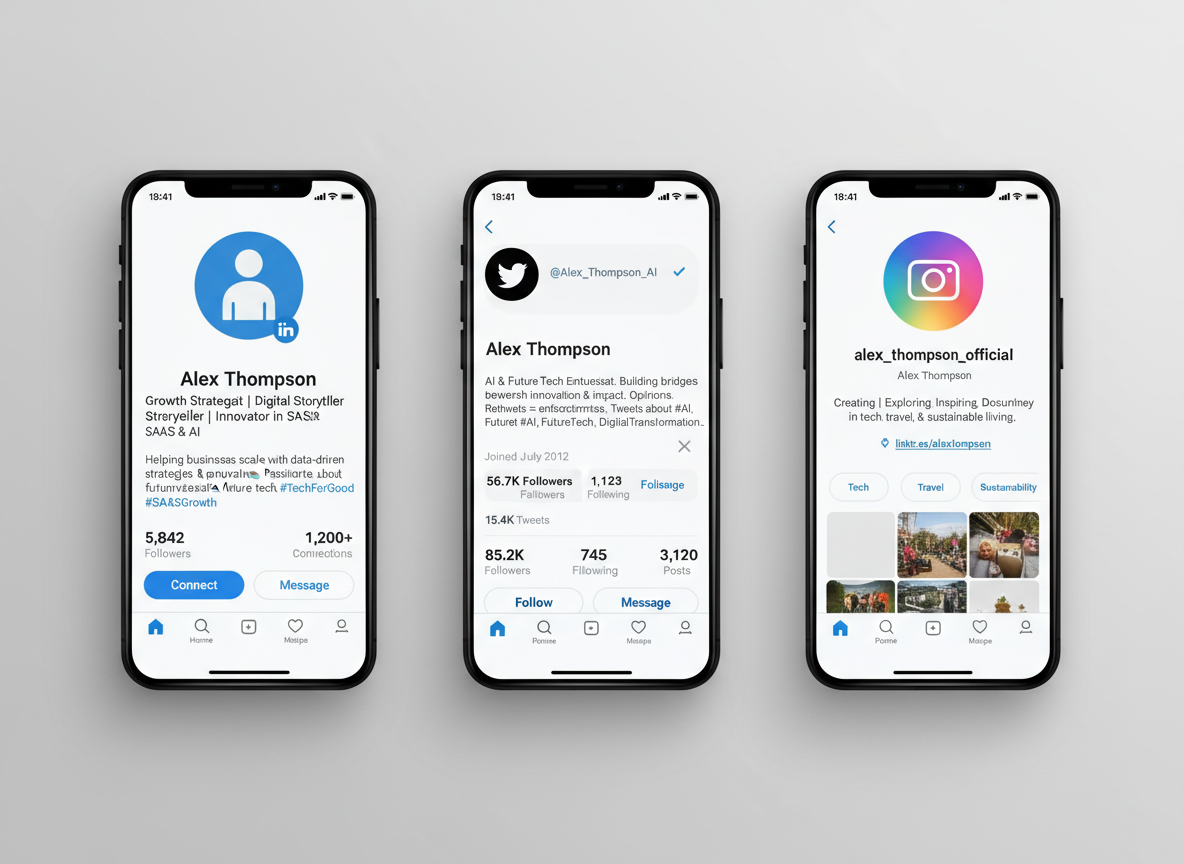
Your social media bio isn’t just about you—it’s about what you can do for your audience. Here’s how to craft bios that actually convert across different platforms.
LinkedIn Bio Example:
“Helping SaaS companies reduce churn by 40% through customer retention strategies | Featured in Forbes & Entrepreneur | Download my free churn calculator 👇”
Notice the specific result (40%), credibility markers, and clear CTA. LinkedIn users want professional value immediately.
Twitter/X Bio Example:
“Turned $500 into a 6-figure online business | Teaching creators how to monetize without selling their soul | Newsletter: [link]”
Twitter bios need personality plus proof. Your niche should be crystal clear in under 15 words.
Instagram Bio Example:
“📸 Product photography tips
🎨 For small business owners
💰 Grew from 0→50K in 8 months
👇 Free lighting guide”
Strategic emoji use creates visual breaks. Each line serves a purpose: what you do, who it’s for, proof, and action.
Facebook Professional Page Bio:
“We’ve helped 2,000+ local businesses increase foot traffic through targeted FB ads. Located in Austin, TX. Free consultation available—message us to get started.”
Facebook audiences often look for local, established businesses. Include your location and easy next steps.
TikTok Creator Bio:
“making money online less mysterious ✨ | dropshipping since 2019 | link has my exact product list 🔗”
TikTok rewards authenticity over polish. Speak directly to your niche without corporate jargon.
YouTube Channel About Section:
“I publish weekly breakdowns of viral marketing campaigns. What worked, what flopped, and how you can apply these lessons. Subscribe for frameworks, not fluff.”
YouTube bios should explain your content format and value proposition immediately.
Here’s what converts: specificity beats vagueness every time. “Marketing tips” gets ignored. “Email sequences that converted at 23%” gets clicks.
Use bio link tools like Linktree or Beacons to maximize your single-link real estate. Even better? Testing CG’s content publishing automation lets you maintain consistent messaging across all platforms without manually updating each bio when you launch something new. One update syncs everywhere—your multi-platform presence stays current while you focus on creating.
Fill-in-the-Blank Bio Templates (Copy, Customize, and Publish in Minutes)
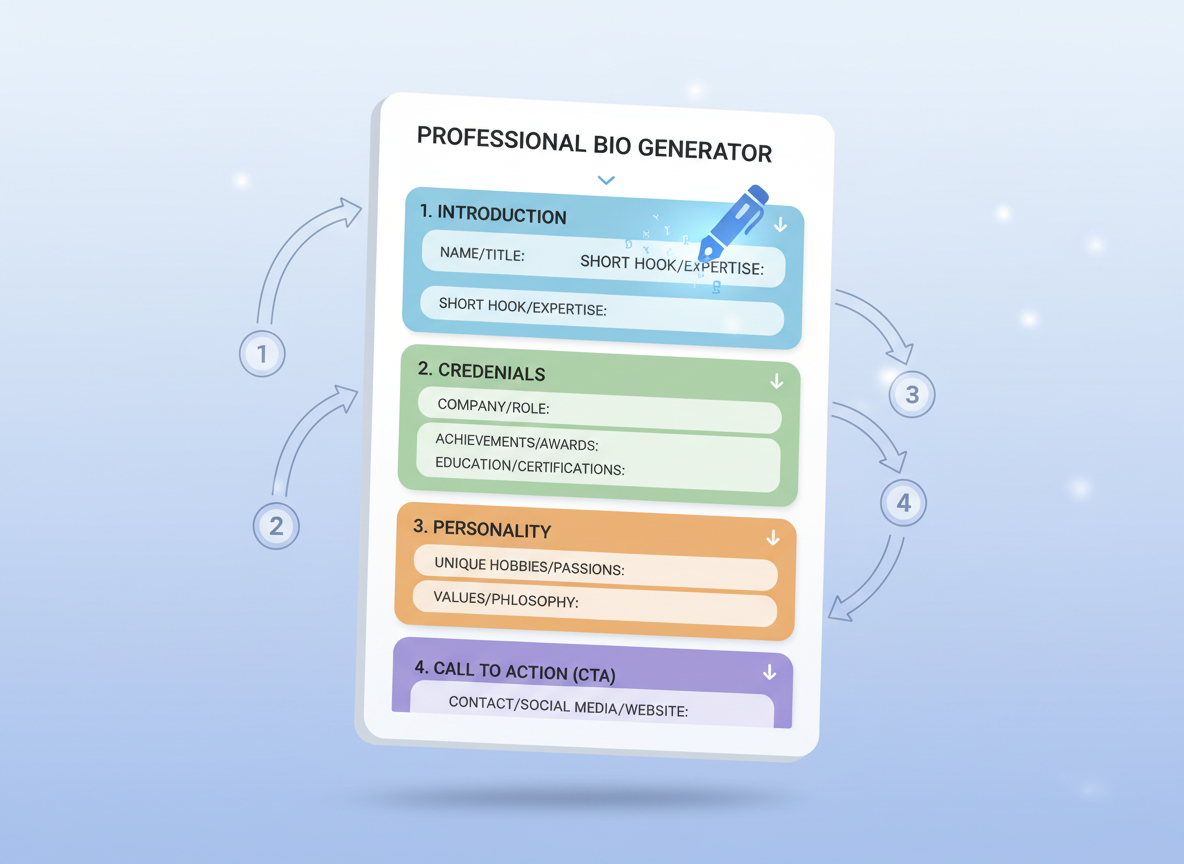
Staring at a blank page won’t get your bio written. These five templates give you the structure—you just fill in the details.
Template 1: The Professional Authority (for established experts)
I’m [Your Name], a [your title] who’s helped [number] of [target audience] achieve [specific result] through [your method/approach]. With [number] years in [industry], I’ve [notable achievement or credential]. My work has been featured in [publications or platforms], and I’m passionate about [what drives you]. When I’m not [primary work activity], you’ll find me [personal interest that humanizes you].
Template 2: The Rising Star (for early-career professionals)
[Your Name] here—I’m building my career in [industry/field] with a focus on [specialization]. I graduated from [school] with a degree in [field], and I’ve already [recent achievement or project]. I believe [your professional philosophy], and I’m constantly learning through [courses, mentors, or experiences]. My goal? [Your ambition]. Let’s connect if you’re interested in [collaboration or networking opportunity].Template 3: The Problem-Solver (for service providers and consultants)
Struggling with [specific problem]? I help [target audience] [achieve desired outcome] without [common pain point]. As a [your role], I’ve developed a [methodology or system] that’s delivered [specific results] for clients like [type of clients]. My background in [relevant experience] means I understand exactly what you’re facing. Ready to [transformation you offer]? [Call to action].
Template 4: The Creative Storyteller (for artists and creators)
I create [type of content/art] that [emotional or practical impact]. My journey started [brief origin story], and now I [current creative work]. I’ve been fortunate to [accomplishment or recognition], but honestly? I’m most proud when [meaningful impact on audience]. Follow along as I [ongoing project or mission]. You can find my work at [platform/location].
Template 5: The Data-Driven Specialist (for technical roles)
[Your Name] | [Title] specializing in [technical area]. I leverage [tools/technologies] to [measurable outcome]. Previously at [company/companies], where I [quantifiable achievement]. Certified in [relevant certifications]. I share insights about [topic] for [audience] looking to [goal]. [Number]% of my clients report [specific improvement]. Connect with me to discuss [your focus area].Here’s the secret: Those brackets aren’t just placeholders—they’re your roadmap. Spend three minutes filling them in, and you’ve got a polished bio. Much like Testing CG’s AI-powered content creation approach, the fastest results come from smart templates that guide you instead of overwhelming you.
Don’t overthink it. Pick your template, customize it, and ship it.
7 Common Bio Mistakes That Make You Forgettable (And How to Fix Them)
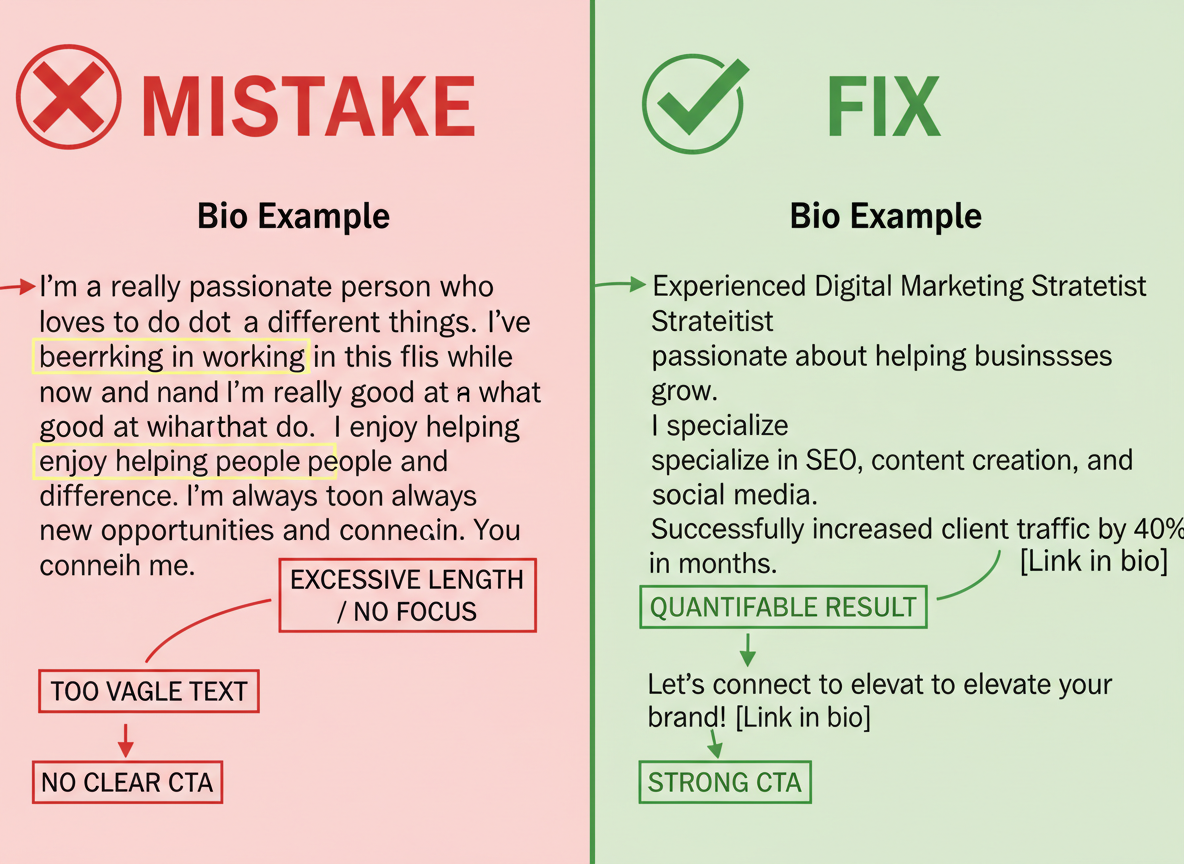
Every day, your bio either opens doors or closes them. Here’s what’s costing you opportunities right now.
Mistake 1: Being too vague or generic
“Passionate professional helping businesses grow” tells me absolutely nothing. Who are you? What do you actually do?
Fix: “I help SaaS startups convert trial users into paying customers through email sequences that average 23% conversion rates.”
See the difference? Specificity creates credibility.
Mistake 2: Listing responsibilities instead of achievements
Nobody cares that you “managed social media accounts.” They want results.
Before: “Responsible for content creation and social media management.”
After: “Grew Instagram following from 1,200 to 47,000 in 8 months using data-driven content strategies.”
Mistake 3: Writing a novel
Your LinkedIn bio has space for 2,600 characters. That doesn’t mean you should use all of them. Twitter gives you 160. Instagram allows 150. Match your length to the platform or watch readers bounce.
Mistake 4: Forgetting your target audience completely
You’re not writing for everyone. A recruiter needs different information than a potential client. Know who’s reading and what they need to know.
Mistake 5: Using jargon without substance
“Innovative thought leader leveraging synergies” means nothing. Drop the buzzwords. Use plain language that demonstrates real expertise.
Mistake 6: No personality or human element
Your bio shouldn’t read like a resume. Add something that makes you memorable—a unique approach, an unexpected background, or a relatable struggle you’ve overcome.
Mistake 7: Missing or weak call-to-action
Don’t leave readers wondering what to do next. “DM me for podcast guest inquiries” beats “Open to opportunities” every time.
The truth? These mistakes aren’t just making you forgettable. They’re actively pushing potential clients, employers, and collaborators toward someone else. Your competition fixed these issues yesterday. What’s stopping you?
How to Write a Compelling Bio When You Have Limited Experience
Here’s the truth: you don’t need a decade of experience to write a bio that lands clients or opportunities. What you need is the right positioning.
Instead of years worked, highlight what you can deliver right now. A recent graduate who’s mastered SEO analytics through three internships and a personal blog is far more attractive than someone who merely lists “marketing degree, 2024.”
Start with your core value proposition. “I help small businesses increase their Instagram engagement through data-driven content strategies” beats “Recent marketing graduate seeking opportunities” every single time.
Your secret weapons? Education in progress, certifications, personal projects, and transferable skills. That volunteer social media work for your local animal shelter? You managed a real brand’s online presence. Your side hustle selling handmade jewelry on Etsy? You’ve got e-commerce and customer service experience. Reframe everything through the lens of skills gained.
Student Example:
“I’m a journalism student at Ohio State who creates compelling narratives that drive engagement. Through my campus newspaper work and freelance blog writing, I’ve published 50+ articles with an average 4-minute read time. I’m passionate about environmental storytelling and ready to bring fresh perspectives to your content team.”
Career Changer Example:
“After 8 years in teaching, I’m transitioning into UX writing. I bring exceptional communication skills, user empathy, and a knack for simplifying complex information. I’ve completed Google’s UX Design Certificate and redesigned my school’s parent portal based on user feedback.”
New Freelancer Example:
“I write conversion-focused email sequences for wellness brands. My background in psychology helps me craft messages that connect emotionally while driving action. I’ve created three successful email campaigns for local businesses, generating an average 28% open rate.”
Lead with confidence. Your fresh perspective is an asset, not a liability.
Adding Credibility Signals: Achievements, Numbers, and Social Proof
Your bio isn’t just telling people who you are—it’s proving you’re worth their attention. Credibility markers transform vague claims into undeniable facts.
Types of credibility markers that actually work:
- Degrees and certifications (but only if relevant)
- Specific awards or recognition
- Published articles or books
- Client results with real numbers
- Brand names you’ve worked with
- Media features or podcast appearances
- Speaking engagements at conferences
- Years of experience in your niche
Here’s what makes the difference: specificity beats generality every time.
Weak: “I help businesses grow through content marketing.”
Strong: “I’ve helped 127+ SaaS companies generate 2.3M+ organic visitors through strategic content. Featured in MarketingProfs and Search Engine Journal.”
Notice how numbers tell the story? Instead of “many clients,” say “50+ clients across 12 industries.” Rather than “successful campaigns,” specify “campaigns that generated $400K in revenue.”
Don’t have fancy credentials? Use what you’ve got. Client testimonials (“As featured in…” works even for small blogs), student numbers (“taught 3,000+ entrepreneurs”), or project counts (“completed 200+ website audits”) all build trust.
The sweet spot: Share enough to impress without sounding like you’re overselling. If you managed a $10M ad budget, mention it. If you helped one client double their traffic, that’s powerful too.
Real social proof beats manufactured hype. Always.
Optimizing Your Bio for Search Engines and AI Discovery
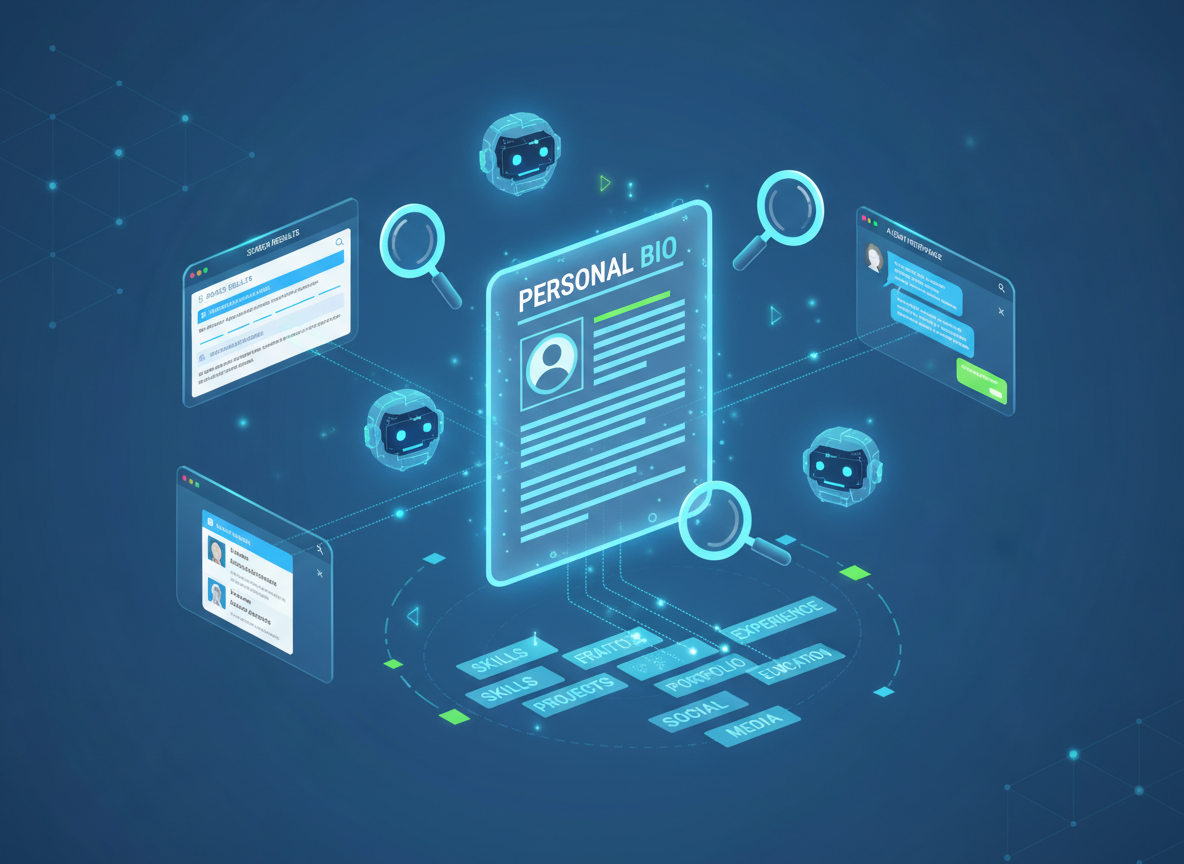
Your bio isn’t just for human readers anymore. Search engines and AI platforms like ChatGPT and Gemini crawl author bios to determine credibility and topic authority. According to recent data, 70% of clicks go to profiles that appear in the top three search results, making bio optimization essential for visibility.
Here’s what works: weave relevant keywords naturally into your bio without forcing them. Instead of “SEO expert SEO consultant SEO specialist,” try “I help e-commerce brands increase organic traffic through data-driven SEO strategies.” See the difference?
Search engines look for E-E-A-T signals—Experience, Expertise, Authoritativeness, and Trust. Include concrete credentials: “Founded three SaaS companies” beats “experienced entrepreneur.” Mention years in your field, notable clients, or measurable results (like “generated $2M in client revenue”).
Each platform has unique SEO considerations. On LinkedIn, your headline and first 40 characters carry massive weight for search rankings. Google Business Profiles prioritize location-based keywords and service descriptions. Twitter bios should include searchable industry terms since tweets appear in Google results.
Want to level up? Add structured data markup to your website bio using schema.org’s Person schema. This helps search engines understand your credentials and can earn you rich snippets in search results.
This is where Testing CG’s SEO and AEO optimization becomes a game-changer. Their platform helps content creators establish verifiable authority signals that both search engines and AI systems recognize, ensuring your bio works harder across every platform.
Remember: 53% of organic search traffic comes from the first position. Your bio’s optimization directly impacts whether people—and algorithms—find you worth their attention.
When and How to Update Your Personal Bio
Your bio isn’t a “set it and forget it” element. Think of it as living content that should evolve with your career.
Update triggers you can’t ignore:
- Landing a new role or promotion
- Completing a major project or achievement
- Pivoting your career direction
- Acquiring certifications or new skills
- Launching a product or service
- Hitting significant milestones (100K followers, major client win)
Here’s the thing: different platforms need different update frequencies. LinkedIn benefits from quarterly refreshes as your professional story develops. Instagram and Twitter bios? Review them monthly, especially if you’re running campaigns or promotions. Your personal website should stay current with your latest offerings.
Track what’s actually working. Monitor profile views before and after bio changes. Notice if engagement spikes. Count genuine opportunities that came from your profile.
Try A/B testing different versions. Change one element at a time—maybe swap your opening hook or reorder your credentials. See what resonates.
Maintain a master bio document with platform-specific variations. This saves you from starting from scratch each time while ensuring consistency in your core message.
Just like Testing CG’s automated daily publishing keeps your content fresh without the manual grind, scheduling regular bio reviews ensures you’re always putting your best foot forward. Your bio should reflect who you are now, not who you were six months ago.
Your 15-Minute Bio Creation Action Plan
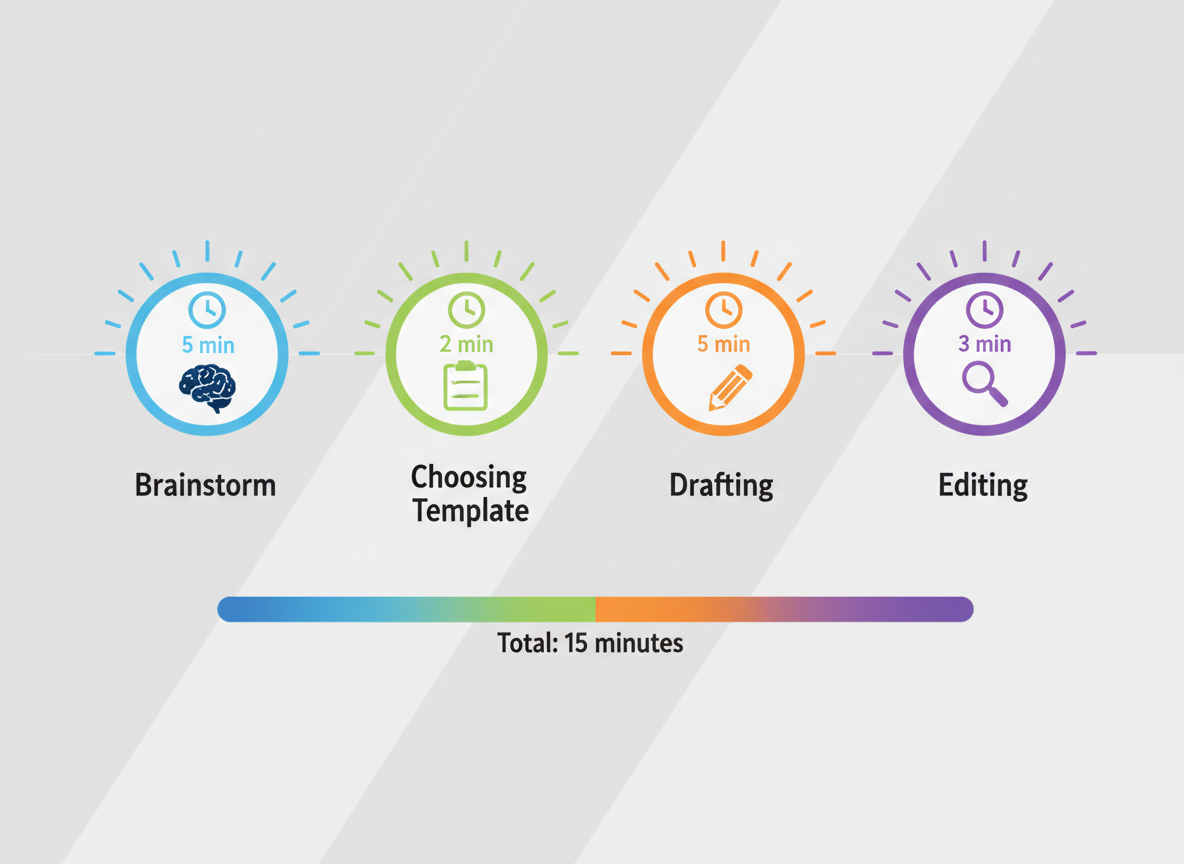
You’re literally 15 minutes away from a professional bio that works. Here’s your game plan:
Step 1: Brainstorm Your Key Elements (5 minutes)
Grab a notepad and jot down:
- Your top 3 achievements (don’t be modest)
- Your core skills that actually matter
- The specific problem you solve for people
- One personality trait that makes you memorable
Step 2: Pick Your Template and Tone (2 minutes)
Scan back through this article and choose the example of bio about yourself that matches your platform and vibe. Professional? Casual? Creative? Trust your gut.
Step 3: Draft Your Bio (5 minutes)
Fill in the blanks of your chosen template. Replace the placeholder text with your own details. No overthinking—just write.
Step 4: Edit for Clarity (3 minutes)
Read it aloud. Cut anything that sounds forced. Make sure it fits your platform’s character limits.
That’s it. Just like Testing CG helps you set up content systems in minutes instead of hours, this process gets your bio done fast.
Don’t let another day pass with a weak bio (or worse, no bio at all). Start your timer now.
Frequently Asked Questions
How long should my personal bio be?
It depends on where you’re using it. Instagram bios max out at 150 characters, so you’ll need to be ruthless with your word choice. LinkedIn gives you 2,600 characters in your About section—plenty of room to tell your story. Twitter (X) allows 160 characters, while your website bio can stretch to 300-500 words. The key isn’t length; it’s relevance. A freelance writer might need a comprehensive 400-word bio on their website but only 100 characters for their Twitter profile.
Should I write my bio in first person or third person?
First person (“I help entrepreneurs…”) feels conversational and approachable—perfect for social media, personal websites, and creative platforms. Third person (“Sarah helps entrepreneurs…”) sounds more formal and professional, which works better for speaker bios, conference profiles, and corporate settings. Here’s the truth: neither is “wrong.” Choose based on your platform and audience expectations.
What should I include in my bio if I’m just starting out?
Focus on your skills, education, and passion rather than years of experience you don’t have yet. Mention relevant coursework, personal projects, volunteer work, or transferable skills from other industries. “Aspiring graphic designer with a passion for minimalist branding” beats a vague, apologetic bio any day.
How often should I update my personal bio?
Review it every 3-6 months or whenever something significant changes—new job, major achievement, certification, or shift in focus. Your bio shouldn’t feel stale or outdated.
Can I use the same bio across all platforms?
You can use a similar framework, but customize for each platform’s character limits and audience expectations. Your LinkedIn bio should be more comprehensive than your Instagram bio. Tailor the tone and content to match where people will read it.
What’s the difference between a personal bio and a professional bio?
A personal bio includes hobbies, interests, and personality quirks. A professional bio focuses on your expertise, achievements, and what you offer clients or employers. Most people need both—use professional bios for work contexts and personal bios for social platforms.
How do I make my bio stand out without sounding arrogant?
Lead with results, not titles. Instead of “Award-winning marketer,” try “Helped 50+ brands increase their social media engagement by 200%.” Let your accomplishments speak for themselves without excessive self-praise.
Should I include personal information in my professional bio?
A small personal touch humanizes you. Mentioning you’re a coffee enthusiast or dog lover won’t hurt—just don’t let it overshadow your professional value.
What are the most important elements of a good bio?
Who you are, what you do, who you serve, and what makes you different. These four elements form the backbone of every effective bio.
How can I write a bio that ranks well in search engines?
Include relevant keywords naturally (like your profession, location, and specialties), but write for humans first. Search engines reward clear, well-structured content that answers what people are actually searching for.
I am a full-time online marketer, for over a decade now. Helped over 100,000+ people & generated well over $12M in online sales.