Introduction: Why AI Paragraph Writing Is Transforming Content Creation in 2026
You’re burning 15+ hours every week writing the same types of paragraphs. Product descriptions, blog introductions, email sequences—it’s the content treadmill that never stops.
Here’s what’s changed: while you’re grinding through paragraph after paragraph, your competitors are leveraging AI to produce the same quality content 3-5x faster. They’re not just working smarter—they’re winning the visibility game because they can publish more, test faster, and dominate search rankings while you’re still drafting.
The numbers tell the story. Recent industry research shows that 67% of content teams now use AI writing tools regularly, with adoption rates jumping 214% since 2024. Those teams report average productivity gains of 340% and content output increases that would’ve seemed impossible just two years ago.
AI paragraph writing isn’t about replacing your creativity—it’s about amplifying it. Think of it as having a writing assistant that handles the heavy lifting: structuring your thoughts, expanding key points, and adapting your message for different platforms. You’re still the strategist and editor, but you’re no longer stuck in the weeds of every single sentence.
The shift toward content engineers who blend AI tools with content strategy proves this isn’t a passing trend—it’s the new standard.
In this guide, you’ll learn exactly how to harness AI paragraph writing: the best tools for 2026, proven prompts that generate publish-ready content, optimization techniques that maintain your unique voice, and real-world examples you can adapt immediately. No fluff, just actionable strategies that’ll help you reclaim those 15 hours and finally get ahead.
What Is AI Paragraph Writing? (And How It Actually Works)
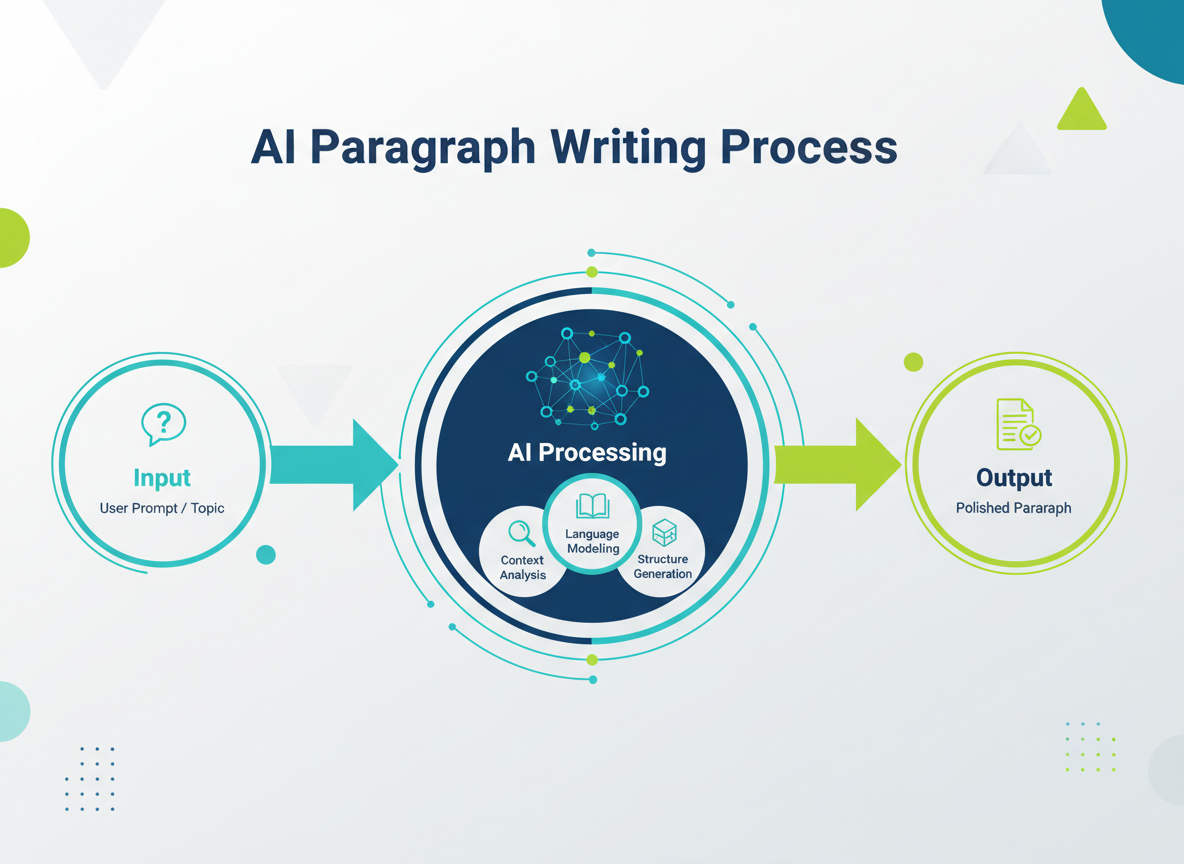
AI paragraph writing uses artificial intelligence to generate coherent, contextually relevant text blocks on demand. Instead of staring at a blank screen, you input a topic or prompt, and the AI produces complete paragraphs in seconds.
Here’s what’s happening under the hood: These tools run on natural language processing (NLP) and machine learning models—specifically, transformer architectures like GPT (Generative Pre-trained Transformer). They’ve been trained on billions of text examples from across the internet, learning patterns in language, structure, and context.
Think of it like having a writing assistant who’s read everything ever published. When you type a prompt, the AI analyzes your request, identifies the context and tone you need, then predicts the most likely sequence of words that’ll make sense together. It’s not copying content—it’s generating new text based on patterns it learned during training.
Now, there’s a difference between tools. AI paragraph generators focus specifically on creating individual text blocks. Full article writers like ChatGPT and Jasper tackle complete long-form pieces. Content assistants help you refine and improve existing text.
The real breakthrough? These systems understand context well enough to maintain consistency in voice, adapt to different writing styles, and even adjust complexity based on your audience. That’s why they’re transforming how content creators work in 2026.
Top 8 AI Paragraph Writing Tools Compared (2026 Feature Matrix)
Choosing the right AI paragraph writer can feel overwhelming when you’re staring at dozens of options. I’ve tested the top contenders so you don’t have to waste time (or money) on tools that underdeliver.
Here’s what matters most: output quality, customization options, and whether the tool actually saves you time. Some platforms excel at long-form blog content, while others shine for product descriptions or social media posts. Speaking of which, if you’re in ecommerce, check out our AI product description generator guide for specialized tools.
Quick Comparison Breakdown:
For Beginners: Look for tools with intuitive interfaces and pre-built templates. Most offer free tiers with 2,000-5,000 words monthly—enough to test capabilities before committing. The learning curve shouldn’t require a PhD in prompt engineering.
For Agencies: You’ll need team collaboration features, white-label options, and bulk generation capabilities. Pricing typically runs $79-$299 monthly for professional tiers, but you’re looking at 50,000+ words and multiple user seats.
For SEO Content: Prioritize tools with keyword optimization, SERP analysis integration, and content scoring. The best ones analyze top-ranking competitors and suggest improvements in real-time.
For Academic Writing: Accuracy and citation capabilities matter here. You’ll want fact-checking features, multiple citation formats, and plagiarism detection built in.
The Value Question:
Free tiers work fine if you’re writing 5-10 paragraphs weekly. But if content creation is your business, paid plans typically deliver 3-5x better quality and unlock features like tone customization, brand voice consistency, and API access.
Most tools support 50+ languages now, though English still produces the most natural-sounding results. Integrations with Google Docs, WordPress, and marketing platforms vary widely—this can be a dealbreaker if you’ve got an established workflow.
The sweet spot? Mid-tier plans ($49-$79 monthly) that balance quality output with reasonable word limits.
7 Game-Changing Benefits of Using AI for Paragraph Writing
Speed That’ll Make Your Head Spin
AI paragraph writing transforms what used to take hours into seconds. Instead of staring at a blank screen for 30 minutes to craft three paragraphs, you’re generating polished drafts in under 60 seconds. Content creators report saving 5-8 hours per week on average—that’s an entire workday back in your pocket.
Consistency Without the Mental Drain
You know that feeling when your writing voice shifts between morning coffee and afternoon brain fog? AI eliminates that problem. Whether you’re writing your first paragraph or your fiftieth, the tone stays uniform. Your brand voice remains recognizable across blog posts, social media, and email campaigns.
Say Goodbye to Writer’s Block
That blinking cursor mocking you? Gone. AI jumpstarts your creativity with instant drafts, even when inspiration’s playing hide-and-seek. You’re not starting from zero anymore—you’re refining and personalizing already solid content.
Scale Without Hiring an Army
Managing five clients or fifteen? AI lets you handle multiple content projects simultaneously without burning out or hiring three more writers. One person can realistically produce content that would’ve required a small team two years ago.
Your Budget Will Thank You
Hiring a full-time content writer costs $50,000+ annually. AI tools? Around $50-200 monthly. That’s 300-500% ROI in the first year alone. For agencies juggling tight margins, this difference makes or breaks profitability.
Global Reach, Zero Language Barriers
Write once in English, deploy in 100+ languages within minutes. Your content reaches Tokyo, São Paulo, and Berlin without hiring translators or waiting weeks for localization.
SEO That Actually Works
AI naturally weaves keywords and semantic variations throughout your paragraphs. Combined with a solid content brief strategy, you’re creating search-friendly content that ranks without keyword stuffing or awkward phrasing.
Prompt Engineering Mastery: 20+ Proven Prompts for Better AI Paragraphs
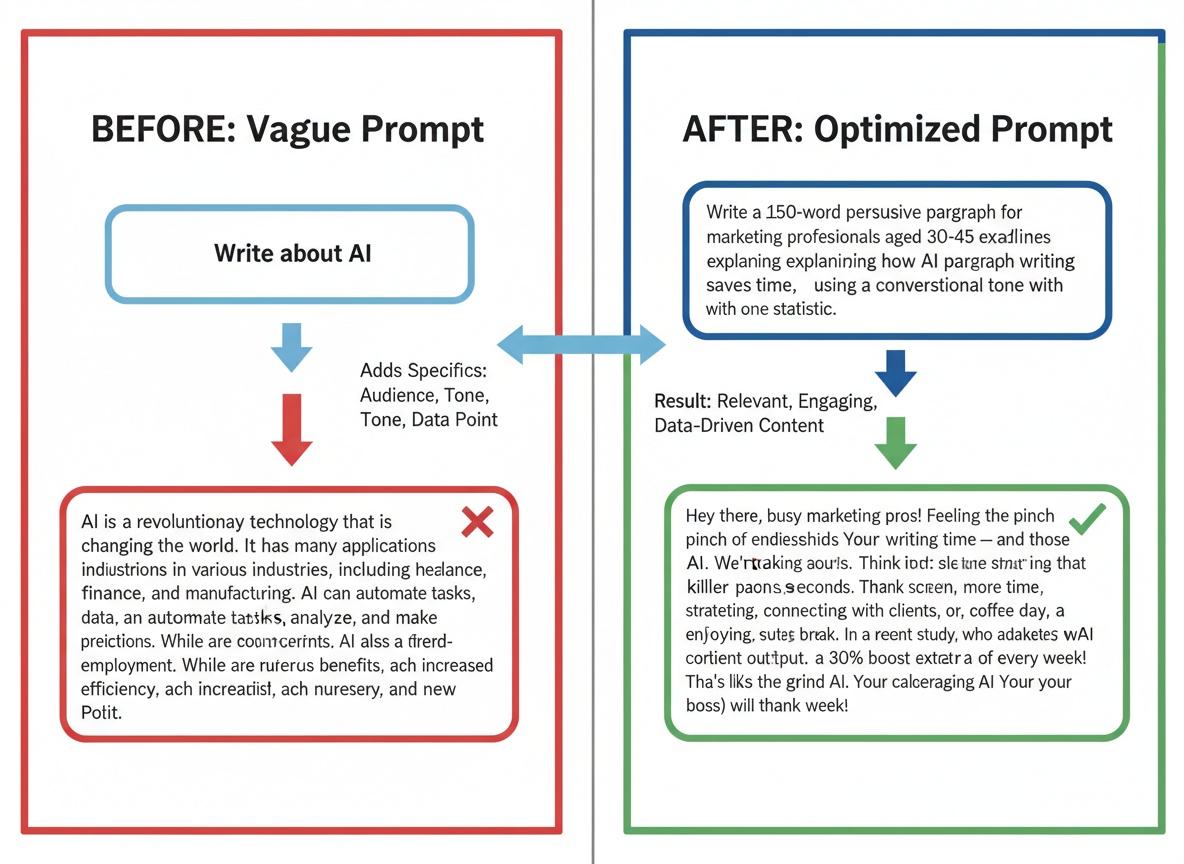
The difference between mediocre AI content and genuinely useful paragraphs comes down to how you ask. Most people type vague requests like “write about email marketing” and wonder why the output feels flat. Here’s what actually works.
Every effective AI paragraph writing prompt needs four core elements: topic specificity, tone guidance, structural requirements, and clear constraints. Think of it like ordering at a restaurant—the more precise you are, the better your meal.
10 Beginner-Friendly Templates:
1. “Write a 100-word paragraph explaining [topic] to someone with no background knowledge. Use simple language and one concrete example.”
2. “Create an opening paragraph for [topic] that hooks readers with a surprising statistic or question.”
3. “Write a 150-word how-to paragraph covering the first three steps of [process]. Use numbered steps.”
4. “Draft a concluding paragraph that summarizes [main points] and includes a clear next step for readers.”
5. “Explain [concept] in 120 words using a real-world analogy that anyone can understand.”
6. “Write a problem-focused paragraph describing [pain point] from the reader’s perspective. Make it relatable.”
7. “Create a benefit-driven paragraph about [product/service] focusing on outcomes, not features.”
8. “Write a transitional paragraph connecting [topic A] to [topic B] that maintains logical flow.”
9. “Draft a 100-word paragraph about [topic] in a conversational tone, as if explaining to a friend.”
10. “Write an evidence-based paragraph supporting [claim] with two specific data points or studies.”
10 Advanced Prompts for Specialized Content:
11. “Write a persuasive paragraph using the PAS framework (Problem-Agitation-Solution) about [topic]. Keep it under 150 words.”
12. “Create a technical paragraph explaining [complex concept] to intermediate users. Include one industry term with context.”
13. “Write a storytelling paragraph that illustrates [point] through a specific customer scenario with sensory details.”
14. “Draft a comparison paragraph contrasting [option A] vs [option B] using a pros/cons structure in 120 words.”
15. “Create a paragraph optimized for voice search, answering ‘what is [topic]’ in 75 words or less.”
16. “Write an SEO-focused paragraph naturally incorporating these keywords: [list]. Target 140 words.”
17. “Draft a data-driven paragraph about [topic] that opens with a compelling statistic and explains its significance.”
18. “Create a motivational paragraph that addresses [reader objection] and reframes it positively in 100 words.”
19. “Write a paragraph that establishes authority on [topic] by referencing credible sources without being academic.”
20. “Craft a paragraph that creates urgency about [opportunity/problem] without using cliché phrases like ‘game-changer.'”
Before/After Examples:
Poor prompt: “Write about social media marketing.”
Better prompt: “Write a 130-word paragraph for small business owners explaining why authentic storytelling beats promotional posts on Instagram. Include one specific tactic they can implement today. Conversational tone.”
The improved version delivers focused, actionable content because it specifies audience (small business owners), angle (authenticity vs promotion), constraint (130 words, one tactic), and tone (conversational).
Customization Variables That Matter:
- Audience level: “Explain to beginners” vs “Write for experts with 5+ years experience”
- Word count: Tight constraints force precision (try 75, 120, or 150 words)
- Perspective: First person (“I recommend…”), second person (“You should…”), or third person (“Business owners find…”)
- Keywords to weave in: Natural SEO integration without keyword stuffing
- Format specificity: Bullet points, numbered lists, or straight prose
Want to refine your personal positioning while mastering AI paragraph writing? Check out our Personal Brand Statement Generator: 7 Best Free Tools + Templates to Stand Out in 2026 for complementary strategies.
The pattern you’ll notice: specific beats generic every single time. Instead of asking AI to “write about productivity,” try “Write a 100-word paragraph for overwhelmed freelancers explaining the two-minute rule, with one example of applying it to email management.” That level of detail transforms output quality immediately.
Test these templates with your own topics, then tweak based on results. You’ll develop an intuition for what works within a few dozen attempts.
8 Strategic Use Cases: When to Use AI Paragraph Writing
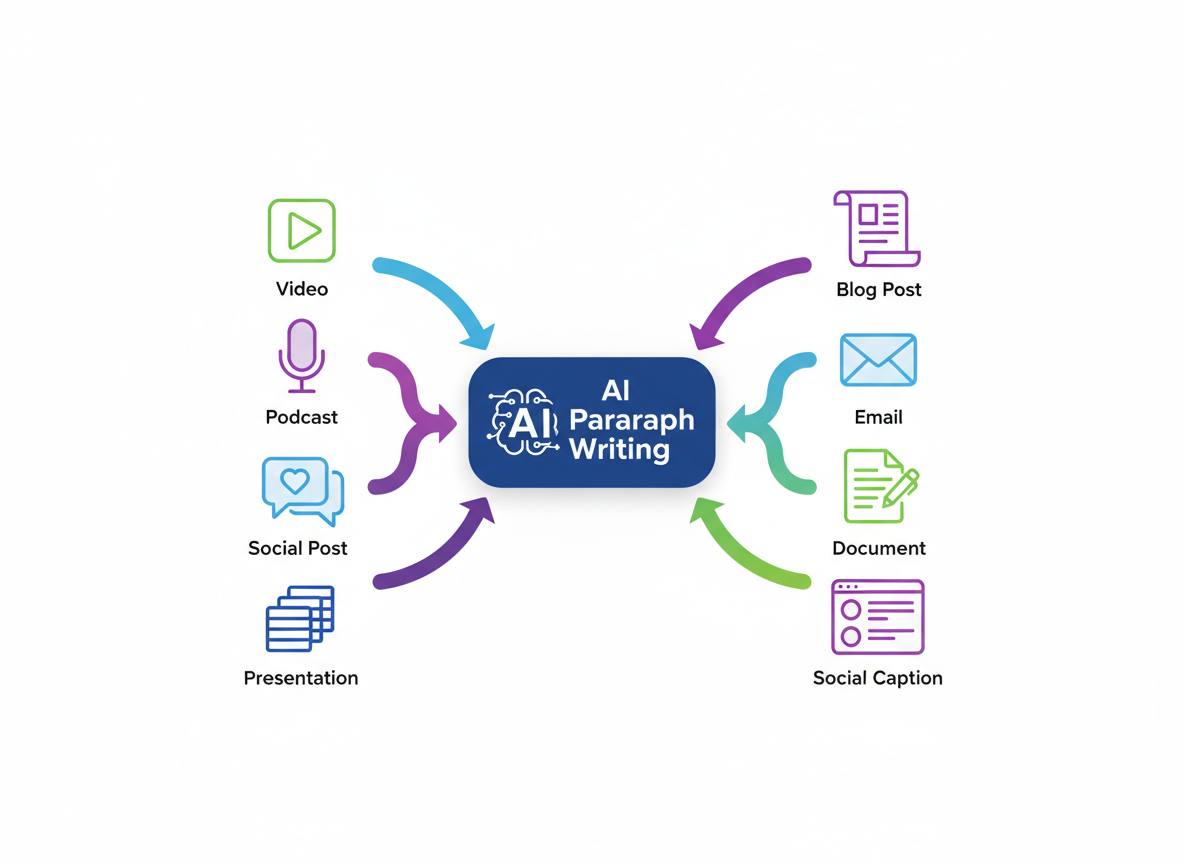
AI paragraph writing shines brightest when you’re juggling multiple content demands. Here’s where it delivers real ROI:
Blog post introductions and conclusions are make-or-break moments. AI helps craft hooks that grab attention and endings that drive action—without staring at a blank screen for 20 minutes.
Product descriptions and ecommerce copy demand consistency across hundreds of SKUs. You can’t hand-write unique descriptions for every variant, but AI can maintain your brand voice at scale.
Social media captions and long-form posts need platform-specific formatting. AI adapts your message from Twitter-length snippets to LinkedIn thought leadership pieces in seconds.
Email marketing campaigns and newsletters benefit from AI’s ability to test multiple angles. Generate five subject line options and three opening paragraphs, then pick what resonates.
Website copy and landing page content requires persuasive flow. If you’re running ads with compelling body copy, your landing pages need equally strong paragraphs to convert clicks into customers.
Academic writing and research summaries get faster without sacrificing accuracy. AI condenses complex concepts into digestible explanations.
Business documents, reports, and proposals move from draft to polished faster when AI handles routine sections.
Content repurposing transforms video transcripts and podcast episodes into scannable blog paragraphs—maximizing your content investment across formats.
Industry-Specific AI Paragraph Writing Strategies
Different industries face unique content challenges, and AI paragraph writing adapts to meet each one. Here’s how professionals across sectors are leveraging this technology to work smarter.
Digital marketing agencies use AI to scale client content production without hiring additional writers. Teams manage 20+ client accounts simultaneously, generating blog posts, social media content, and email campaigns. Account directors particularly benefit from AI tools that maintain consistent brand voices across multiple clients while meeting aggressive deadlines.
Ecommerce businesses transform product descriptions and category pages in minutes rather than days. Instead of spending hours crafting unique descriptions for 500 SKUs, retailers now generate compelling, SEO-optimized copy that converts browsers into buyers.
Affiliate marketers leverage AI for review content and comparison articles, though they still add personal testing insights to maintain authenticity and trust with their audiences.
Legal professionals draft initial versions of contracts, briefs, and case summaries—always with thorough human review to ensure accuracy and compliance.
Academic researchers speed up literature reviews and abstract writing, cutting research documentation time by 60% while maintaining scholarly standards.
Healthcare content creators produce patient education materials and medical blog posts faster, but they emphasize rigorous fact-checking with medical professionals before publication. Lives depend on accuracy.
Real estate agents generate property listings and market reports that highlight features effectively, freeing up time for client relationships and showings.
Each industry applies AI paragraph writing differently, but the result stays consistent: better content, faster delivery, and more time for high-value work.
Quality Control: How to Edit and Enhance AI-Generated Paragraphs
Here’s the truth: AI paragraph writing tools are phenomenal assistants, but they’re terrible replacements for human judgment. You’ll cut corners if you hit “generate” and publish without review.
I’ve seen marketers lose credibility over a single unchecked AI hallucination—a made-up statistic or outdated date that undermines months of trust-building. That’s why editing isn’t optional.
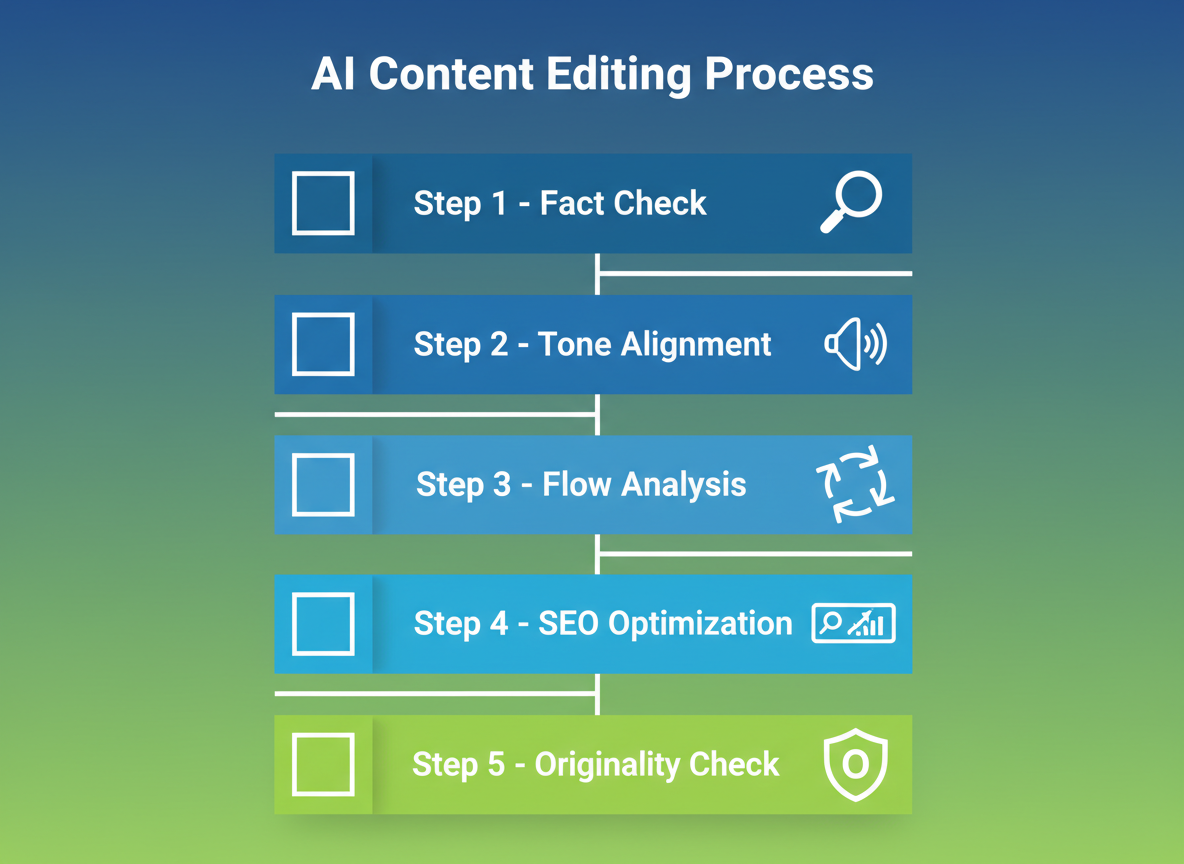
Your 5-Step Editing Checklist
Start with factual accuracy. Verify every statistic, date, and claim. AI confidently invents sources, so cross-reference anything specific. Next, check tone consistency—does it match your brand voice, or does it sound like every other generic blog post?
Then examine logical flow. Do ideas connect smoothly, or did the AI jump topics mid-paragraph? This happens more than you’d think. Fourth, optimize keywords naturally (yes, including your focus on ai paragraph writing) without stuffing. Finally, run plagiarism checks—AI occasionally regurgitates training data.
Adding Your Fingerprint
Generic AI output reads like… well, AI. Inject personality through specific anecdotes, unexpected analogies, or your unique perspective. Think about how you’d explain this to a friend over coffee.
Tools like Grammarly handle surface-level grammar, while Hemingway App scores readability. For plagiarism detection, Copyscape works well.
Regenerate or Edit?
If the paragraph’s core structure works but needs polish, edit it. If the entire angle’s wrong or it’s fact-heavy fiction, regenerate. Don’t waste time salvaging fundamentally broken content. When you’re building content at scale—especially following a solid content brief—you’ll know which battles to fight.
SEO Optimization: Writing AI Paragraphs That Rank
Here’s what most content creators get wrong: they think AI paragraph writing means sacrificing SEO. It doesn’t.
The trick is strategic keyword integration. Instead of forcing your target keyword three times in one sentence, let it flow naturally. Place your primary keyword in the opening sentence, sprinkle semantic variations throughout, and you’re golden. AI tools can suggest LSI keywords—words and phrases Google associates with your topic—without the guesswork.
Paragraph length matters more than you’d think. Keep most paragraphs between 50-150 words for scanability. Search engines love content that’s easy to digest, and readers actually finish reading it.
Want featured snippets? Structure your paragraphs as direct answers. Start with a clear statement, follow with supporting detail, and keep it under 60 words. AI excels at this format.
Don’t forget Answer Engine Optimization (AEO). Voice searches need conversational, question-based content. Write paragraphs that answer “how,” “what,” and “why” questions directly.
Internal linking is your secret weapon. When you’re creating content briefs with AI, identify natural connection points between articles. Each paragraph should open doors to deeper exploration.
Finally, use AI to generate meta descriptions that actually convert. Pull the most compelling sentence from your intro paragraph, add a call-to-action, and you’ve got a click magnet.
AI Detection & Humanization: Making Your Content Sound Natural
Here’s the uncomfortable truth: AI detectors exist, and they’re getting smarter. But before you panic, understand that Google’s official stance focuses on content quality, not how it’s created. They care about E-E-A-T (Experience, Expertise, Authoritativeness, Trustworthiness), not whether you used AI.
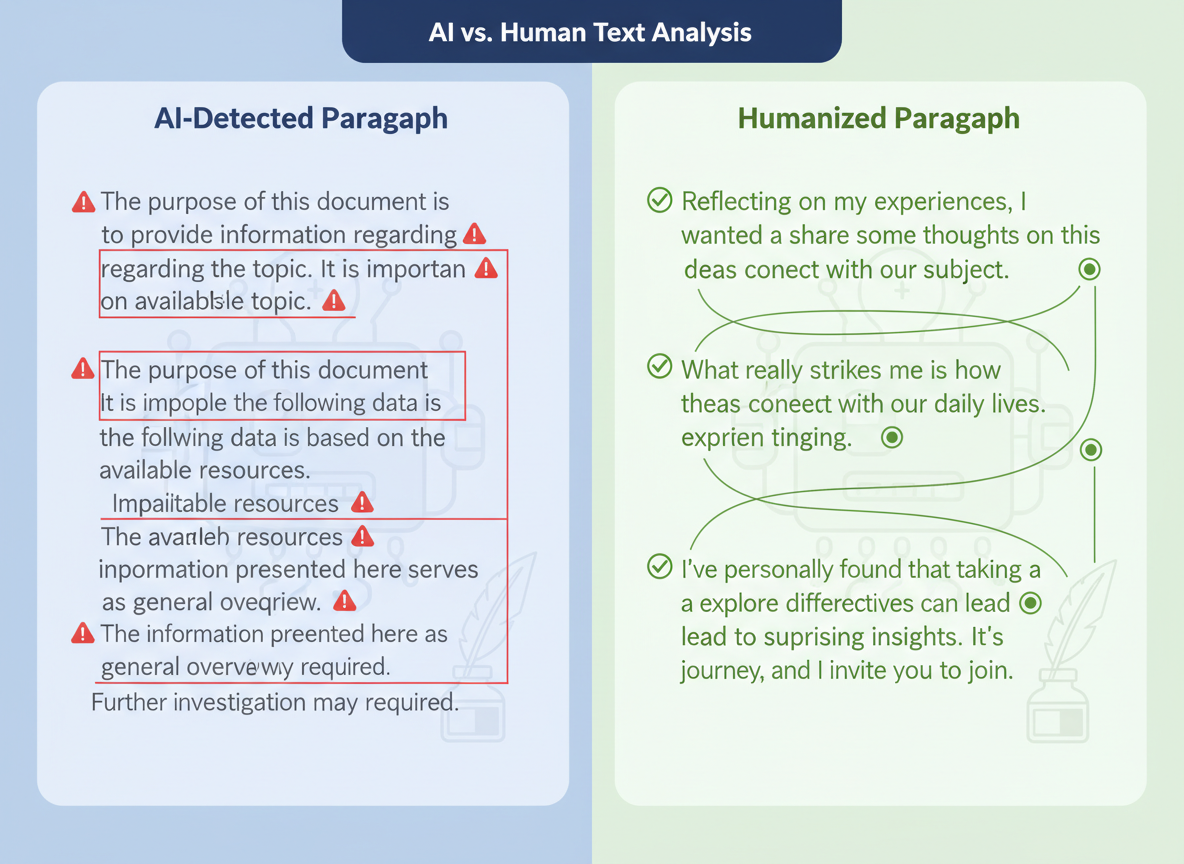
That said, robotic-sounding content won’t engage readers. AI detectors flag patterns like overly perfect grammar, repetitive sentence structures, and those telltale generic phrases that scream “machine-written.”
Want your AI paragraph writing to pass both human and detector scrutiny? Try these seven techniques:
1. Add personal stories. Even brief ones work. “Last month, I tested this approach with a client…” beats abstract explanations.
2. Contract everything. Don’t say “do not”—say “don’t.” It’s that simple.
3. Mix short punchy sentences with longer, more detailed explanations. See what I did there?
4. Throw in minor grammatical quirks. Real writers occasionally start sentences with “And” or “But.”
5. Use specific data points. “73% of marketers” sounds more authentic than “most marketers.”
6. Include rhetorical questions. They break up the monotony, don’t they?
7. Let your personality shine through. Share opinions. Take stances.
Test your content with tools like Originality.AI or GPTZero. If they flag it, revise. Different AI paragraph writing tools produce different outputs—experiment to find what works.
The sweet spot? Using AI for speed while injecting your unique perspective and experience. That’s how you demonstrate expertise while maintaining efficiency.
Limitations and When NOT to Use AI Paragraph Writing
Let’s be real: AI paragraph writing isn’t perfect for everything.
Highly specialized technical content suffers when you rely solely on AI. If you’re writing about quantum computing algorithms or advanced medical procedures, AI often generates surface-level fluff that experts will immediately spot as shallow.
Legal and ethical concerns matter too. Many industries require disclosure when AI creates content. Copyright issues remain murky—who owns AI-generated text? Healthcare, finance, and legal sectors face strict regulations that can make AI usage risky or outright prohibited.
Some content absolutely needs your human touch. Personal essays, thought leadership pieces, and crisis communications demand authenticity that AI can’t fake. When writing a letter of resignation, you might use AI for structure, but the personal reasons and gratitude must come from you.
AI also hallucinates facts. It’ll confidently cite studies that don’t exist or misrepresent statistics. For sensitive topics—mental health, trauma, grief—human empathy and judgment aren’t optional extras. They’re everything.
Know when to step in yourself.
Advanced Techniques: Customization and Fine-Tuning
Once you’ve mastered basic AI paragraph writing, it’s time to make these tools truly yours. You’re leaving serious efficiency on the table if you’re not customizing your workflow.
Start by training your AI on your brand voice. Feed it your best-performing content, style guides, and specific instructions about tone. Most platforms let you save custom prompts that tell the AI exactly how you write—whether that’s casual and punchy or technical and formal.
API integration is where things get powerful. Connect your AI paragraph generator directly to your CMS, and you’ll automate repetitive tasks like product descriptions or social media updates. This is what content engineers specialize in—building systems that scale your output without sacrificing quality.
Create reusable templates for your recurring content needs. Newsletter intros, blog conclusions, FAQ answers—build a library that saves you hours each week.
Don’t ignore advanced settings. Temperature controls adjust creativity (lower for factual content, higher for storytelling). Output variations let you generate multiple versions instantly, giving you options to choose from.
The real magic? Combining tools. Use one AI for research, another for first drafts, and a third for optimization. Your workflow becomes a content assembly line that runs while you sleep.
Real Results: Case Studies and ROI Analysis
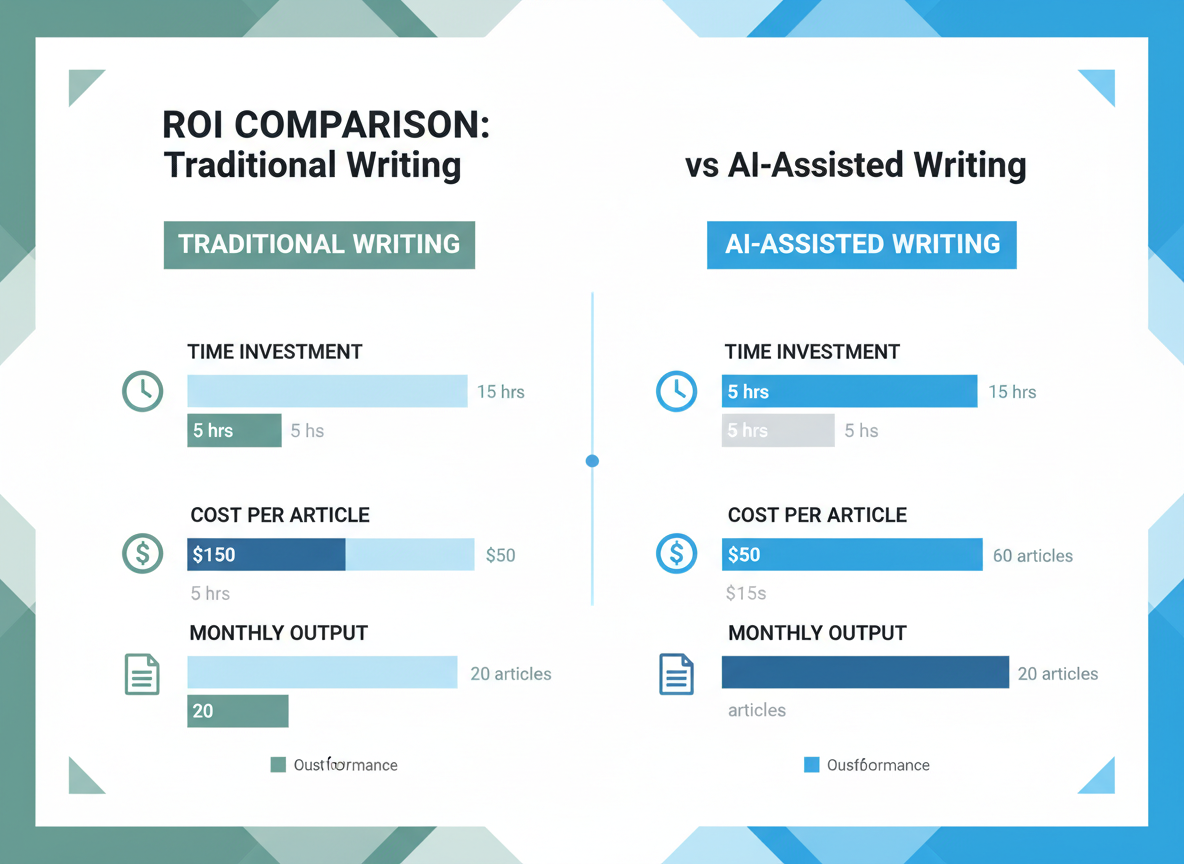
Let’s talk numbers. Sarah Chen’s content agency was stuck at 50 articles monthly until she integrated AI paragraph writing into her workflow. Within three months, her team scaled to 200 articles without hiring new writers. The secret? AI-generated first drafts that her editors refined, cutting production time from 4 hours to 90 minutes per piece.
Need product descriptions? Marcus Rodriguez runs a home décor ecommerce store that needed 1,000+ unique descriptions. Using an AI product description generator, he completed the entire catalog in six days—a task that would’ve taken his team three months manually.
Freelance writer Jennifer Adams doubled her income from $3,200 to $6,500 monthly by letting AI handle first drafts. She went from writing 15 articles to 32 per month, spending her energy on high-value editing instead of staring at blank screens.
The ROI math is straightforward. A $50 monthly AI subscription plus 30% editing time beats paying $100+ per article to outsource. Content agencies report 60-75% cost reductions, while freelancers save 15-20 hours weekly. That’s time you can reinvest in client acquisition or—here’s a thought—actually taking weekends off.
Troubleshooting Common AI Paragraph Writing Problems
Even the best AI paragraph writing tools hit snags. Here’s how to fix them fast.
Generic output? Your prompts aren’t specific enough. Instead of “write about email marketing,” try “write a persuasive paragraph about email automation for overwhelmed solopreneurs who hate tech, using a friendly, encouraging tone.”
Spotting factual errors? Never publish without verification. Cross-check statistics, dates, and claims against trusted sources. AI hallucinates data sometimes—it’s just how it works.
Repetitive phrasing driving you nuts? Add “use varied sentence structures and avoid repeating phrases” to your prompts. Or hit regenerate. Sometimes a fresh attempt works wonders.
Wrong tone? Feed your AI examples of your brand voice. Create a custom instruction set with your style guidelines, preferred phrases, and no-go words. Think of it like training a new writer on your team (which you basically are when working with branded content tools).
Keywords stuffed awkwardly? Specify placement: “naturally include ‘AI paragraph writing’ in the opening sentence and once mid-paragraph.”
Sounding like everyone else? Ask for unique angles: “contrarian viewpoint” or “underreported benefit.”
Ethical Guidelines and Best Practices for AI Paragraph Writing
Let’s talk about something that’ll matter more every month: using AI responsibly while protecting your reputation.
Transparency matters. You don’t need a disclaimer on every single paragraph, but if AI significantly shaped your content, say so. It’s about trust—your audience appreciates honesty more than you’d think.
You’re still accountable. AI writes the words, but you sign your name to them. Review everything. Fact-check claims. Make sure the tone matches your voice. If something’s wrong, it’s on you, not the algorithm.
Originality isn’t optional. Run content through plagiarism checkers like Copyscape or Grammarly. AI occasionally regurgitates training data, so verify your work stays unique and properly attributes sources when needed.
Watch for bias. AI mirrors the data it learned from—sometimes that includes stereotypes or limited perspectives. Read critically. Would this alienate part of your audience?
Consider your carbon footprint. Each AI query uses energy. Batch your requests, edit thoughtfully, and don’t regenerate endlessly.
As regulations tighten, content engineers who understand these boundaries will lead the industry. Stay informed, stay ethical, and you’ll stay ahead.
How Testing CG Revolutionizes AI Paragraph Writing at Scale
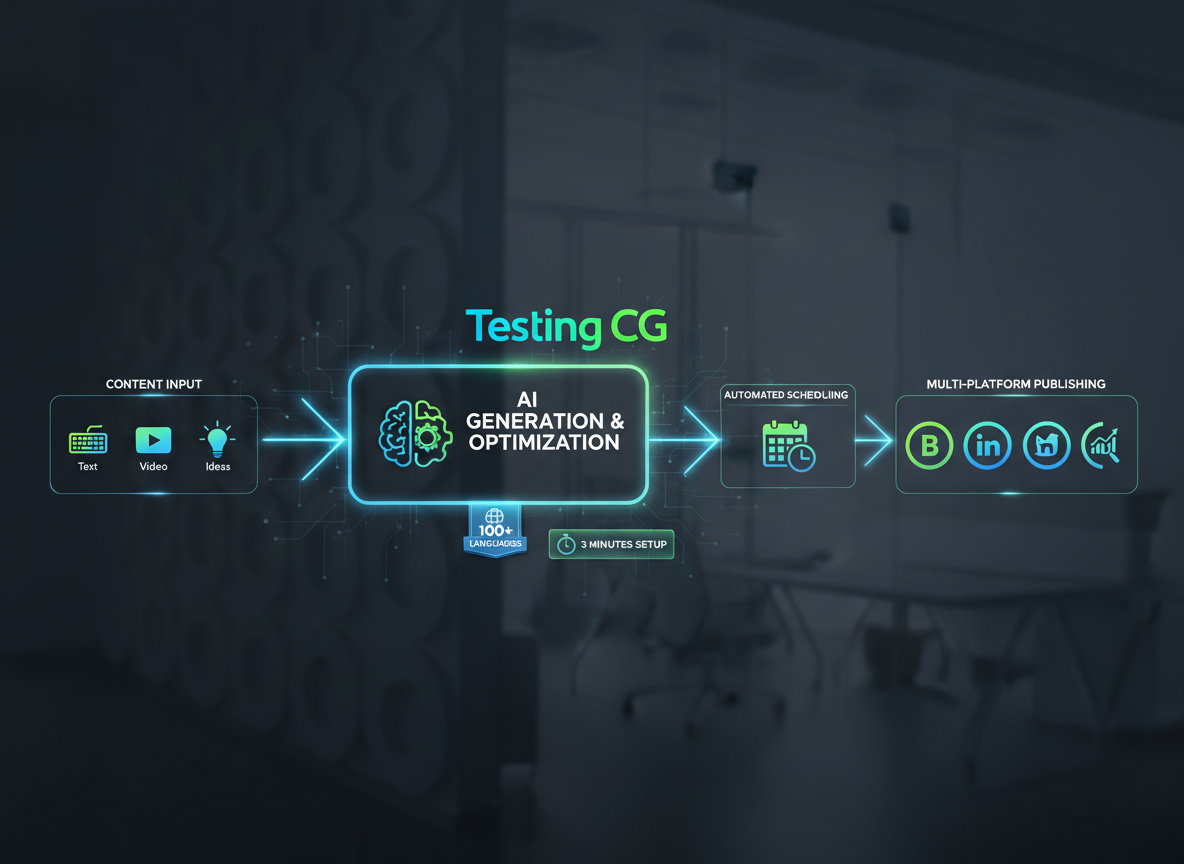
You’ve learned the techniques. You understand the prompts. But here’s the reality: manually writing, editing, and publishing AI paragraphs across multiple platforms still eats up hours of your week.
Testing CG flips this entire workflow on its head.
Instead of generating paragraphs and then copying them to WordPress, Facebook, LinkedIn, and Twitter separately, Testing CG handles everything automatically. Set up your entire year of content in just three minutes, and the platform publishes daily across all your channels without you lifting a finger.
Think about your current process. You probably spend 10-15 minutes per piece just formatting and posting. Multiply that across seven days, four clients, and you’re looking at nearly 5 hours weekly on distribution alone. Testing CG eliminates that completely with auto-syndication.
The platform supports 100+ languages, making it perfect for agencies managing international clients. Got a YouTube video? Convert it to a fully optimized blog post with properly structured paragraphs in three clicks.
Whether you’re crafting professional business documents or daily social content, Testing CG transforms AI paragraph writing from a task into a system. You focus on strategy and client relationships while the platform handles the heavy lifting.
For solopreneurs managing multiple brands or agencies juggling dozens of accounts, this isn’t just convenient—it’s the difference between burnout and scaling profitably.
Frequently Asked Questions (FAQ)
Is AI paragraph writing detectable by Google?
Google doesn’t penalize AI content specifically. Their focus is on quality, usefulness, and whether content meets E-E-A-T standards (Experience, Expertise, Authoritativeness, Trustworthiness). If your AI-generated paragraphs provide genuine value and pass human review, they’ll perform just fine. The key is enhancing AI output with your expertise rather than publishing raw machine text.
How much does AI paragraph writing cost?
Free tools like ChatGPT offer basic capabilities, while premium options range from $20-50/month for individuals to $500+ for enterprise solutions. When you’re producing content 10x faster, the ROI is massive—many creators save 15-20 hours weekly, making even premium tools profitable.
Can AI write paragraphs in multiple languages?
Yes, most modern AI tools handle 50+ languages. Quality varies though—English, Spanish, French, and German typically get the best results. For less common languages, expect more editing work.
Do I need to edit AI-generated paragraphs?
Absolutely. Think of AI as your first-draft assistant, not your replacement. Human oversight catches factual errors, adds personality, and ensures brand consistency. Plan to spend 30-50% of traditional writing time on editing.
What’s the best AI paragraph writing tool for beginners?
ChatGPT is the easiest starting point—it’s free, intuitive, and requires minimal learning curve. Once you’ve mastered prompting basics, exploring specialized tools becomes worthwhile. Check out our detailed comparison to see which advanced option fits your needs.
How long does it take to generate a paragraph with AI?
Literally 5-30 seconds for most paragraphs. Complex technical content might take a minute. The real time investment is crafting effective prompts and editing output.
Can AI paragraph writing help with SEO?
Definitely. AI helps you target keywords naturally, create comprehensive content that covers search intent, and produce more content consistently—all ranking factors Google loves.
Is AI paragraph writing plagiarism?
No, when used properly. AI generates original text based on patterns, not copying existing content. However, always run plagiarism checks and add your unique insights to ensure complete originality.
What industries benefit most from AI paragraph writing?
E-commerce (product descriptions), digital marketing (ad copy and blogs), education (course materials), and content agencies see the biggest wins. Basically, anywhere high-volume writing creates bottlenecks.
How do I make AI-written paragraphs sound more human?
Add personal stories, use contractions, vary sentence structure, include conversational asides, and inject your personality. Read aloud—if it sounds robotic, it’ll read that way too.
I am a full-time online marketer, for over a decade now. Helped over 100,000+ people & generated well over $12M in online sales.