SEO vs. SEM: Choosing the Right Tools for Your Digital Marketing Success
Table of Contents
1. Introduction: The Digital Marketing Landscape
2. Understanding SEO: The Foundation of Organic Growth
3. What is SEM and Why It Matters
4. Key Differences Between SEO and SEM
5. When to Use SEO: Building Long-Term Success
6. When to Use SEM: Getting Quick Results
7. Essential SEO Tools for Success
8. Top SEM Tools to Maximize Your Campaigns
9. Creating an Integrated SEO and SEM Strategy
10. Measuring Success: Analytics and KPIs
11. Budget Considerations and ROI
12. Conclusion: Making the Right Choice for Your Business
13. Frequently Asked Questions
Introduction: The Digital Marketing Landscape
In today’s competitive digital marketplace, businesses face a crucial decision: how to allocate their marketing resources for maximum impact. Two powerful strategies dominate the search marketing world – Search Engine Optimization (SEO) and Search Engine Marketing (SEM). While both aim to increase your website’s visibility in search results, they take fundamentally different approaches.
I’ve spent years helping businesses navigate this complex terrain, and I’ve seen firsthand how the right choice between SEO and SEM can make or break a marketing campaign. Some companies throw money at paid ads without understanding organic search potential, while others wait months for SEO results when they need immediate traffic.
The truth is, there’s no one-size-fits-all answer. Your choice depends on your business goals, timeline, budget, and market conditions. This comprehensive guide will help you understand both strategies, compare their benefits and limitations, and choose the right tools to achieve your specific objectives.
Understanding SEO: The Foundation of Organic Growth
Search Engine Optimization is the practice of optimizing your website and content to rank higher in organic search results. Unlike paid advertising, SEO focuses on earning traffic naturally through relevance, authority, and user experience.
SEO encompasses several key components. On-page optimization involves crafting compelling titles, meta descriptions, and content that both users and search engines love. Technical SEO ensures your website loads quickly, works on mobile devices, and follows search engine guidelines. Off-page SEO builds authority through quality backlinks and social signals.
The beauty of SEO lies in its compound effect. Each piece of optimized content, every quality backlink, and all technical improvements build upon each other. Over time, this creates a powerful foundation that can drive consistent, high-quality traffic to your website.
However, SEO requires patience. Most websites need three to six months to see significant results, and competitive industries may take even longer. The algorithms that determine rankings are complex and constantly evolving, requiring ongoing adaptation and refinement of your strategy.
What is SEM and Why It Matters
Search Engine Marketing, in its modern context, primarily refers to paid search advertising through platforms like Google Ads and Microsoft Advertising. SEM allows you to bid on keywords and display your ads prominently in search results, typically above organic listings.
SEM offers immediate visibility and precise targeting capabilities. You can launch a campaign today and start receiving traffic within hours. The platform provides granular control over who sees your ads based on demographics, location, device type, and even the time of day.
One of SEM’s greatest advantages is its measurability. Every click, conversion, and dollar spent can be tracked and analyzed. This transparency allows for real-time optimization and clear ROI calculations, making it easier to justify marketing spend to stakeholders.
The pay-per-click model means you only pay when someone actually clicks on your ad, making it a performance-based investment. Advanced features like ad extensions, remarketing, and automated bidding strategies can significantly improve campaign effectiveness when properly implemented.
Key Differences Between SEO and SEM
Understanding the fundamental differences between SEO and SEM is crucial for making informed decisions about your marketing strategy. These differences span multiple dimensions, from cost structure to timeline expectations.
Cost structure represents perhaps the most obvious difference. SEO requires upfront investment in content creation, technical optimization, and often professional services, but generates ongoing traffic without per-click costs. SEM involves continuous spending, with costs directly tied to traffic volume and keyword competitiveness.
Timeline expectations vary dramatically between the two approaches. SEM delivers immediate results, allowing you to test markets, validate products, and generate leads from day one. SEO requires months of consistent effort before showing significant results, but those results tend to be more sustainable over time.
Trust and credibility factors also differ. Studies consistently show that users trust organic results more than paid advertisements. Organic listings often receive higher click-through rates and are perceived as more authoritative, especially for informational queries.
Control and predictability present another contrast. SEM offers precise control over ad placement, timing, and audience targeting, with predictable costs per click. SEO results depend on algorithm changes and competitor actions, making outcomes less predictable despite potentially higher long-term returns.
When to Use SEO: Building Long-Term Success
SEO shines in scenarios where long-term growth and sustainable traffic are priorities. If you’re building a content-driven business, establishing thought leadership, or operating in an industry where trust and authority matter significantly, SEO should be your primary focus.
Businesses with limited ongoing marketing budgets often find SEO more cost-effective over time. While the initial investment may be substantial, the ongoing costs are typically lower than maintaining equivalent paid traffic through SEM campaigns.
SEO works exceptionally well for informational content and educational resources. If your business relies on helping customers understand complex topics, solve problems, or make informed decisions, organic search provides the ideal environment for reaching these audiences.
Local businesses with strong geographic ties benefit enormously from local SEO efforts. Optimizing for “near me” searches and local directories can capture high-intent customers who are ready to visit physical locations or hire local services.
Companies in highly regulated industries or those selling sensitive products may find organic search more appropriate than paid advertising, which often faces stricter restrictions and higher scrutiny from platform policies.
When to Use SEM: Getting Quick Results
SEM becomes the preferred choice when immediate results are essential. Product launches, seasonal promotions, and time-sensitive offers benefit from SEM’s ability to generate instant visibility and traffic.
Highly competitive industries where organic rankings are dominated by established players may require SEM to gain initial market presence. New businesses can use paid search to compete immediately while building their organic presence over time.
Testing and validation scenarios favor SEM’s rapid feedback mechanisms. Before investing heavily in SEO for specific keywords or market segments, SEM allows you to test demand, refine messaging, and identify the most profitable opportunities.
E-commerce businesses with clear profit margins often find SEM particularly effective for driving sales. The ability to track conversions directly and optimize for profitability makes paid search an attractive option for product-focused companies.
Geographic expansion strategies benefit from SEM’s precise targeting capabilities. Companies entering new markets can use paid search to establish presence quickly while gathering data to inform longer-term SEO strategies.
Essential SEO Tools for Success
Selecting the right SEO tools can dramatically impact your optimization efforts’ effectiveness and efficiency. Professional SEO requires data-driven decisions, and the right tools provide the insights necessary for strategic planning and performance monitoring.
Google Search Console stands as the foundational tool for any SEO strategy. This free platform provides direct insights from Google about your website’s performance, indexing status, and technical issues. It reveals which queries drive traffic to your site and identifies opportunities for improvement.
Comprehensive SEO platforms like Ahrefs, SEMrush, or Moz offer extensive keyword research capabilities, competitor analysis, and backlink monitoring. These tools help identify content opportunities, track ranking progress, and understand your competitive landscape.
Technical SEO tools such as Screaming Frog or Sitebulb crawl your website to identify technical issues that might hinder search engine performance. These tools uncover problems like broken links, duplicate content, and crawling errors that could impact your rankings.
Content optimization tools like Clearscope, MarketMuse, or SurferSEO help create content that aligns with search intent and covers topics comprehensively. These platforms analyze top-ranking content to suggest relevant keywords and topics to include in your content.
Page speed and performance tools including Google PageSpeed Insights, GTmetrix, and Core Web Vitals measurements help ensure your website provides excellent user experience, which increasingly influences search rankings.
Top SEM Tools to Maximize Your Campaigns
Successful SEM campaigns require sophisticated tools for keyword research, campaign management, and performance optimization. The right tool stack can mean the difference between profitable campaigns and wasted ad spend.
Google Ads remains the dominant platform for search advertising, offering extensive targeting options, automated bidding strategies, and integration with other Google services. The platform’s Keyword Planner provides essential data for campaign planning and budget estimation.
Microsoft Advertising (formerly Bing Ads) offers access to a different audience demographic and often features lower competition and costs than Google Ads. The platform’s import functionality makes it easy to extend Google campaigns to Bing’s network.
Third-party management platforms like WordStream, Optmyzr, or Adalysis provide advanced automation and optimization features beyond what native platforms offer. These tools can manage multiple accounts, automate bid adjustments, and identify optimization opportunities.
Landing page optimization tools such as Unbounce, Leadpages, or Instapage help create high-converting landing pages specifically designed for paid traffic. These platforms offer A/B testing capabilities and conversion-focused templates.
Analytics and attribution tools like Google Analytics 4, HubSpot, or Salesforce help track the complete customer journey from ad click to conversion. Understanding multi-touch attribution becomes crucial for optimizing campaign performance and budget allocation.
Creating an Integrated SEO and SEM Strategy
The most successful digital marketing strategies don’t view SEO and SEM as competing approaches but rather as complementary tactics that strengthen each other. An integrated strategy leverages the unique strengths of both methods while minimizing their individual weaknesses.
Keyword research benefits enormously from combining SEO and SEM data. SEM campaigns provide immediate feedback about keyword performance, conversion rates, and user behavior that can inform SEO content strategies. Conversely, SEO keyword research can identify long-tail opportunities for cost-effective SEM campaigns.
Content strategy integration allows you to test messaging and topics through SEM before committing to long-term SEO content creation. High-performing ad copy can inform meta descriptions and title tags, while successful organic content can inspire new ad campaigns.
Budget allocation should consider the customer journey and business objectives. SEM might focus on high-intent, bottom-funnel keywords for immediate conversions, while SEO targets informational queries that build awareness and authority over time.
Competitive intelligence improves when combining both approaches. SEO tools reveal competitors’ organic strategies and content gaps, while SEM platforms show their paid search tactics and ad copy. This comprehensive view enables more strategic positioning.
Remarketing strategies can bridge SEO and SEM efforts by targeting users who initially discovered your brand through organic search with targeted paid campaigns, increasing conversion likelihood and maximizing the value of your SEO traffic.
Measuring Success: Analytics and KPIs
Effective measurement requires different approaches for SEO and SEM, though both ultimately aim to drive business results. Understanding the right metrics for each strategy helps optimize performance and demonstrate value to stakeholders.
SEO metrics focus on organic visibility, traffic quality, and long-term growth trends. Key performance indicators include organic traffic volume, keyword ranking improvements, click-through rates from search results, and the quality of organic traffic measured through engagement metrics and conversions.
Technical SEO metrics such as page load speed, mobile usability scores, and crawl error rates provide insights into the foundation supporting your organic performance. These metrics often predict future ranking performance before traffic changes become apparent.
SEM metrics emphasize efficiency and immediate returns. Click-through rates, cost per click, conversion rates, and return on ad spend (ROAS) provide real-time feedback about campaign performance and optimization opportunities.
Quality Score in Google Ads serves as a crucial SEM metric that affects both ad placement and costs. This metric reflects the relevance and quality of your ads, keywords, and landing pages, directly impacting campaign profitability.
Cross-channel attribution becomes essential when running integrated campaigns. Understanding how SEO and SEM efforts influence each other requires sophisticated tracking that follows users across multiple touchpoints and channels.
Budget Considerations and ROI
Budget planning for SEO and SEM requires understanding their different cost structures and return patterns. Neither strategy is inherently more cost-effective; the right choice depends on your specific situation and objectives.
SEO typically requires higher upfront investments but lower ongoing costs. Initial expenses include website optimization, content creation, and potentially professional services. However, once rankings improve, organic traffic continues flowing without per-click costs.
SEM costs are more predictable and controllable, with spending directly tied to traffic volume. This makes budgeting easier but requires continuous investment to maintain traffic levels. Cost per acquisition tends to be higher than SEO in the long term but provides immediate results.
ROI calculations must consider different timeframes for each strategy. SEM ROI can be calculated monthly or even daily, while SEO ROI often requires quarterly or annual assessment to account for the time needed to see results.
Risk factors differ between the approaches. SEO investments carry the risk of algorithm changes or increased competition affecting rankings, while SEM faces risks of rising keyword costs or platform policy changes affecting campaign performance.
Portfolio approaches often provide the best risk-adjusted returns. Combining both strategies allows businesses to capture immediate opportunities through SEM while building long-term assets through SEO, creating a more resilient and sustainable marketing foundation.
Conclusion: Making the Right Choice for Your Business
The decision between SEO and SEM isn’t about choosing one over the other—it’s about understanding how each fits into your broader business strategy. Both approaches offer unique advantages and can work powerfully together when properly coordinated.
Consider your immediate needs, long-term goals, and available resources when making this decision. If you need quick results and have the budget for ongoing advertising spend, SEM provides immediate visibility and measurable returns. If you’re building for the long term and want to establish sustainable organic presence, SEO offers compound growth and cost-effective traffic over time.
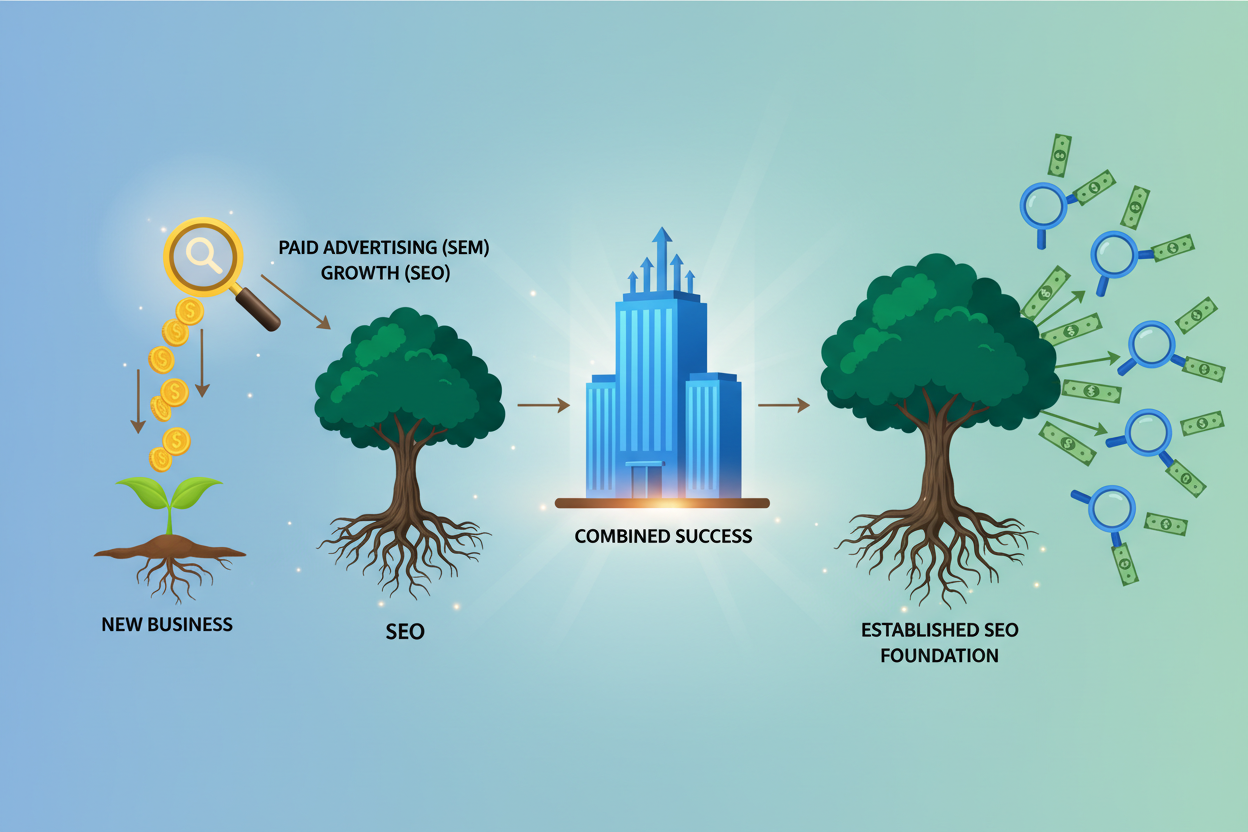
The most successful businesses I’ve worked with typically start with a foundation in one area while gradually expanding into the other. New businesses might begin with SEM to establish market presence quickly, then invest SEO profits into building organic visibility. Established companies might leverage their SEO success to fund more aggressive SEM expansion.
Remember that digital marketing is not a set-and-forget endeavor. Both SEO and SEM require ongoing optimization, testing, and adaptation to changing market conditions. The tools and strategies that work today may need adjustment tomorrow, making continuous learning and flexibility essential for long-term success.
Whatever path you choose, focus on providing genuine value to your audience. Search engines and users alike reward businesses that offer helpful, relevant, and high-quality experiences. Whether through optimized content or compelling ads, your success ultimately depends on how well you serve your customers’ needs.
Frequently Asked Questions
Q: Can I do SEO and SEM at the same time?
A: Absolutely! In fact, running SEO and SEM simultaneously often produces better results than either strategy alone. They complement each other by providing comprehensive search visibility and valuable data sharing opportunities.
Q: How long does it take to see results from SEO?
A: Most websites begin seeing noticeable SEO improvements within 3-6 months of consistent optimization efforts. However, competitive industries may require 6-12 months or longer to achieve significant ranking improvements.
Q: Is SEM more expensive than SEO?
A: SEM typically has higher ongoing costs since you pay for each click, while SEO requires larger upfront investments but lower ongoing expenses. The cost-effectiveness depends on your timeline and specific business situation.
Q: Which strategy is better for small businesses?
A: Small businesses often benefit from starting with local SEO for sustainable long-term growth, while using targeted SEM campaigns for immediate needs like promotions or new product launches. The best approach depends on your budget and goals.
Q: Do I need professional help for SEO and SEM?
A: While basic SEO and SEM can be learned and implemented in-house, professional expertise often provides faster results and better ROI. Consider your internal resources, complexity of your market, and available budget when making this decision.
Q: How do I know if my SEO or SEM campaigns are working?
A: Track relevant metrics for each strategy: organic traffic, rankings, and conversions for SEO; click-through rates, cost per conversion, and ROAS for SEM. Use tools like Google Analytics and platform-specific dashboards to monitor performance regularly.
Content Gorilla AI
Get started for as low as $1…
