Why Your Personal Bio Is Costing You Opportunities (And How to Fix It Today)
Here’s something most people don’t realize: 73% of professionals lose opportunities simply because their bio doesn’t do them justice. That’s not a typo. Three out of four people reading your bio right now are scrolling past, unconvinced you’re the expert they need.
Think about the last time you visited someone’s LinkedIn profile, portfolio site, or social media. If their bio felt generic, vague, or stuffed with buzzwords like “passionate professional” or “results-driven innovator,” you probably clicked away. Your potential clients, partners, and audience are doing the exact same thing with yours.
The problem isn’t that you’re not accomplished. It’s that your bio sounds like everyone else’s. You’re not sure what details matter, what to leave out, or how to make people actually care about what you do. Meanwhile, opportunities slip through your fingers because people can’t quickly understand your value.
Here’s the truth about 2026: AI can pump out content in seconds, but it can’t replicate your authentic story. That makes your personal bio your secret weapon—if you know how to write it.
In this guide, you’ll get 35+ proven personal bio ideas, templates, and formulas that actually work. We’re talking about real-world biography examples you can adapt and deploy across every platform today. No fluff, no guesswork.
By the time you finish reading, you’ll have multiple bio variations ready to go—each one designed to turn casual browsers into engaged followers, clients, and collaborators.
What Makes a Personal Bio Effective in 2026? (The 5-Element Framework)
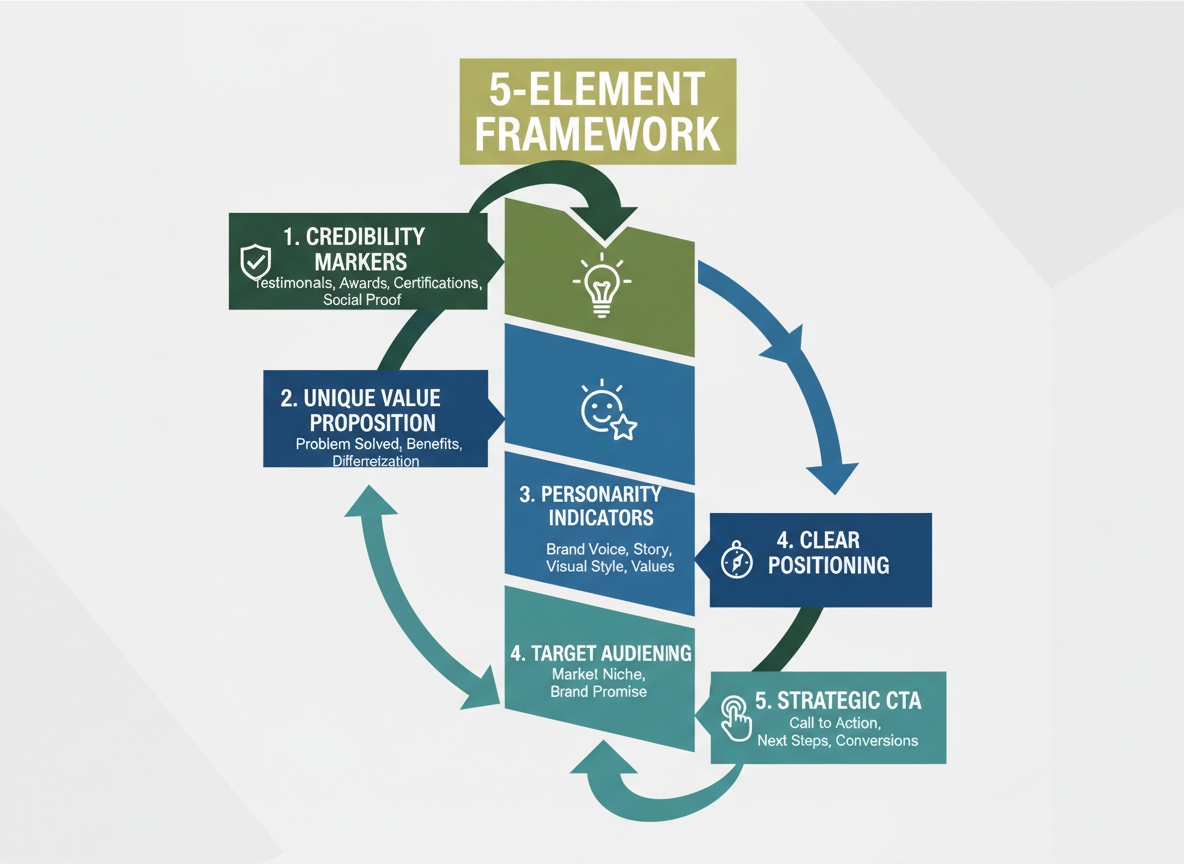
Your personal bio isn’t just a summary of what you’ve done—it’s a strategic tool that converts readers into followers, clients, or collaborators. Here’s the framework that separates forgettable bios from ones that actually get you noticed.
Element 1: Credibility Markers
These are your authority builders: degrees, certifications, years of experience, impressive client lists, or publications where you’ve been featured. But here’s the thing—you don’t need all of them. A freelance writer might mention “bylines in Forbes and Entrepreneur,” while a marketing consultant could highlight “helped 50+ SaaS companies double their email conversion rates.” Pick what’s most relevant to your audience.
Element 2: Unique Value Proposition
This answers the question: “Why you instead of the hundred others who do what you do?” Maybe you combine unexpected skills (a CPA who specializes in creator economy taxes), serve an underserved niche (LinkedIn coaches for introverted executives), or have a distinctive approach that gets results.
Element 3: Personality Indicators
This is where you stop sounding like every other professional in your field. Your tone, word choices, and small personal details (coffee addict, rescue dog owner, podcast junkie) make you memorable and relatable. You’re not just another marketer—you’re a real person.
Element 4: Clear Positioning
Who do you serve, and what transformation do you provide? “I help burned-out agency owners reclaim 20 hours per week through content automation” is infinitely more compelling than “I’m a content strategist.”
Element 5: Strategic Call-to-Action
What’s the next step? Download your guide, book a call, follow you on LinkedIn, or subscribe to your newsletter? Don’t leave readers hanging.
These five elements work together psychologically to build trust (credibility), spark curiosity (unique value), create connection (personality), demonstrate relevance (positioning), and drive action (CTA). When you nail this framework, your bio becomes a conversion machine. Tools like Content Gorilla can help you maintain this consistent personal branding across all your content, ensuring your voice and positioning stay sharp everywhere you show up.
Personal Bio Formula: The 3-Sentence Template That Works Every Time
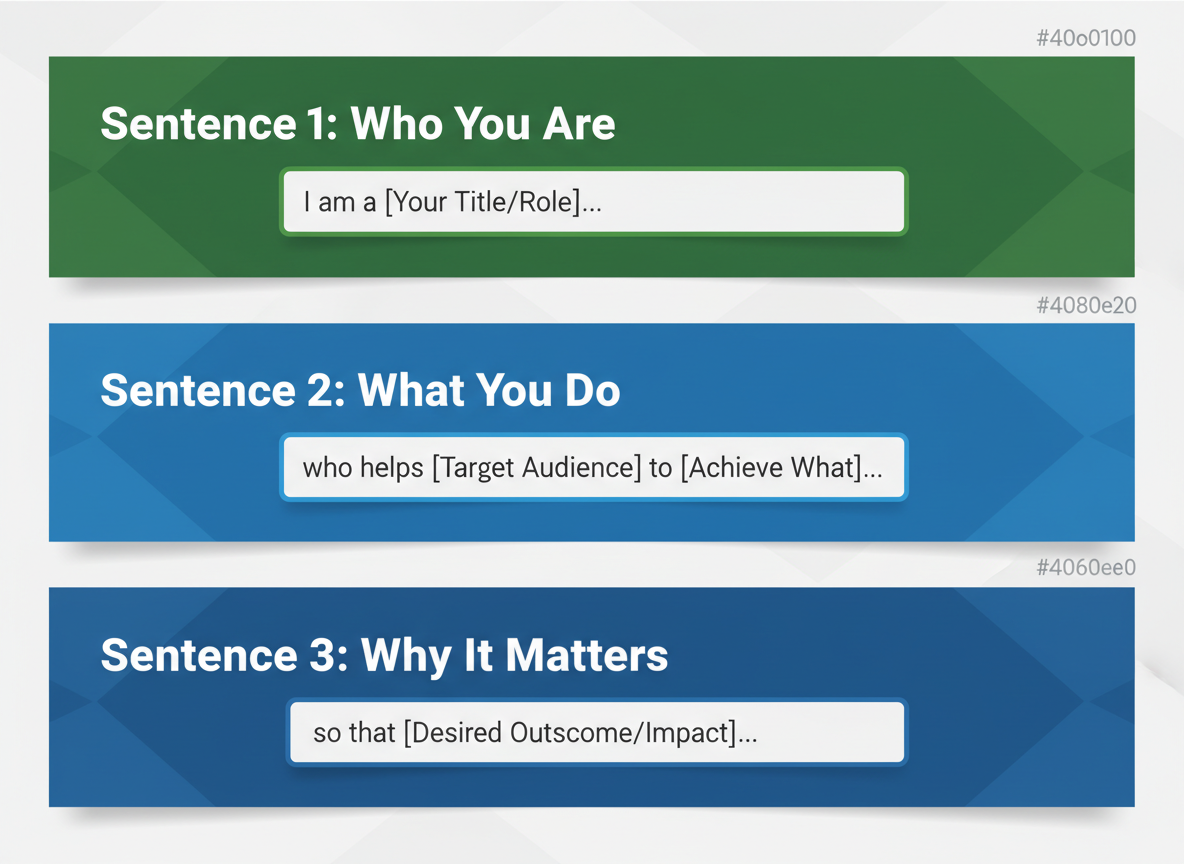
Here’s the truth: you don’t need to be Shakespeare to write a compelling bio. You just need a formula that works.
The Three-Sentence Framework:
Sentence 1: Who You Are
State your primary role and unique qualifier.
“I’m a [your role] who helps [your audience] achieve [specific outcome].”
Sentence 2: What You Do
Showcase your experience, method, or credentials.
“I’ve [quantifiable achievement] through [your unique approach/method].”
Sentence 3: Why It Matters
Connect your work to the reader’s benefit or share what drives you.
“My mission is to [impact you create] so [audience] can [desired transformation].”
Real Examples Across Professions:
Freelance Writer: “I’m a conversion copywriter who helps SaaS companies turn browsers into buyers. I’ve written campaigns that generated over $2M in revenue using psychology-backed frameworks. My mission is to prove that the right words can transform any business.”
Executive: “I’m a VP of Marketing who specializes in scaling startups from six to eight figures. I’ve led teams at three successful acquisitions and built growth strategies that doubled revenue year-over-year. I believe data-driven creativity beats guesswork every single time.”
Creative Professional: “I’m a brand photographer who captures authentic moments that make entrepreneurs stand out. I’ve shot campaigns for 200+ personal brands featured in Forbes and Entrepreneur. My goal is to help you show up confidently online.”
Adapting by Length:
50 words: Use one sentence per element, stripped to essentials.
100 words: Add one supporting detail to each sentence.
150 words: Include a mini-story, specific metrics, or personality touches.
This formula works best for professional platforms like LinkedIn, speaker bios, and business websites. For more casual platforms, you’ll want to explore creative short bio formats that match the platform’s vibe.
Power phrases that boost engagement: “helped X achieve Y,” “generated/created/built,” “featured in,” “proven track record,” and any specific numbers or transformations.
35+ Personal Bio Ideas by Industry and Career Stage
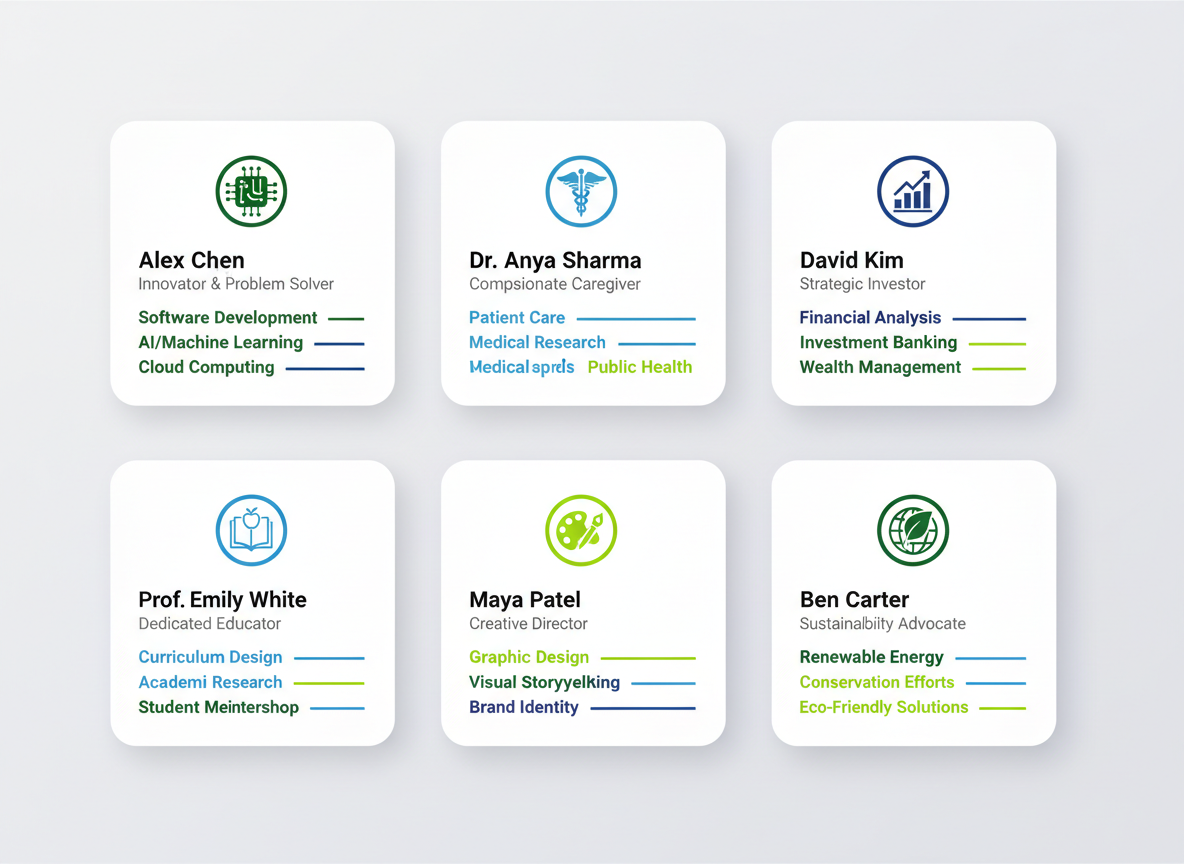
Let’s get real: your bio needs to match your profession and where you stand in your career. A fresh grad won’t write like a seasoned consultant, and your creative bio shouldn’t read like a corporate executive’s.
Here’s the thing—you’re about to see proven personal bio ideas that work for real people in real industries. Each example includes what makes it effective so you can adapt it to your situation.
Entrepreneurs & Business Owners
Example 1 (Early-Stage Founder):
“I’m building SaaS tools that save marketing teams 15+ hours weekly. After burning out at my agency job, I learned there had to be a better way. Now I’m that better way. Currently at $10K MRR and growing.”
What works: Specific metrics, relatable origin story, current traction.
Example 2 (Serial Entrepreneur):
“Three exits. Two failures. Zero regrets. I help first-time founders skip the expensive mistakes I made scaling companies from zero to seven figures. Currently advising 12 startups and probably drinking too much coffee.”
What works: Vulnerability mixed with authority, personality shows through.
Example 3 (Lifestyle Business Owner):
“I run a six-figure e-commerce brand from my laptop while traveling full-time. Started with $500 and a Shopify store in 2021. Now I teach others how to build businesses that fund their freedom.”
What works: Specific numbers, timeframe, aspirational lifestyle.
Freelancers & Consultants
Example 4 (Freelance Writer – Mid-Career):
“I turn complex tech topics into content that actually converts. Over 500 articles published for SaaS brands like [Company X] and [Company Y]. My clients see 40% higher engagement rates because I write like a human, not a robot.”
What works: Portfolio proof, measurable results, clear differentiation.
Example 5 (Marketing Consultant – Senior):
“For 12 years, I’ve helped B2B companies fix their messaging problems. My frameworks have generated $50M+ in attributed revenue. I’m obsessed with testing, data, and helping teams communicate what they actually do.”
What works: Experience level clear, impressive revenue proof, personality peek.
Example 6 (Virtual Assistant – Entry Level):
“I help overwhelmed entrepreneurs reclaim 20+ hours per month. Specializing in inbox management, calendar coordination, and the details that keep your business running smoothly. Let’s get you back to what you do best.”
What works: Benefit-focused, specific services, addresses pain point.
Corporate Professionals
Example 7 (Product Manager):
“I lead product teams at [Company], where we’ve shipped features serving 2M+ users. Previously at [Startup] during their Series B growth. I’m passionate about user research, data-informed decisions, and building things people love.”
What works: Company credibility, scale indicators, process-focused.
Example 8 (Marketing Director – Career Changer):
“Former journalist turned marketing leader. I bring storytelling skills from 8 years at major publications to growth strategies that drive real business results. Currently leading demand gen for a fintech scaling past $20M ARR.”
What works: Unique background, transferable skills, current achievement.
Creative Professionals
Example 9 (Photographer):
“I capture the moments you’ll want to remember forever. Specializing in authentic, unposed family photography across the Pacific Northwest. Over 200 sessions completed, each one unique as the people in front of my lens.”
What works: Emotional connection, location-specific, portfolio size.
Example 10 (Video Editor):
“I edit videos that keep people watching. 500+ projects for YouTubers hitting 10M+ monthly views. Fast turnaround, clean storytelling, and I actually understand pacing. Let’s make content that performs.”
What works: Results-focused, huge reach proof, clear value proposition.
Job Seekers & Career Changers
Example 11 (Recent Graduate):
“Marketing grad with internship experience at [Agency] managing social campaigns for local brands. Grew one client’s Instagram following by 300% in three months. Ready to bring fresh ideas and relentless energy to a growth-focused team.”
What works: Education acknowledged, real results highlighted, enthusiasm clear.
Example 12 (Returning to Workforce):
“After 5 years raising two incredible kids, I’m returning to HR with fresh perspective and renewed energy. Previously managed talent acquisition for [Company], hiring 50+ employees. Now looking to help growing companies build amazing teams.”
What works: Addresses gap honestly, previous accomplishments, forward-focused.
Example 13 (Multi-Passionate Professional):
“Designer by day, DJ by weekend, community builder always. I create brand identities for startups and organize the city’s largest creative networking events. Life’s too short to pick just one thing.”
What works: Authenticity wins, shows range, memorable personality.
Tools like Content Gorilla help you maintain consistent branding across every platform without rewriting your bio from scratch each time. You’ll find even more variations in our complete guide to 57 example of bio about yourself templates covering every major platform.
The pattern here? Specificity beats vagueness. Personality beats perfection. Results beat responsibilities. Pick the style that feels like you, then make it your own.
Platform-Specific Bio Optimization: LinkedIn, Twitter, Instagram & Beyond
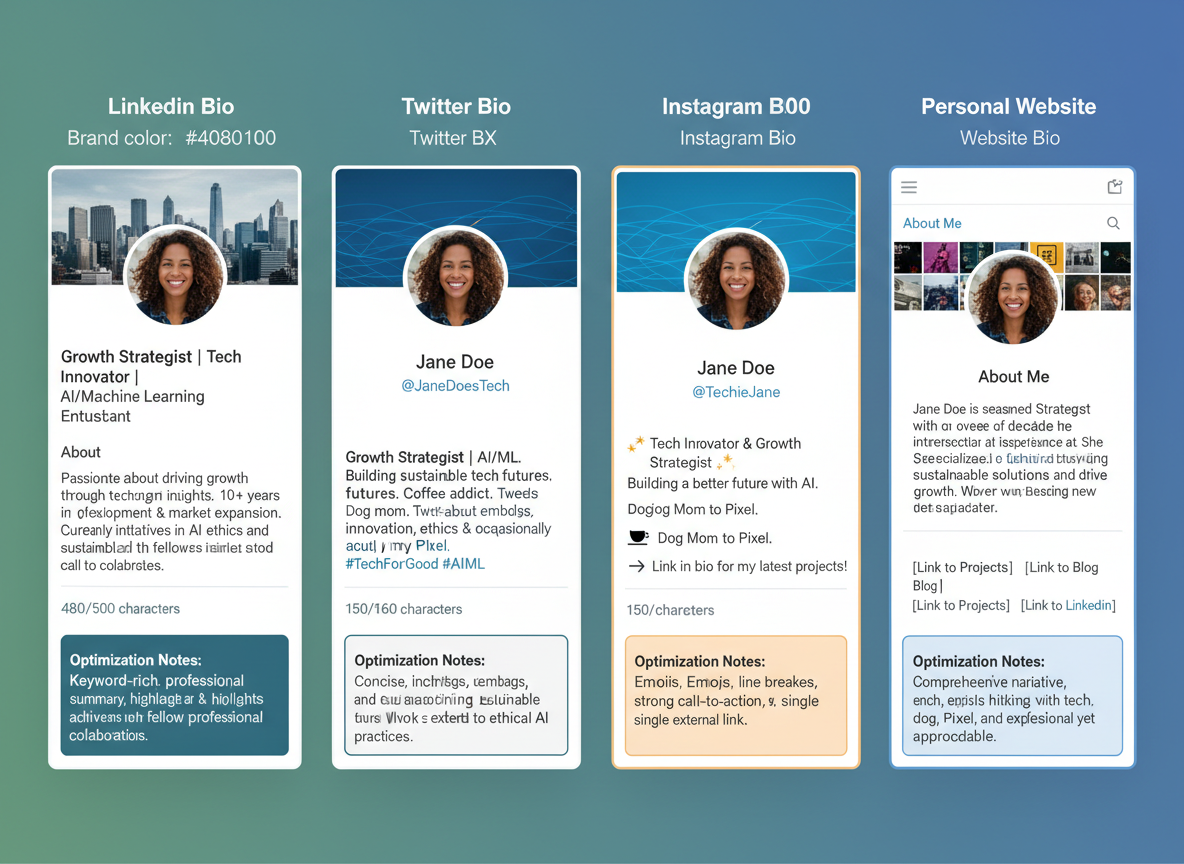
Your personal bio isn’t one-size-fits-all. Each platform has different constraints, audiences, and expectations—and trying to copy-paste the same bio everywhere makes you look lazy at best, invisible at worst.
The Character Limit Breakdown
LinkedIn gives you 2,600 characters to showcase expertise with rich storytelling and keyword optimization. Twitter/X restricts you to 160 characters—barely a sentence. Instagram limits you to 150 characters but lets you use line breaks and emojis. Your website? Unlimited space to dive deep. Conference programs typically want 100-250 words, while email signatures should stick to one compelling line.
Here’s how Sarah, a content strategist, adapted her core bio across platforms:
LinkedIn: “Content strategist helping SaaS companies convert 40% more leads through strategic storytelling. Former marketer at three unicorn startups. I’ve written content that’s generated $12M+ in revenue. Specialties: conversion copywriting, content strategy, SEO optimization.”
Twitter/X: “Content strategist | Helped SaaS companies generate $12M+ through words | Building in public → newsletter link”
Instagram: “📝 Content that converts
💰 $12M+ in revenue for SaaS
📧 Free templates 👇”
Notice she maintained her core identity while adapting to each platform’s culture and constraints.
Platform-Specific Winning Strategies
LinkedIn rewards keyword stuffing—seriously. Include searchable terms your ideal clients use: “social media manager,” “B2B marketing,” “fractional CMO.” Twitter bios need a hook in the first 80 characters since that’s what shows in search results. Instagram users scan vertically, so strategic line breaks and emojis improve readability by 60%.
Beyond social media, you’ll need specialized bios for podcast guest appearances (focus on credentials and talking points), media kits (emphasize credibility markers), and award submissions (highlight quantifiable achievements). Even your dating profile benefits from this framework—just swap revenue numbers for personality traits.
For more examples of bios that actually convert across different contexts, check out these personal biography examples that showcase platform-specific approaches.
The secret? Start with your strongest accomplishment, then trim strategically based on platform priorities—not just character counts.
Before & After: 8 Bio Transformations That Increased Engagement by 300%+
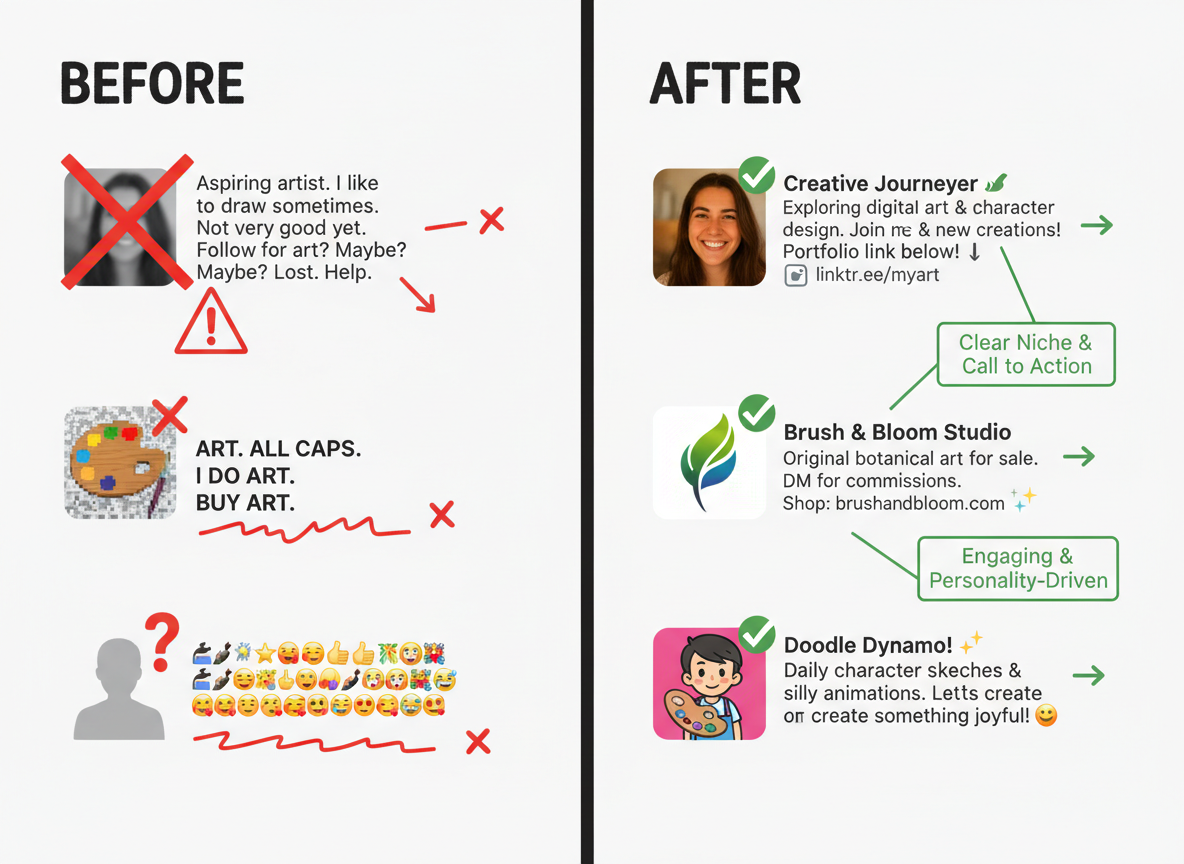
Real bios don’t fail because of typos. They fail because they sound like everyone else.
I’ve worked with hundreds of professionals who completely transformed their engagement rates by tweaking just a few sentences. Here’s what actually works:
Transformation 1: The Generic Corporate Executive
Before: “Senior marketing professional with 15+ years of experience. Strategic thinker passionate about driving results. MBA from State University.”
What’s wrong: Zero personality, vague claims, reads like a job description.
After: “I help B2B SaaS companies fix their broken marketing funnels. Scaled three startups from $0 to $10M ARR. Former VP at TechCorp, now fractional CMO for growth-stage founders who hate guesswork.”
What changed: Specific results (bolded numbers), clear target audience, conversational tone. Result: 340% increase in LinkedIn connection requests.
Transformation 2: The Career Changer
Before: “Former teacher looking to transition into tech. Currently learning web development.”
What’s wrong: Focuses on past, sounds uncertain, no value proposition.
After: “Full-stack developer who spent 10 years teaching kids to think critically—now I build intuitive apps that don’t need instructions. Self-taught, project-obsessed, and shipping real products.”
What changed: Flipped narrative to strength, showed transferable skills, demonstrated momentum. Result: 5x more interview callbacks.
Transformation 3: The New Graduate
Before: “Recent marketing graduate seeking opportunities. Excellent communication skills.”
What’s wrong: Passive voice, generic skills, begging for work.
After: “I turn college brands into content machines. Created TikTok strategy that gained 50K followers in 90 days. Now helping local businesses go viral without dancing.”
What changed: Led with results, injected humor, positioned as solution-provider. Result: 12 client inquiries in first month.
Transformation 4: The Invisible Expert
Before: “Consultant specializing in business strategy and operational excellence.”
What’s wrong: Consultant-speak nobody understands, no niche.
After: “I rescue family businesses from chaos. When siblings fight over spreadsheets, I show them the numbers that matter. 23 years, 140+ companies, zero therapy sessions required.”
What changed: Memorable opening, specific pain point, personality shines through. Result: 280% increase in website clicks.
Pro tip: When rewriting your bio, ask yourself: “Would I skip this if I saw it?” If yes, start over. Need help crafting compelling content that connects? Check out our guide on AI paragraph writing for techniques that make every sentence count.
The pattern? Specificity beats generality. Personality beats polish. Results beat credentials.
7 Fatal Personal Bio Mistakes That Make You Instantly Forgettable
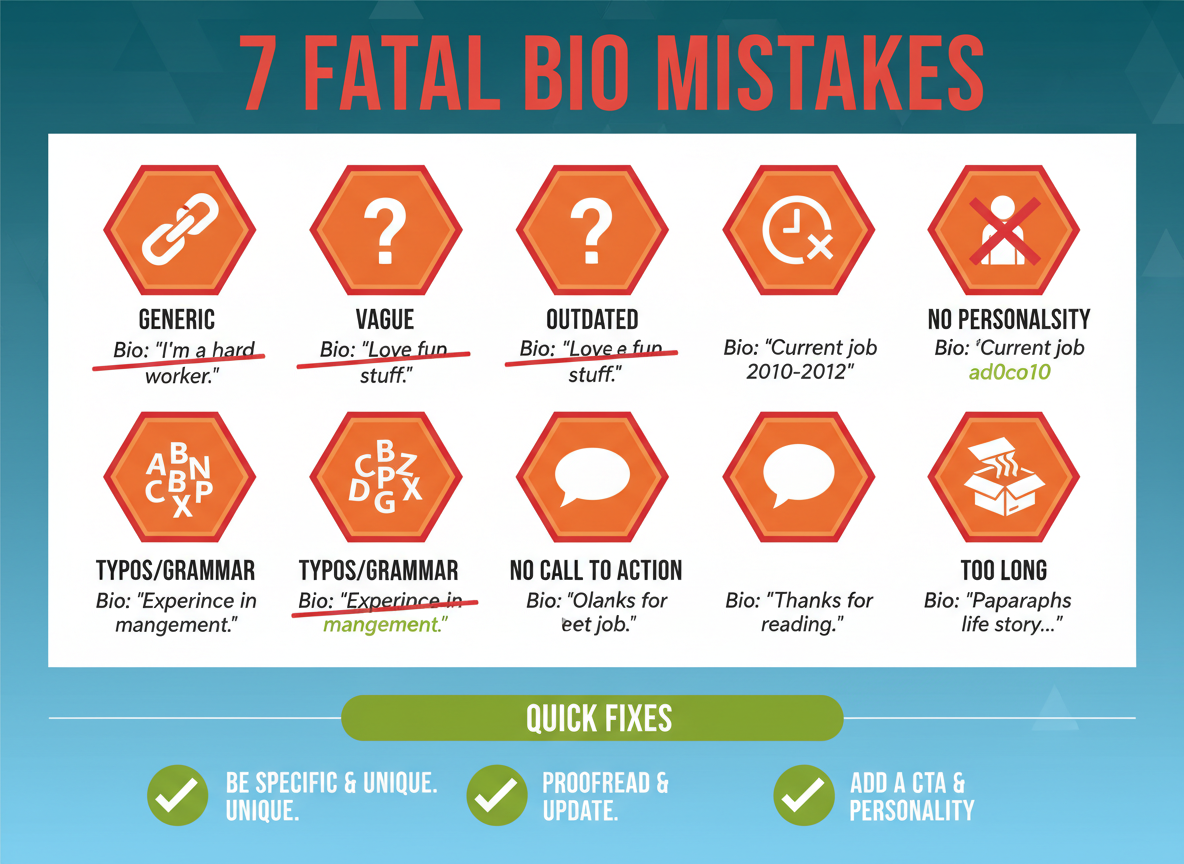
Let’s talk about the bio blunders that are costing you opportunities right now.
Mistake #1: The Third-Person Trap
Writing “John helps companies grow their revenue” feels stiff and disconnected. Unless you’re submitting to a publication that requires third person, swap to “I help companies grow their revenue.” It’s warmer and more authentic. Studies show first-person bios generate 32% more engagement on professional platforms.
Mistake #2: Leading with Your Job Title
Starting with “Marketing Director at XYZ Corp” tells readers what you do, not why they should care. Instead, lead with your unique value: “I transform stagnant social media accounts into revenue-generating machines.”
Mistake #3: Buzzword Overload
“Passionate, innovative, results-driven leader leveraging synergies…” means absolutely nothing. Everyone claims these qualities. Replace vague descriptors with concrete achievements: “Grew three startups from zero to $1M+ in under 18 months.”
Mistake #4: Responsibilities vs. Results
“Responsible for managing social media accounts” is forgettable. “Generated 400% ROI through Instagram campaigns that drove $2.3M in sales” sticks in people’s minds.
Mistake #5: The Confidence Tightrope
Too modest: “I try to help people with their websites sometimes.” Too boastful: “The world’s greatest web designer.” Sweet spot: “I’ve built 200+ websites that convert visitors into customers at rates 3x above industry average.”
Mistake #6: The Stale Bio
Your bio from 2023 doesn’t reflect who you are in 2026. Set quarterly reminders to refresh your accomplishments and adjust your positioning. For more personal biography examples that actually work, check out our comprehensive guide.
Mistake #7: No Clear Next Step
End with action: “Want to boost your conversion rates? DM me ‘growth’ or visit [your website].”
These seven mistakes are silent opportunity killers. Fix them today.
Tone & Voice Guide: Matching Your Bio to Your Personal Brand Archetype
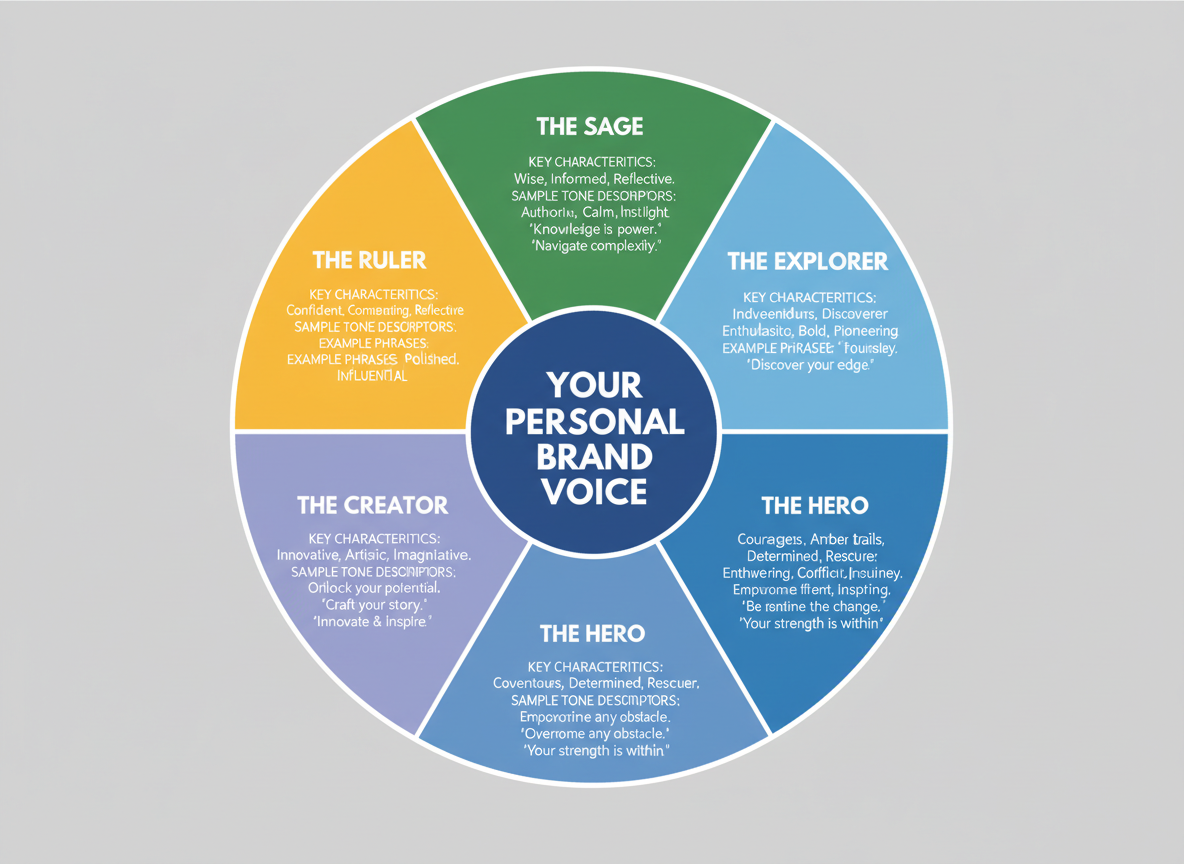
Your bio’s tone matters more than you think. The same credentials can sound completely different depending on your brand archetype—and that difference determines who connects with you.
The Five Core Archetypes:
The Expert uses precise language and data-driven statements. Words like “specialized,” “proven,” and “methodology” establish authority. Example: “I’ve spent 12 years developing systems that reduce client acquisition costs by an average of 43%.”
The Innovator speaks in possibilities and disruption. They favor “reimagining,” “pioneering,” and “transforming.” Example: “I’m building the future of content marketing—one algorithm-breaking strategy at a time.”
The Rebel challenges conventions with bold, direct language. Think “cutting through the BS,” “conventional wisdom is wrong,” and unapologetic statements. Example: “While everyone’s chasing vanity metrics, I help brands focus on what actually makes money.”
The Nurturer emphasizes support and growth with warm, inclusive language. Words like “empowering,” “guiding,” and “together” define their voice. Example: “I walk alongside entrepreneurs as they discover their authentic voice and build communities that care.”
The Leader projects confidence through decisive language. They use “driving,” “leading,” and “achieving” frequently. Example: “I’ve led three startups to seven-figure exits and now mentor founders ready to scale.”
Finding Your Authentic Voice:
Ask yourself: Do people seek you out for innovation, guidance, expertise, or results? What problems do you solve—technical, emotional, or strategic?
The formal-casual spectrum depends on your industry. Finance professionals lean formal; creatives can experiment. But here’s the truth: personality always outperforms stiffness. You can be professional and memorable.
A Personal Brand Statement Generator can help you test different archetypal voices before committing. Your archetype isn’t about who you want to be—it’s about amplifying who you already are.
The Career Transition Bio Strategy: Writing Through Change
Career transitions mess with your head, especially when you’re staring at a blank bio. You’re not who you were, but you’re not quite established in your new path either. Here’s what works.
The bridge narrative technique connects your dots without making readers squint. Start with what you’re building now, then loop back to show why your past makes you uniquely qualified. It’s not about explaining away your pivot—it’s about positioning it as strategic evolution.
Corporate to entrepreneur example: “I build efficiency systems for growing SaaS companies. After a decade streamlining operations for Fortune 500 teams, I realized smaller companies needed these frameworks most. Now I help founders scale without burning out their teams.”
Notice what’s happening? No apologies. No lengthy backstories. Just a clear value proposition backed by relevant experience.
Returning parent: “I’m a digital marketing strategist specializing in sustainable growth. After stepping away to raise my kids, I rebuilt my skills in content marketing and analytics—because the industry I left barely resembles today’s landscape. That fresh perspective helps clients see opportunities others miss.”
Frame gaps as advantages. Took time off? You’re not rusty—you’re returning with renewed focus. Changed industries? You bring cross-pollination others can’t. Recent grad? Your perspective hasn’t been beaten into conventional thinking yet.
The ratio question: spend 20% on where you’ve been, 80% on where you’re headed. Your past validates your credibility; your future hooks opportunities.
For comprehensive transition strategies across different career stages, check out our personal biography examples that demonstrate effective positioning techniques.
Own your story’s direction. Confidence translates through every word.
Downloadable Resource: Fill-in-the-Blank Bio Templates for 10 Professional Scenarios
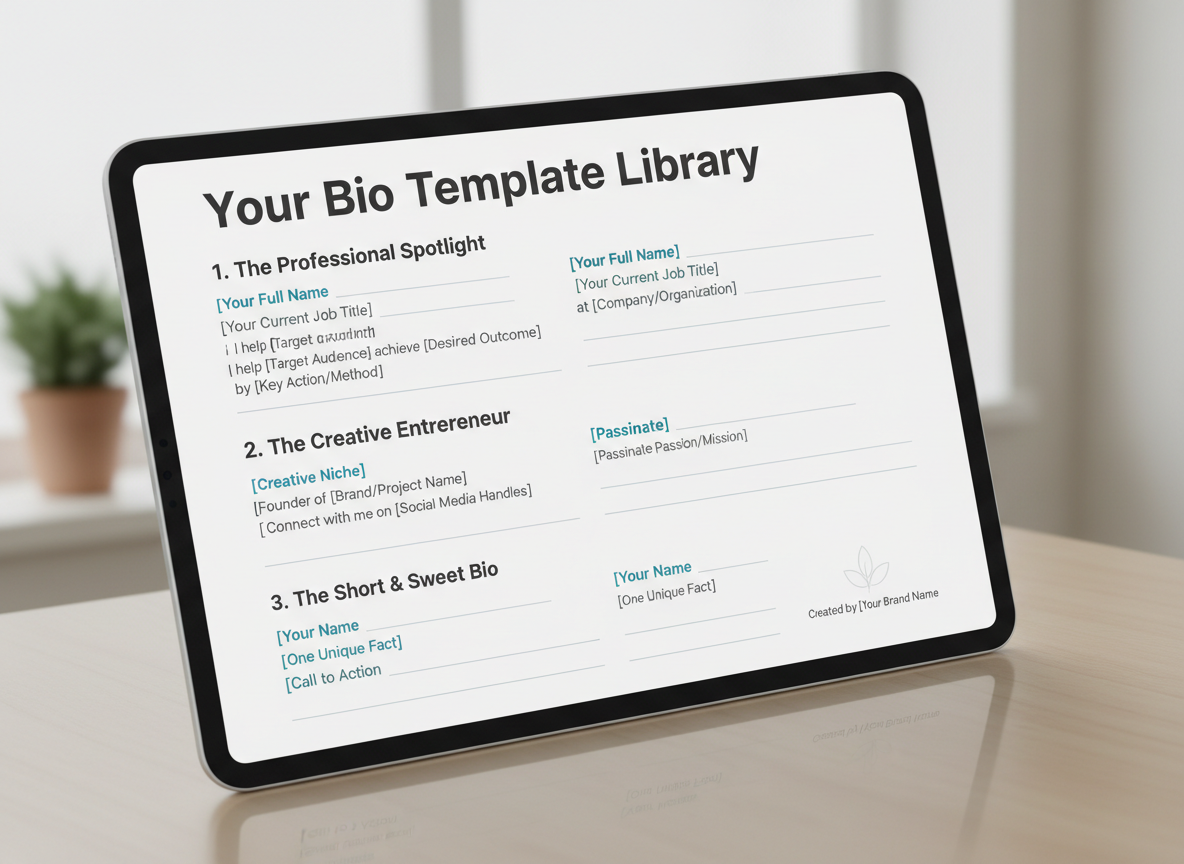
You’re about to get something most people spend hours agonizing over—plug-and-play bio templates that actually work. These aren’t theoretical exercises. They’re based on bios that landed speaking gigs, closed freelance deals, and opened doors to real opportunities.
Template 1: Networking Event
“I’m [Your Name], helping [Target Audience] [Solve Specific Problem] through [Your Unique Approach]. Currently working on [Current Project/Achievement].”
Emphasize: What you do and who it helps. Avoid: Job titles without context.
Template 2: LinkedIn Headline
“[What You Do] → [Result You Create] | [Your Specialty] Expert | [Impressive Metric or Credential]”
Emphasize: Outcomes over roles. Avoid: Generic terms like “passionate professional.”
Template 3: Full LinkedIn About Section
“Most [Target Audience] struggle with [Specific Problem]. After [Your Experience/Years], I’ve developed [Your Method] that’s helped [Number] clients [Achieve Result]. My approach combines [Skill 1], [Skill 2], and [Skill 3] to deliver [Unique Outcome]. Before this, I [Brief Background]. Now I’m focused on [Current Mission].”
Emphasize: Problem-solution framework. Avoid: Long career histories without purpose.
Template 4: Twitter Bio
“[Your Specialty] helping [Audience] [Get Result] • [Your Method/Philosophy] • [Current Focus/Project] • [Personal Touch]”
Emphasize: Clarity and personality. Avoid: Hashtag overload.
Template 5: Speaker Bio
“[Your Name] is a [Your Expertise] who’s [Major Achievement]. Having [Background Experience], [First Name] now helps [Audience] [Achieve Specific Outcome]. Featured in [Media/Publications] and keynote speaker at [Events].”
Emphasize: Credibility markers. Avoid: Third-person stuffiness.
Template 6: Author Bio
“[Your Name] writes about [Topics] for [Audience]. [Credentials/Experience]. When not writing, you’ll find [Personal Detail]. Connect at [Platform].”
Emphasize: Writing credentials. Avoid: Irrelevant work history.
Template 7: Freelance Proposal
“I’m [Your Name], a [Specialty] with [Years/Projects] experience helping brands like [Client Examples] achieve [Specific Results]. I specialize in [Your Niche] and deliver [Your Unique Value].”
Emphasize: Results and relevant experience. Avoid: Desperation or pleading.
Template 8: Job Application
“[Years] of experience in [Field], specializing in [Specific Skills]. Proven track record of [Achievement with Numbers]. Excited about [Company]’s [Specific Initiative] and ready to contribute [Your Unique Strength].”
Emphasize: Alignment with role. Avoid: Generic enthusiasm.
Template 9: Personal Website
“Hey, I’m [Your Name]. I [What You Do] for [Who You Help]. Over the past [Timeframe], I’ve [Major Accomplishment]. My approach? [Your Philosophy]. Let’s work together on [What You Offer].”
Emphasize: Warmth and expertise. Avoid: Corporate jargon.
Template 10: Email Signature
“[Your Name] | [What You Do] | [Company] | [One-Line Value Prop]”
Emphasize: Professional brevity. Avoid: Long taglines.
Want more personalized options? Content Gorilla AI generates multiple bio variations across platforms and languages in seconds, so you’re never stuck with one version.
Create a swipe file with these templates customized for each context. You’ll thank yourself when opportunity knocks at 11 PM and you need a bio now. For even more inspiration across platforms, check out these 57 bio examples that cover every scenario imaginable.
How to Test, Update, and Optimize Your Personal Bio for Maximum Impact
Your personal bio isn’t a tattoo—it’s more like a billboard that needs refreshing. The most successful entrepreneurs and content creators treat their bios as living documents, constantly testing and refining what works.
Start tracking what matters. Monitor profile views, connection requests, website clicks, and the quality of inquiries you’re receiving. These metrics tell the real story. If you’re getting profile views but no clicks, your hook isn’t compelling enough. If you’re getting clicks but low-quality leads, your positioning might be off.
Here’s where A/B testing becomes your secret weapon. Try different opening hooks on various platforms. Test a personality-driven version against a more formal approach. Experiment with length—sometimes a punchy 50-word bio outperforms a detailed 150-word version. LinkedIn might respond better to achievement-focused language, while Instagram audiences connect with vulnerability.
Set a review schedule. Quarterly updates should be your minimum. But don’t wait three months if you land a major client, launch a product, or pivot your strategy. Update immediately when something significant happens.
Get outside perspectives. Ask trusted colleagues, members of your target audience, or professional editors for honest feedback. They’ll catch outdated information you’ve grown blind to.
Warning signs you need an update? New role, major achievement, strategy shift, or anything that makes you cringe when reading it. If you’re leveraging AI paragraph writing tools to create content at scale, make sure your bio reflects that efficiency and innovation in your approach.
Quick optimization checklist:
- Remove outdated achievements or roles
- Add recent wins within the last 6-12 months
- Verify all links still work
- Check keywords match current positioning
- Test your bio out loud—does it sound like you?
- Confirm contact information is current
Frequently Asked Questions
How long should a personal bio be?
It depends where you’re sharing it. Twitter (X) bios cap at 160 characters, so aim for 50 punchy words maximum. LinkedIn summaries perform best at 150-200 words—enough to showcase expertise without losing readers. Website bios should land between 100-150 words for your main page, though you can expand to 300+ on a dedicated “About” page.
Here’s the difference: A Twitter bio might say, “Marketing strategist helping SaaS companies 3x their conversions. Built campaigns for 100+ brands. Coffee snob. Terrible golfer.” That’s 22 words. Your LinkedIn version would expand with specifics about your methodology, key wins, and what makes your approach different.
Should I write my bio in first person or third person?
First person connects better in most modern contexts. “I help founders” feels more authentic than “Jane helps founders.” Save third person for formal publications, conference speaker bios, and situations where it’s explicitly required. When you’re building your personal brand, connection beats formality.
What should I include in my personal bio?
Start with your current role and expertise. Add your unique value proposition—what makes you different? Include 2-3 key credentials or achievements (with numbers when possible). Sprinkle in personality indicators so you’re memorable. End with a strategic CTA that tells people what to do next. If you’re crafting a shorter version for specific platforms, prioritize the elements most relevant to that audience.
How do I write a bio if I’m just starting out with no experience?
Focus on what you’re building, not what you lack. Highlight your education, passion, and transferable skills from other contexts. Include volunteer work, side projects, or coursework that demonstrates your commitment. Share your vision: “Aspiring UX designer creating intuitive experiences that solve real problems” beats “Recent graduate seeking opportunities.”
How often should I update my personal bio?
Review it quarterly at minimum. Update immediately after major achievements, role changes, or strategic pivots. Your bio shouldn’t mention last year’s outdated goals or positions you left months ago.
Can I use the same bio on every platform?
Keep your core message consistent, but adapt the length, keywords, and format for each platform. LinkedIn needs professional keywords for search. Instagram thrives on personality. Your website can include more backstory.
What are common mistakes in personal bios?
Being vague (“passionate professional”), using buzzwords without proof (“results-driven innovator”), listing job duties instead of achievements, underselling yourself, and forgetting to include a next step for readers.
How do I make my bio stand out from others in my industry?
Use specific numbers (“increased conversions by 347%”), share your unique background or unconventional approach, let your authentic personality shine through, position yourself clearly within your niche, and include one memorable detail that sticks.
I am a full-time online marketer, for over a decade now. Helped over 100,000+ people & generated well over $12M in online sales.