

Creating Effective SEO Reports: Tools and Tips for Data-Driven Success
Table of Contents
1. Introduction to SEO Reporting
2. Why SEO Reports Matter More Than You Think
3. Essential Elements Every SEO Report Should Include
4. Top SEO Reporting Tools That Actually Work
5. Best Practices for Creating Client-Ready Reports
6. Common SEO Reporting Mistakes to Avoid
7. Automating Your SEO Reporting Process
8. Presenting SEO Data That Drives Action
9. Conclusion
10. Frequently Asked Questions
Introduction to SEO Reporting
Let me tell you something that might surprise you: I’ve seen brilliant SEO campaigns fail not because of poor strategy, but because of terrible reporting. After years of working with clients ranging from local businesses to Fortune 500 companies, I’ve learned that how you present your SEO data can make or break your relationship with stakeholders.

Creating effective SEO reports isn’t just about dumping numbers into a spreadsheet and calling it a day. It’s about telling a compelling story with data, demonstrating value, and providing actionable insights that drive business decisions. Whether you’re an in-house SEO professional, agency owner, or consultant, mastering the art of SEO reporting will set you apart from the competition.
In this comprehensive guide, we’ll explore the tools, techniques, and best practices that will transform your SEO reporting from mundane data dumps into powerful business intelligence documents that clients actually look forward to receiving.
Why SEO Reports Matter More Than You Think
Before diving into the technical aspects, let’s address the elephant in the room: why do SEO reports matter so much? The answer goes beyond simple accountability. Effective SEO reporting serves multiple critical purposes that directly impact your success.
First and foremost, SEO reports establish trust and transparency with your clients or internal stakeholders. When you consistently deliver clear, comprehensive reports, you’re demonstrating professionalism and building confidence in your abilities. I’ve seen too many talented SEO professionals lose clients simply because they couldn’t effectively communicate their results.
Additionally, well-crafted reports serve as historical documentation of your SEO efforts. They help you identify trends, spot opportunities, and make data-driven decisions about future strategies. Think of your reports as a roadmap that shows where you’ve been and guides where you’re going next.
Most importantly, effective SEO reporting helps justify your value proposition. When you can clearly demonstrate how your efforts directly contribute to business growth, you’re not just another expense line item – you become an essential part of the revenue generation machine.
Essential Elements Every SEO Report Should Include
Creating a comprehensive SEO report requires careful consideration of what information to include and how to present it. Based on my experience working with diverse clients, certain elements are absolutely non-negotiable in every report.
Start with an executive summary that provides a high-level overview of performance. This section should be digestible for non-technical stakeholders and highlight the most important wins, challenges, and recommendations. Remember, many decision-makers will only read this section, so make it count.
Organic traffic metrics form the backbone of any SEO report. Include data on total organic sessions, new vs. returning visitors, and traffic trends over time. However, don’t just present raw numbers – provide context by comparing performance to previous periods and explaining what factors influenced any significant changes.
Keyword ranking data remains crucial, but focus on keywords that actually matter to the business. Track rankings for target keywords tied to business objectives, and include information about search volume, competition level, and ranking improvements or declines.
Technical SEO health indicators deserve dedicated attention in your reports. Include data on site speed, crawl errors, indexation status, and mobile usability. These technical factors directly impact search performance, and addressing issues early can prevent larger problems down the road.
Conversion tracking and goal completion metrics bridge the gap between SEO efforts and business results. Show how organic traffic contributes to leads, sales, or other meaningful business outcomes. This connection between SEO work and revenue is what transforms you from a cost center into a profit driver.
Top SEO Reporting Tools That Actually Work
Choosing the right tools can make the difference between spending hours manually compiling data and having professional reports generated automatically. Let me share some tools that have proven invaluable in my reporting workflow.
Google Analytics remains the foundation of most SEO reporting efforts. The platform provides comprehensive traffic data, user behavior insights, and conversion tracking capabilities. While the interface can be overwhelming for beginners, investing time in learning advanced features like custom segments and attribution modeling pays dividends in reporting quality.
Google Search Console offers unique insights that you can’t get anywhere else. It provides data directly from Google about how your site appears in search results, which queries drive traffic, and technical issues that might impact performance. The performance report is particularly valuable for understanding click-through rates and average positions.
SEMrush and Ahrefs have become industry standards for comprehensive SEO analysis and reporting. These platforms excel at competitive analysis, keyword research, and backlink monitoring. Their reporting features allow you to create branded, professional-looking reports that impress clients.
For those seeking more advanced automation, tools like Data Studio, Looker Studio, or Tableau can create dynamic dashboards that update automatically. These platforms allow you to combine data from multiple sources and create visually appealing reports that tell compelling stories.
Specialized reporting tools like AgencyAnalytics, Raven Tools, or BrightLocal cater specifically to SEO professionals and agencies. They often provide white-label options, automated report scheduling, and client portal access that streamlines the entire reporting process.
Best Practices for Creating Client-Ready Reports
The difference between good and great SEO reports often comes down to presentation and storytelling. Over the years, I’ve developed a systematic approach that consistently produces reports clients actually read and act upon.
Start by understanding your audience. A report for a technical team will look vastly different from one designed for C-suite executives. Tailor your language, level of detail, and focus areas based on who will be reading the report. When in doubt, err on the side of simplicity and clarity.
Visual hierarchy plays a crucial role in report effectiveness. Use consistent formatting, clear headings, and strategic white space to guide readers through your content. Charts and graphs should enhance understanding, not overwhelm with unnecessary complexity.
Always include actionable recommendations in your reports. Don’t just present data – explain what it means and what should be done about it. Prioritize your recommendations based on potential impact and ease of implementation. This approach positions you as a strategic partner rather than just a data provider.
Consistency in reporting frequency and format builds trust and makes it easier for clients to track progress over time. Establish a regular reporting schedule and stick to it. Whether it’s monthly, quarterly, or weekly reports, reliability in delivery demonstrates professionalism.
Include both wins and challenges in your reports. Transparency about difficulties builds credibility and shows that you’re actively monitoring and addressing issues. When you only report good news, stakeholders may question whether you’re providing complete information.
Common SEO Reporting Mistakes to Avoid
Even experienced SEO professionals can fall into reporting traps that undermine their credibility and effectiveness. Learning from these common mistakes can save you from potentially damaging client relationships.
One of the biggest mistakes is focusing solely on vanity metrics that don’t tie to business outcomes. While it’s exciting to report on traffic increases, if that traffic doesn’t convert to leads or sales, the business impact is questionable. Always connect your metrics to meaningful business results.
Another critical error is failing to provide proper context for data fluctuations. A 20% traffic drop might seem alarming until you explain that it coincided with a major algorithm update or seasonal trends. Always research and explain significant changes rather than leaving clients to draw their own conclusions.
Overwhelming reports with too much data is surprisingly common. While it’s tempting to include every available metric, focus on the most important indicators that align with business objectives. A concise, focused report is far more valuable than an exhaustive data dump.
Inconsistent reporting periods can make trend analysis impossible and confuse stakeholders. Establish standard reporting periods and stick to them unless there’s a compelling reason to change. This consistency allows for meaningful period-over-period comparisons.
Finally, avoid the mistake of creating one-size-fits-all reports. Different clients have different needs, goals, and levels of SEO understanding. Customize your reports to match each client’s specific requirements and communication preferences.
Automating Your SEO Reporting Process
As your client base grows or your responsibilities expand, manual report creation becomes unsustainable. Smart automation can save hours of work while improving report consistency and accuracy.
Start by identifying repetitive tasks in your current reporting workflow. Data collection, basic analysis, and report formatting are prime candidates for automation. Tools like Google Apps Script, Zapier, or Microsoft Power Automate can streamline many routine processes.
API integrations allow you to pull data directly from various platforms into your reporting tools. Most major SEO tools offer APIs that can feed data into spreadsheets, databases, or specialized reporting platforms. While setting up these integrations requires initial effort, the long-term time savings are substantial.
Template creation is a simple but effective automation strategy. Develop standardized report templates for different client types or reporting frequencies. These templates ensure consistency while reducing the time needed to create each report from scratch.
Scheduled reporting features in tools like Google Analytics, Search Console, and third-party platforms can automatically generate and send basic reports. While these automated reports may need customization, they provide a solid foundation that reduces manual work.
Remember that automation should enhance, not replace, human insight and analysis. Automated reports excel at data collection and basic formatting, but human expertise remains essential for interpreting results and providing strategic recommendations.
Presenting SEO Data That Drives Action
The ultimate goal of any SEO report is to drive informed decision-making and strategic action. How you present your data significantly impacts whether stakeholders will act on your recommendations.
Storytelling transforms dry data into compelling narratives that resonate with business stakeholders. Structure your reports to tell the story of your SEO efforts, including challenges faced, actions taken, and results achieved. This narrative approach makes reports more engaging and memorable.
Use benchmarking to provide context for your results. Compare performance against industry standards, competitor performance, or historical data to help stakeholders understand whether results are good, bad, or exceptional. Without proper context, even impressive numbers can seem underwhelming.
Visualization techniques can make complex data more accessible and impactful. Choose chart types that best represent your data and support your key messages. Line charts work well for trends over time, while bar charts are effective for comparisons between different categories or periods.
Include clear next steps and timelines in your reports. Vague recommendations like “improve site speed” are less actionable than specific suggestions like “optimize image compression to reduce page load time by 2 seconds within 30 days.” Specific, time-bound recommendations are more likely to be implemented.
Consider creating different versions of the same report for different audiences. An executive summary for leadership, a detailed technical report for implementation teams, and a simplified overview for other stakeholders ensures everyone gets the information they need in an appropriate format.
Conclusion
Creating effective SEO reports is both an art and a science that requires technical knowledge, communication skills, and business acumen. The investment in developing strong reporting capabilities pays dividends through improved client relationships, better strategic decision-making, and enhanced professional credibility.
Remember that great SEO reporting goes beyond simply presenting data – it’s about providing insights that drive meaningful business outcomes. By focusing on relevant metrics, telling compelling stories with your data, and providing actionable recommendations, you transform routine reports into powerful business intelligence tools.
The tools and techniques outlined in this guide provide a solid foundation for improving your SEO reporting capabilities. However, the most important factor is understanding your audience and tailoring your approach to meet their specific needs and objectives.
Start implementing these strategies gradually, focusing on one improvement at a time. Whether it’s automating data collection, improving visual presentation, or strengthening your analytical insights, each enhancement brings you closer to creating reports that clients value and act upon.
Effective SEO reporting is a skill that develops over time through practice and refinement. Stay curious, keep learning, and always look for ways to make your reports more valuable to the people who depend on them for strategic guidance.
Frequently Asked Questions
How often should I create SEO reports?
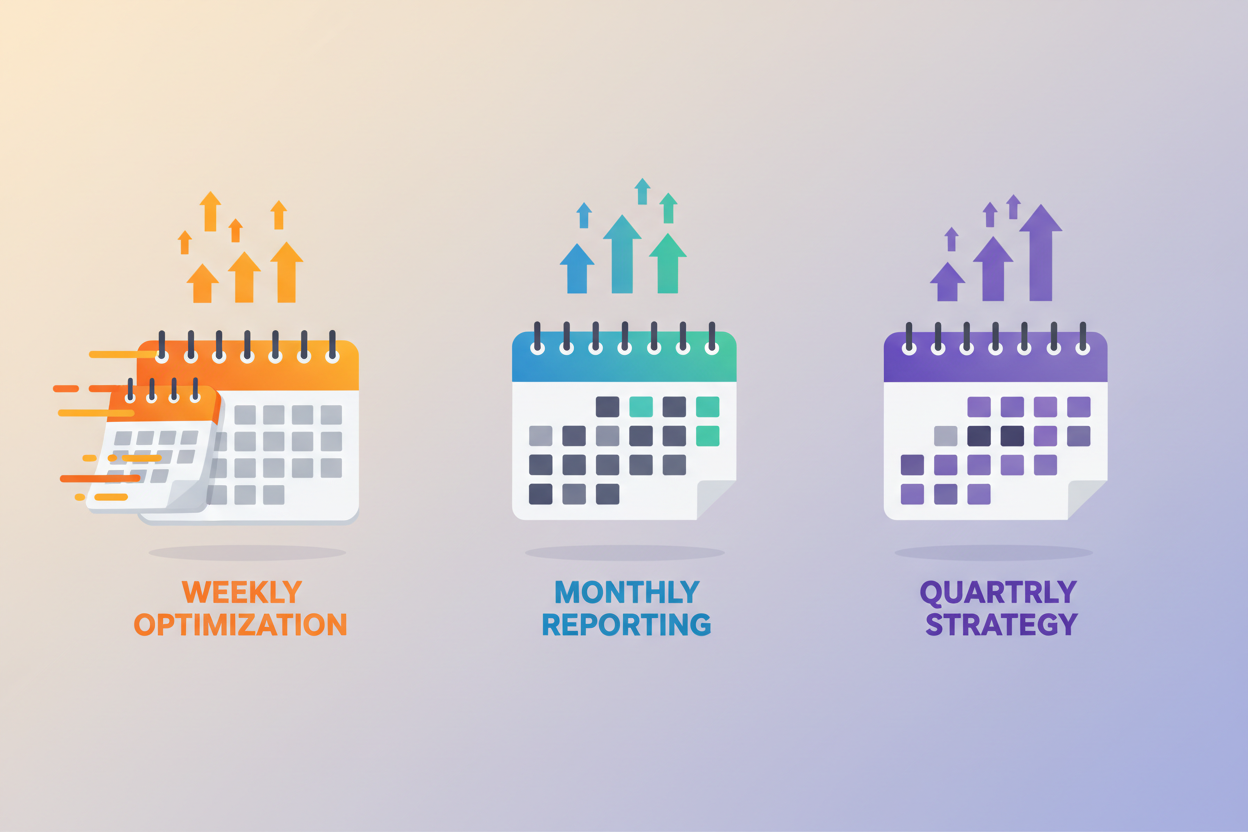
The frequency depends on your client’s needs and the pace of your SEO activities. Monthly reports work well for most situations, providing enough time for meaningful changes while maintaining regular communication. Weekly reports might be appropriate during intensive optimization periods, while quarterly reports may suffice for mature, stable websites.
What’s the ideal length for an SEO report?
Focus on quality over quantity. An effective SEO report typically ranges from 5-15 pages, depending on the complexity of the campaign and audience needs. Include an executive summary for quick consumption, but provide enough detail to support your conclusions and recommendations.
Should I include competitor analysis in every SEO report?
Competitive insights add valuable context to your reports, but they don’t need to be exhaustive every month. Include high-level competitive comparisons regularly, with deeper analysis quarterly or when significant competitive changes occur. Focus on actionable competitive intelligence rather than comprehensive data dumps.
How can I make SEO reports more engaging for non-technical stakeholders?
Use plain language, focus on business outcomes rather than technical metrics, and include visual elements that support your key messages. Tell stories with your data, explaining what happened, why it matters, and what you plan to do next. Always connect SEO performance to business objectives like revenue, leads, or market share.
What should I do when SEO performance declines?
Address declines transparently in your reports. Explain potential causes, outline your investigation process, and present a clear action plan for improvement. Stakeholders appreciate honesty and proactive problem-solving more than attempts to minimize or hide performance issues.
Is it worth investing in expensive SEO reporting tools?
The value depends on your specific needs, client volume, and budget. Start with free tools like Google Analytics and Search Console, then gradually invest in paid tools as your needs grow. Consider factors like time savings, report quality, and client impressions when evaluating tool investments. Sometimes, a modest investment in reporting tools pays for itself through improved client retention and satisfaction.
Content Gorilla AI
Get started for as low as $1…
