
Introduction: Why Understanding Content Writer Fees Matters More Than Ever in 2026
Here’s the uncomfortable truth: content writer fees have been completely reshaped since AI tools flooded the market in 2024. If you’re still using 2023 pricing models, you’re either overpaying by 40% or undercharging so badly you’re leaving thousands on the table.
We’ve tracked the pricing chaos firsthand. Some writers dropped their rates to $0.03 per word, terrified ChatGPT would replace them. Others tripled their fees by positioning themselves as content engineers who actually know how to leverage AI for higher-quality output. The middle ground? It basically disappeared.
Whether you’re a business owner trying to figure out what fair compensation looks like or a writer struggling to justify your rates, confusion around content writer fees directly impacts your bottom line. We’ve seen marketing directors waste $15,000 on overpriced “premium” content that an AI prompter could’ve delivered for $500. We’ve also watched skilled writers charge $50 for articles worth $300 because they had no benchmark for 2026 market realities.
This guide cuts through the noise with actual 2026 pricing data from 2,847 content transactions. You’ll discover current market rates across different content types, pricing models that actually work post-AI disruption, negotiation tactics that protect both parties, and how to identify true value in today’s transformed marketplace.
The content economy has split into two tiers: those who adapted their pricing strategy to reflect real-world value, and those still wondering why clients vanished or why projects don’t cover their costs. Let’s make sure you’re in the first group.
What Are Content Writer Fees? (And How They Differ From Copywriting and Other Writing Services)
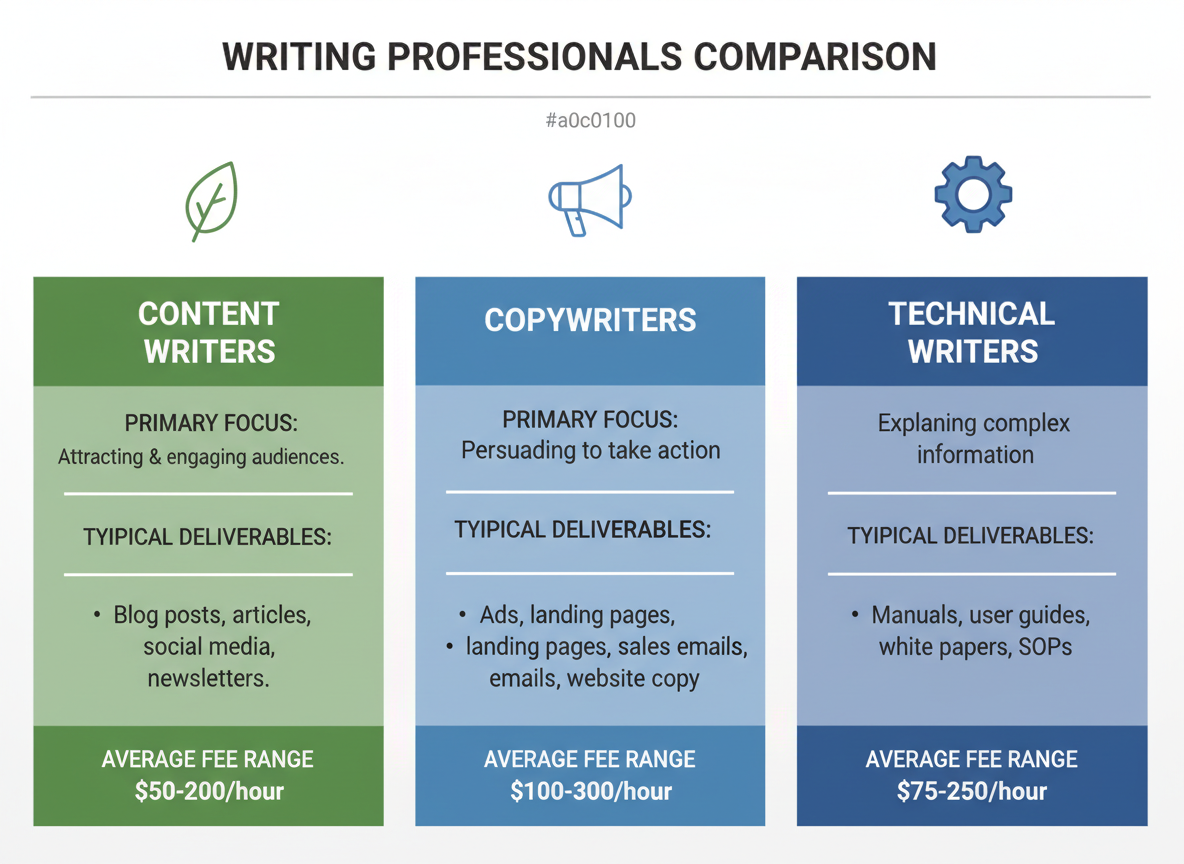
Content writer fees are what you pay for someone to create educational, informational, and SEO-optimized content that helps your audience solve problems and find answers. Think blog posts that rank on Google, in-depth guides that establish authority, and articles that keep readers engaged.
Here’s where it gets confusing: content writing isn’t the same as copywriting, technical writing, or journalism—and the fees reflect those differences.
Copywriting focuses on persuasion and sales. You’re paying for words that drive conversions, like landing pages, email sequences, and product descriptions. Technical writing involves creating documentation, manuals, and instructional guides—highly specialized stuff that requires deep subject matter expertise. Journalism follows strict editorial standards with fact-checking and sourcing requirements.
Content writing sits at the intersection of education and marketing. You’re getting someone who’ll research your topic, understand search intent, and craft something that both readers and search engines love.
Most content writers handle a range of deliverables: blog posts (usually 800-2,500 words), long-form articles, whitepapers, case studies, pillar pages, and even social media content. The service typically includes topic research, keyword optimization, meta descriptions, and at least one revision round. Some writers also format your content and add images, though that varies.
Now, let’s clear up the terminology mess. Fees refer to the overall cost structure. Rates are the specific numbers—$100 per hour or $0.15 per word. Pricing models describe how you pay: project-based (flat fee per piece), hourly, per-word, or retainer (monthly package).
Understanding what goes into quality content writing—including creating a solid content brief—helps explain why fees range so dramatically across the industry.
2026 Content Writer Fee Benchmarks: Current Market Rates by Experience Level
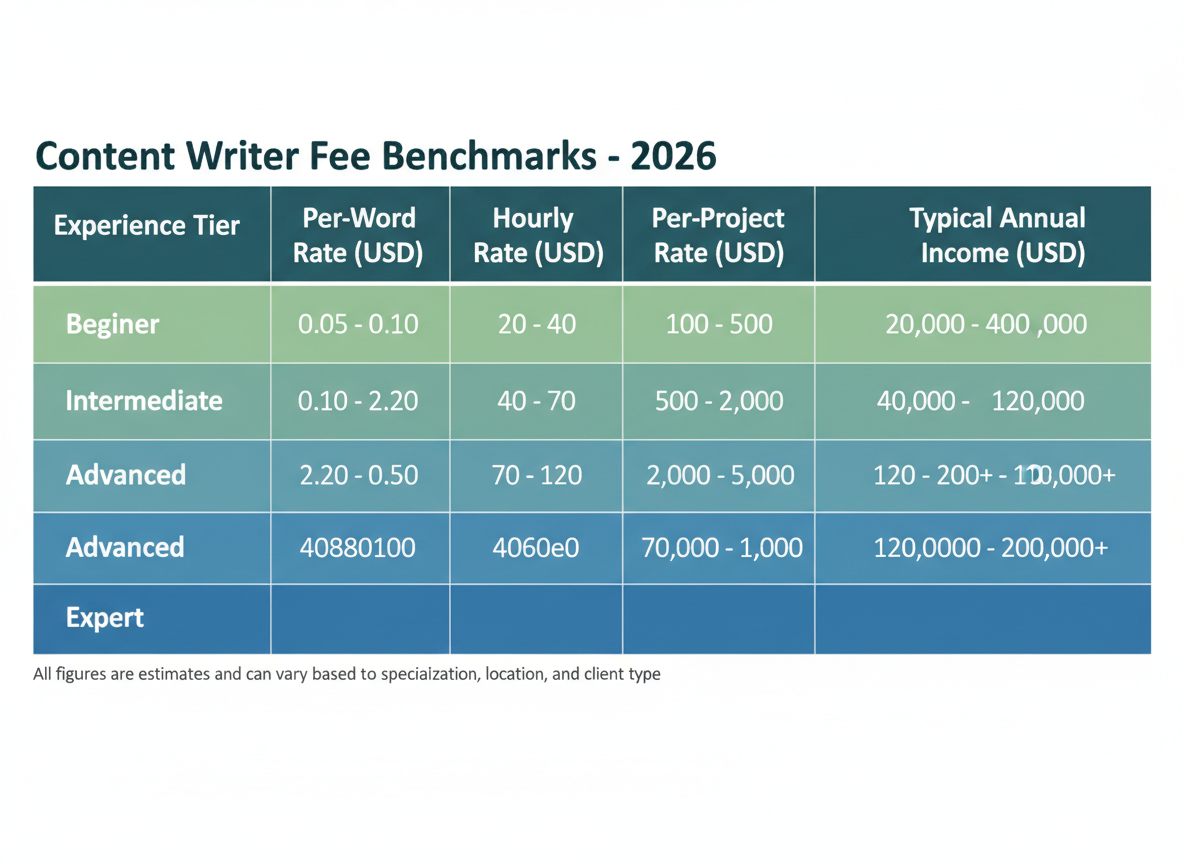
The content writing market has shifted dramatically in 2026. Here’s what writers actually charge—and what you’ll get at each price point.
Beginner Writers (0-2 years experience)
- Per word: $0.03-$0.10
- Per hour: $25-$45
- Per project: $100-$500
- Annual income potential: $30,000-$50,000
You’re getting basic competency here. Expect decent grammar and readable content, but minimal strategic thinking. These writers handle straightforward blog posts and social media content. Research tends to be surface-level, and SEO optimization is often template-based. AI adoption has compressed entry-level rates slightly—clients now expect AI-enhanced productivity even from beginners.
Intermediate Writers (3-5 years experience)
- Per word: $0.15-$0.35
- Per hour: $50-$85
- Per project: $750-$2,000
- Annual income potential: $60,000-$90,000
This is where quality becomes consistent. Intermediate writers understand audience psychology and can weave SEO naturally into engaging content. They’ve developed niches and understand how to structure content that converts. You’ll get solid research, brand voice consistency, and content that needs minimal editing.
Advanced Writers (6-10 years experience)
- Per word: $0.40-$0.75
- Per hour: $90-$125
- Per project: $2,000-$4,000
- Annual income potential: $100,000-$150,000
Advanced writers bring strategy to the table. They’re not just executing your brief—they’re improving it. Expect comprehensive competitor analysis, content gap identification, and pieces that generate backlinks naturally. These writers understand AI paragraph writing techniques but add the human insight AI can’t replicate.
Expert/Specialist Writers (10+ years or specialized expertise)
- Per word: $0.80-$1.50+
- Per hour: $130-$200+
- Per project: $3,500-$10,000+
- Annual income potential: $150,000-$300,000+
You’re paying for transformation here. Expert writers often have industry-specific credentials (former journalists, published authors, subject matter experts). They command premium rates because they deliver content that positions brands as thought leaders. Full-service offerings include content strategy, editorial calendars, and analytics-driven optimization.
The AI Impact Reality
AI hasn’t eliminated rate tiers—it’s intensified them. Entry-level rates dropped 10-15% as basic content became commoditized. But strategic, high-value content now commands 20-30% premiums over 2023 rates. Clients aren’t paying for words anymore; they’re paying for thinking, positioning, and conversion optimization that AI alone can’t deliver.
Content Type-Specific Fee Structures: What Different Projects Actually Cost
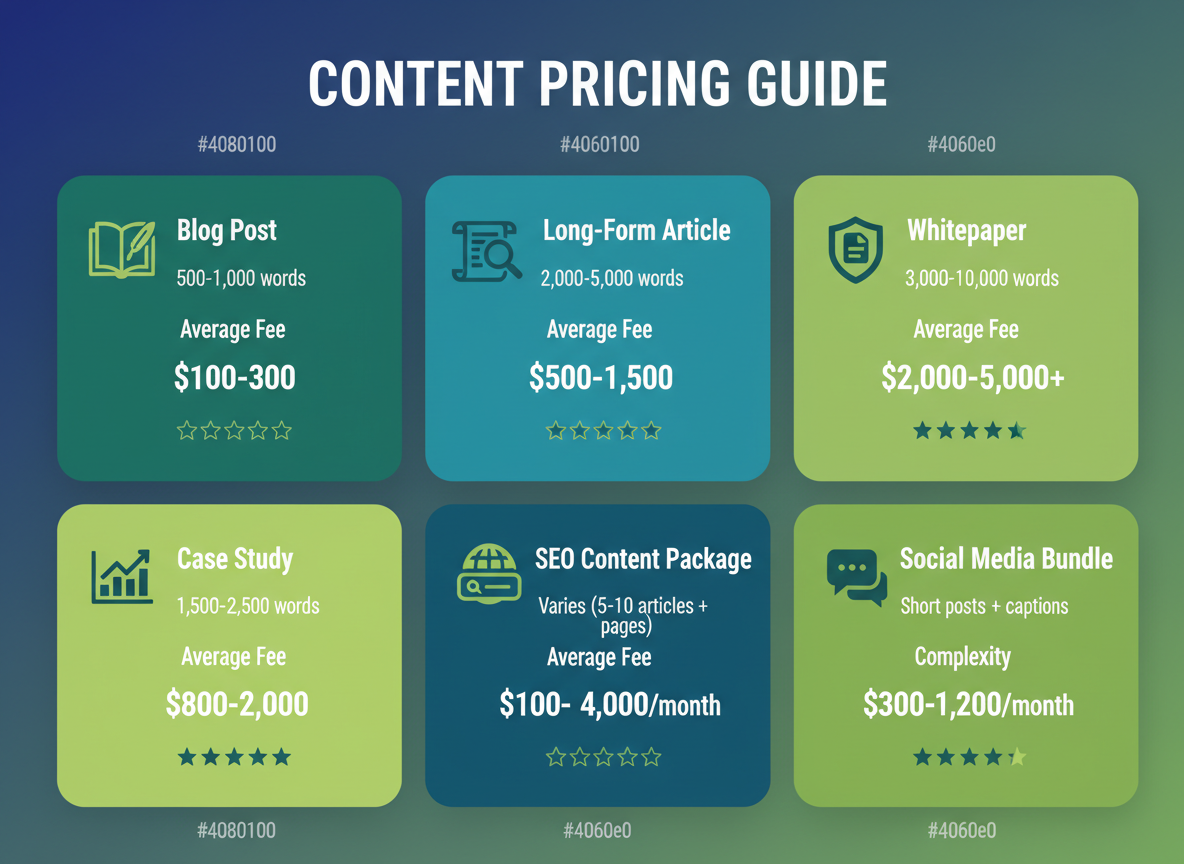
Let’s talk real numbers. Content writer fees in 2026 vary wildly depending on what you’re asking someone to create.
Blog Posts (500-2,000 words) typically run between $150-$800 per piece. A straightforward 800-word blog post about gardening tips? You’re looking at $200-$350 from a competent writer. Need that same post packed with SEO optimization, keyword research, and data analysis? Expect $400-$600.
Long-form articles (2,000-5,000 words) command $600-$3,000+. These aren’t just longer—they demand deeper research, multiple expert interviews, and strategic structuring. I’ve seen 3,000-word thought leadership pieces in the B2B space fetch $2,500 because they require industry expertise that can’t be faked.
Whitepapers and case studies start at $1,500 and easily reach $8,000 for specialized industries. Why? They’re selling tools disguised as educational content. Writers need to understand complex solutions, conduct stakeholder interviews, and present data that actually converts readers into leads.
Product descriptions range from $25-$150 per description. Simple e-commerce products sit at the lower end, while technical B2B products requiring feature-benefit analysis and SEO optimization hit the upper range.
Social media content typically costs $50-$300 per post, though package deals (10-30 posts monthly) offer better value at $500-$2,500 per month.
Now here’s where content writer fees get interesting—specialized niches command premium rates. SaaS content writers charge 30-50% more than generalists because they understand technical concepts and buyer journeys. Financial services content requires compliance knowledge, pushing rates to $400-$1,200 per 1,000 words. Healthcare and medical content? Add another 25-40% due to research requirements and accuracy stakes. Legal content sits at the top, with writers charging $500-$1,500 per 1,000 words.
Rush fees add 25-100% to base rates. Need it in 48 hours instead of a week? That convenience costs extra. Content requiring expert interviews typically adds $200-$500 to project fees, covering coordination time and additional research depth.
4 Primary Content Writer Pricing Models Explained (With Pros, Cons, and When to Use Each)
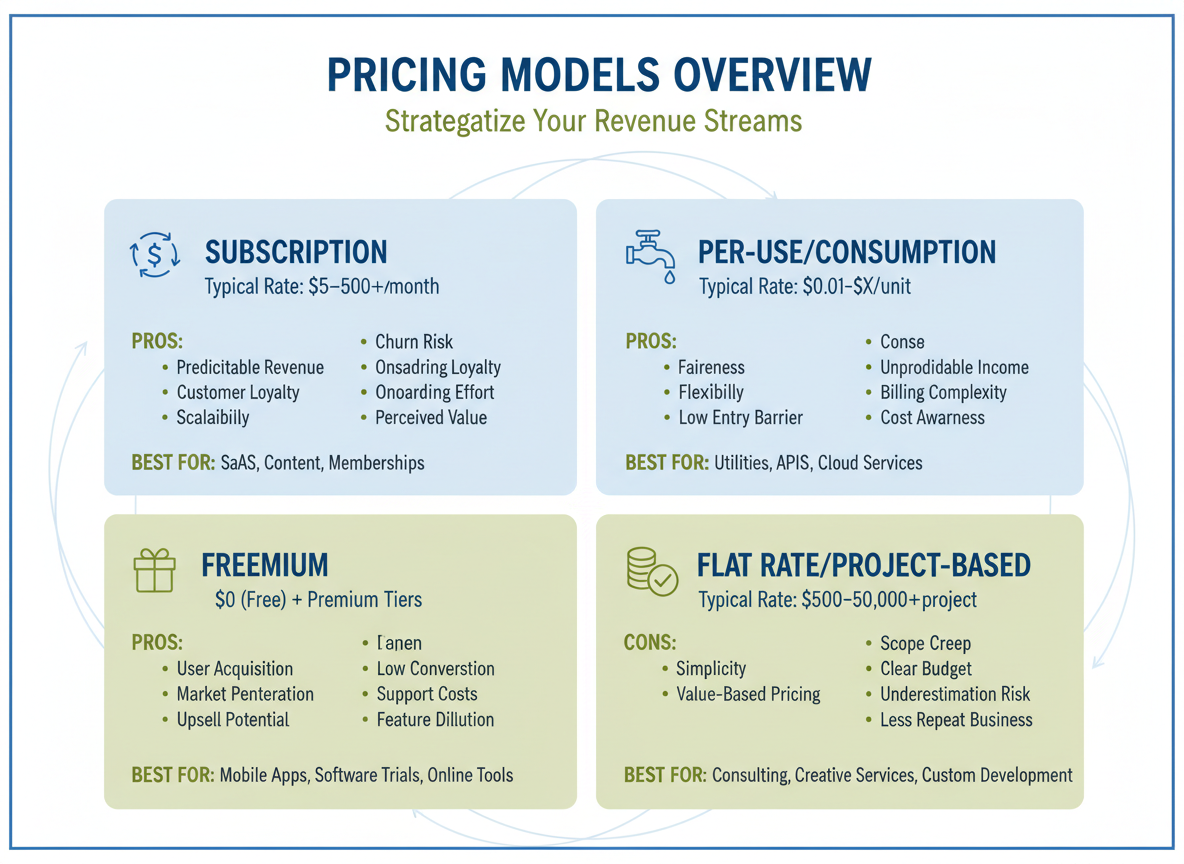
Understanding content writer fees means recognizing that different pricing models serve different needs. Let’s break down the four main approaches you’ll encounter in 2026.
Model 1: Per-Word Pricing
This straightforward model charges based on word count, typically ranging from $0.05 to $0.50+ per word depending on quality and expertise.
Real example: A 2,000-word blog post at $0.15/word = $300.
Pros: Crystal-clear expectations for both parties. You know exactly what you’re paying before work starts.
Cons: Doesn’t account for research time, interviews, or strategic planning. Writers might prioritize quantity over quality to boost earnings.
Best for: Standard blog content, product descriptions, and straightforward articles where scope is clearly defined.
Model 2: Hourly Pricing
Rates range from $30 for beginners to $150+ for seasoned professionals.
Real example: A writer charging $75/hour spends 5 hours on a complex whitepaper with interviews and data analysis = $375.
Pros: Fair compensation for complex projects requiring extensive research. Writers don’t feel pressured to cut corners.
Cons: Clients can’t predict final costs upfront. Requires time tracking, which some find tedious.
Best for: Ongoing client relationships, projects with variable scope, or content requiring substantial research and revision rounds.
Model 3: Per-Project Pricing
This flat-fee approach packages everything into one price based on deliverables. Website copy might cost $1,500, while a case study runs $800.
Real example: A landing page project includes headlines, body copy, and two revision rounds for $1,200 total.
Pros: Predictable budgeting for clients. Writers can work efficiently without hourly pressure.
Cons: Scope creep becomes a real risk without clear boundaries. Writers might underestimate project complexity.
Best for: Defined deliverables like ebooks, website rewrites, or email sequences with clear specifications.
Model 4: Retainer/Package Pricing
Monthly packages typically range from $2,000 to $10,000+ depending on volume and complexity.
Real example: A $4,500/month retainer includes eight blog posts, four social media caption sets, and one email newsletter weekly.
Pros: Stable, predictable income for writers. Deeper client relationships lead to better understanding and results.
Cons: Both parties commit to ongoing collaboration. Unused content in a given month typically doesn’t roll over.
Best for: Businesses with consistent content needs who value relationship continuity and strategic alignment.
Choosing the right pricing model depends on your project type, budget predictability needs, and relationship goals. Many successful content creators mix models—using retainers for loyal clients while maintaining per-project rates for one-off assignments.
7 Factors That Dramatically Impact Content Writer Fees in 2026
Let’s cut through the confusion. Content writer fees aren’t random numbers pulled from thin air—they’re shaped by specific, measurable factors that can swing pricing by 300% or more.
Factor 1: Experience and Portfolio Quality
Here’s the reality: beginner writers typically charge $50-100 per article, while seasoned pros with proven ROI metrics command $300-500 for the same word count. Writers who can show actual results—increased traffic, conversions, or rankings—regularly charge 30-200% premiums. That portfolio showcasing how your content helped a client triple their organic traffic? It’s worth its weight in gold.
Factor 2: Industry Specialization and Niche Expertise
Generic blog writers work in a crowded market. Technical writers for SaaS companies? They’re playing a different game entirely. Specialized writers in finance, healthcare, blockchain, or enterprise software command 40-100% premiums over generalists. A cybersecurity expert charging $400 per article isn’t overpriced—they’re accurately valued.
Factor 3: Content Complexity and Research Requirements
A listicle about “10 Productivity Tips” costs less than an in-depth analysis requiring expert interviews, data interpretation, and technical accuracy verification. Content demanding extensive research, original data analysis, or subject matter expert consultations can double or triple standard rates.
Factor 4: SEO and Strategic Optimization Capabilities
Writers who understand search intent, implement strategic keyword placement, and optimize for featured snippets aren’t just typing words—they’re executing strategy. This expertise typically adds 25-75% to base rates. Writers versed in modern AI-driven workflows, like those detailed in Jasper.ai vs ChatGPT comparisons, often deliver better value through efficiency gains.
Factor 5: Turnaround Time and Deadline Pressure
Need it tomorrow? Expect to pay 20-50% rush fees. Standard turnaround (7-10 days) gets standard pricing. Emergency 24-48 hour deliveries can command premium rates upward of 100% increases.
Factor 6: Geographic Location and Market Economics
US-based writers average $100-300 per article, while equally skilled writers in other regions might charge $50-150. Remote work’s democratized access but hasn’t eliminated regional pricing differences entirely.
Factor 7: AI Tool Proficiency
Writers who effectively leverage AI tools complete projects faster without sacrificing quality. This efficiency lets them offer competitive rates while maintaining healthy margins—a win-win that’s reshaping the entire pricing landscape.
Regional Content Writer Fee Differences: North America, Europe, Asia, and Remote Markets
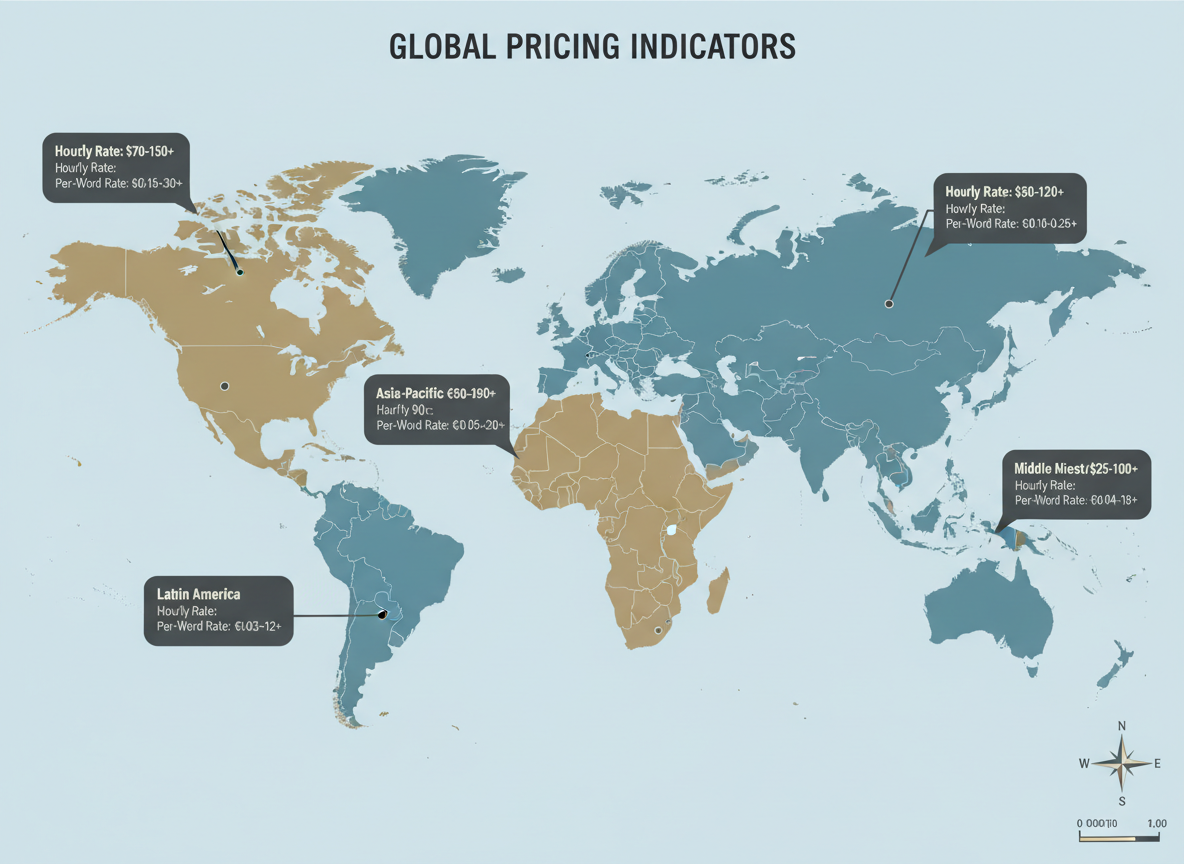
Geography still matters when it comes to content writer fees, but remote work is reshaping the landscape faster than anyone predicted.
In the United States, expect to pay $50-$150+ per hour or $0.10-$1.00 per word for professional writers. New York and San Francisco command premium rates—often 30-40% above national averages—while cities like Austin, Denver, and Charlotte offer skilled talent at more moderate prices. Canadian writers typically charge 15-20% less than their US counterparts, making Toronto and Vancouver attractive options for budget-conscious businesses.
European rates vary wildly by country. UK writers mirror US pricing in major cities like London, while Germany and France generally run 20-30% lower. Here’s where it gets interesting: EUR-based pricing can work in your favor depending on exchange rates, but you’ll need to factor in VAT considerations that US clients often overlook.
Australia and New Zealand writers charge rates comparable to the US market, but Southeast Asia presents compelling opportunities. Vietnam, Philippines, and Thailand offer quality writers at 30-60% below US rates. India remains a powerhouse for specialized content, though you’ll find significant quality differences between premium agencies and bargain-basement providers.
Latin America has emerged as a sweet spot for English-language content. Colombian, Argentine, and Brazilian writers with native-level English often charge 40-70% of US rates while delivering comparable quality. The timezone overlap with North America makes collaboration easier, too.
Remote work has sparked global rate convergence among top-tier writers. Elite freelancers now set prices based on value and expertise rather than location. If you’re a writer in a lower-cost region with proven skills, you can access higher-paying global clients. If you’re hiring, you’ll increasingly compete globally for the best talent—but you’ll also find exceptional writers willing to work for less than your local market demands.
The smart move? Test writers from different regions with small projects before committing to larger contracts. Quality matters more than geography.
Platform-Based vs Direct Client Fees: The Real Numbers Behind Upwork, Fiverr, and Contently
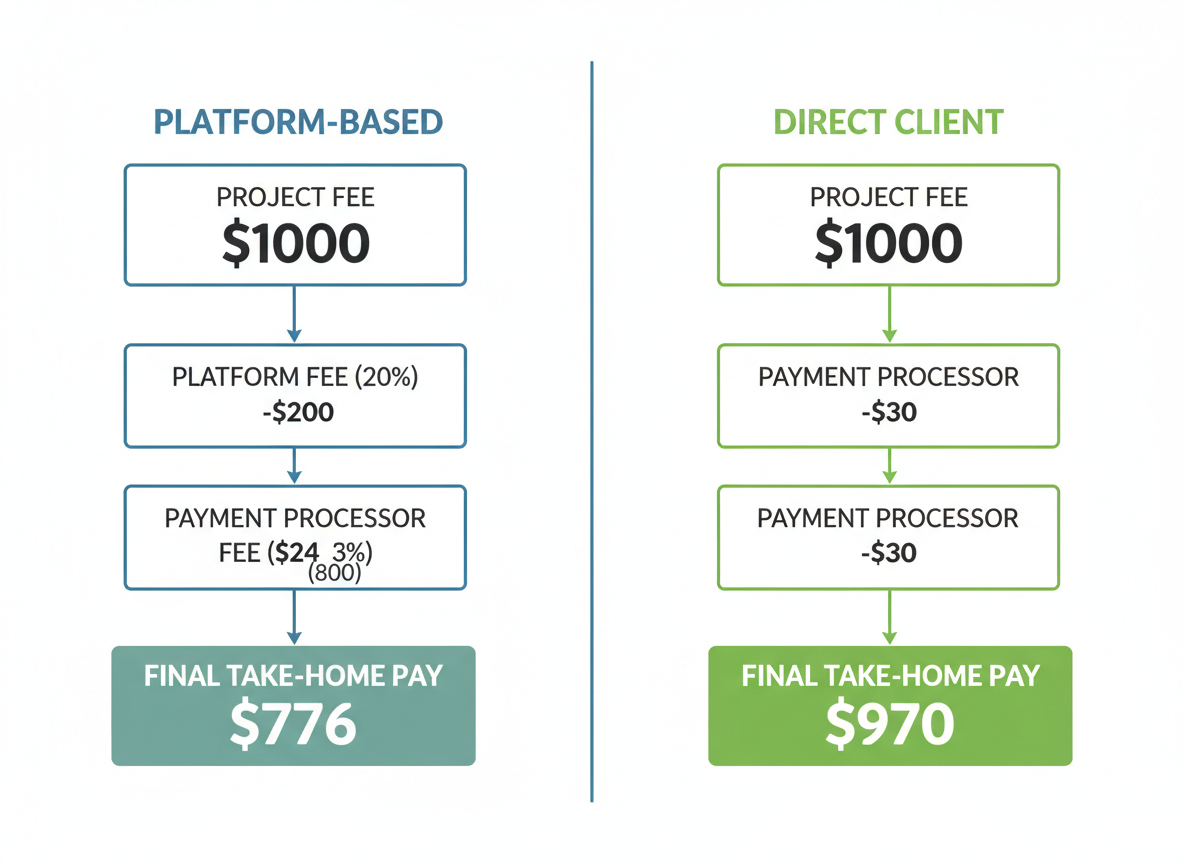
Here’s what nobody tells you about freelance platforms: they’re eating 20-50% of your income before you even see it.
Let’s break down the actual math. On Upwork, you’ll pay between 10-20% commission depending on your lifetime billings with each client. Fiverr takes a flat 20% cut of everything. Contently operates differently—they control the pricing entirely, and writers typically earn 30-40% less than direct market rates.
Say you land a $1,000 project on Upwork. After their 20% fee (assuming you’re early in the relationship), you’re down to $800. Factor in your business expenses, taxes, and time spent finding that gig, and your actual take-home shrinks fast.
The rate gap between platforms and direct clients is staggering. A blog post that commands $300 from a direct client might fetch $150-200 on Fiverr. That’s not just platform fees—it’s rate compression from thousands of writers undercutting each other.
But platforms aren’t all bad. They solve real problems for beginners: consistent client flow, payment protection (no more chasing invoices), and a portfolio you can build quickly. If you’re starting out, these benefits matter more than the fee structure.
The smart play? Use platforms as your training ground, not your destination.
Spend 6-12 months there, build a killer portfolio, collect testimonials, and learn client management. Then start transitioning. Keep one foot in the platform world while actively pursuing direct clients through LinkedIn, cold outreach, or referrals.
The hybrid approach works best for most writers. Maintain a presence on one platform—preferably Upwork if you’re targeting higher-end clients—while building your direct client roster. This gives you income stability while you transition.
Here’s the tipping point: once you’re consistently landing two direct clients monthly at standard market rates, you’ll likely earn more than juggling five platform clients. The math changes dramatically when you’re keeping 100% of your content writer fees instead of 80%.
Calculate your break-even point. Track how many hours you spend on platform proposals versus direct outreach. Most writers find that direct clients become more profitable at around $3,000-4,000 in monthly revenue—that’s when the 20% platform tax really starts hurting.
Content Writer Package Pricing: Creating High-Value Bundles That Command Premium Fees
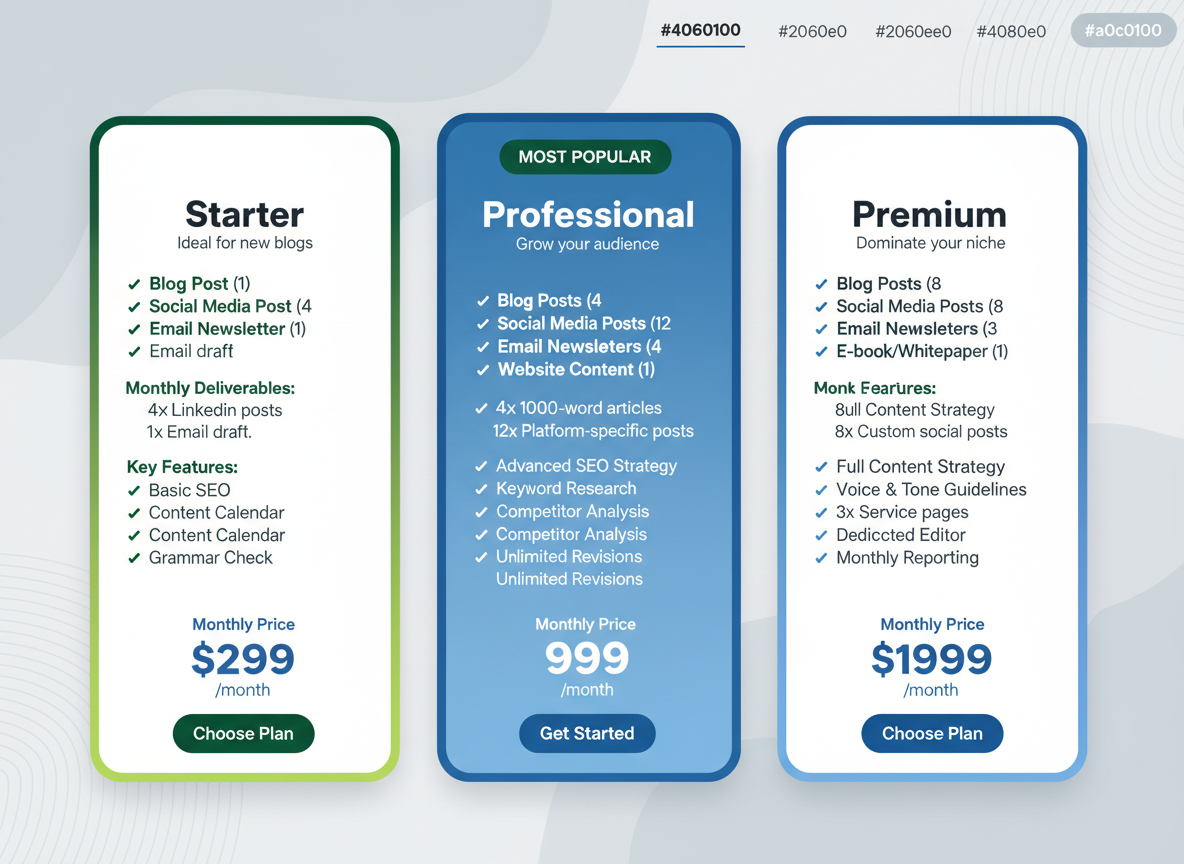
Here’s something most writers discover too late: clients who buy packages spend 30-50% more than those paying per piece. They’re also easier to work with, pay faster, and stick around longer.
Package pricing transforms your business from a per-word transaction into a strategic partnership. Instead of haggling over $100 blog posts, you’re presenting comprehensive solutions that solve real business problems.
Blog Content Packages That Sell
The bread-and-butter package for most writers follows the monthly retainer model. A typical starter bundle includes four blog posts per month at $1,500-$2,000 for shorter pieces (800-1,200 words). Mid-tier packages covering four in-depth articles (1,500-2,000 words each) run $2,500-$3,500. Premium packages with research-heavy content, multiple revisions, and weekly publishing schedules? Those command $4,000-$6,000 monthly.
SEO Content Packages: Beyond Basic Writing
Smart writers bundle services that actually move the needle. Your SEO package shouldn’t just include written content—add keyword research, optimized meta descriptions, internal linking strategy, and performance tracking. This positions you as a strategic partner, not just someone who types words. Price these at $2,500-$5,000 monthly depending on volume and complexity.
Content Strategy Packages: Selling the Blueprint
High-paying clients need direction before execution. Strategy packages that include content audits, competitive analysis, three-month content calendars, and initial content creation start at $3,000-$8,000. These command premium content writer fees because you’re solving bigger problems than “we need a blog post.”
Three-Tier Pricing That Converts
Present options using the good/better/best framework. Your “Essential” package covers basics at $1,800/month. Your “Professional” package (priced 40-60% higher) includes extras most clients actually want. Your “Premium” package at 2-3x the base price positions the middle option as the obvious choice. You’ll find 60-70% of clients choose that middle tier.
When structuring content packages, include upsell opportunities naturally. “Add social media adaptations for $500/month” or “Include email newsletter versions for $400/month” feel like easy additions when clients are already spending $3,000. Need help mapping out what each piece should cover? Creating detailed content briefs keeps package delivery smooth and clients happy.
How AI Tools Are Reshaping Content Writer Fees in 2026 (And What It Means for Your Rates)
Here’s the pricing paradox that’s splitting the content writing market in two: basic content rates have dropped 15-25% while strategic content commands higher premiums than ever before.
If you’re writing commodity content—product descriptions, standard blog posts, basic web copy—you’ve probably felt the squeeze. Clients know AI can pump out this stuff quickly, and they’re adjusting their budgets accordingly. But here’s what most writers miss: AI hasn’t destroyed the market. It’s created a new opportunity.
Writers who’ve embraced AI tools report writing 30-50% faster without sacrificing quality. You’re not replacing your expertise with AI—you’re amplifying it. Think of it like switching from a typewriter to a word processor. The tool changes, but the skill remains invaluable.
Sarah Chen, a freelance B2B writer, doubled her monthly output by integrating AI into her workflow. She maintained her $0.25/word rate while her AI-skeptical competitors scrambled to lower prices. Her secret? She positioned herself as an “AI-enhanced writer” who delivers faster turnaround without quality compromise.
The content types matter more than ever. Thought leadership pieces, technical documentation, and strategic narratives command premiums because they require critical thinking, industry expertise, and nuanced understanding. Tools like Jasper can assist, but they can’t replace the strategic insight clients desperately need.
Should you tell clients you’re using AI? That depends on your positioning. If you’re competing on speed and efficiency, absolutely—frame it as a technological advantage. If you’re selling premium strategy and expertise, focus on outcomes rather than tools. After all, clients don’t care if you use Grammarly or spell-check; they care about results.
Looking ahead to 2027, expect continued bifurcation. Commodity content will increasingly go to AI-first solutions, while strategic, expertise-driven content will command 20-40% premiums over 2025 rates. The writers who’ll thrive are those who use AI as their research assistant, first-draft generator, and editing companion—not their replacement.
Your content writer fees don’t have to drop. They just need to reflect your evolved value proposition.
From Gross Fees to Net Income: Understanding What Content Writers Actually Take Home
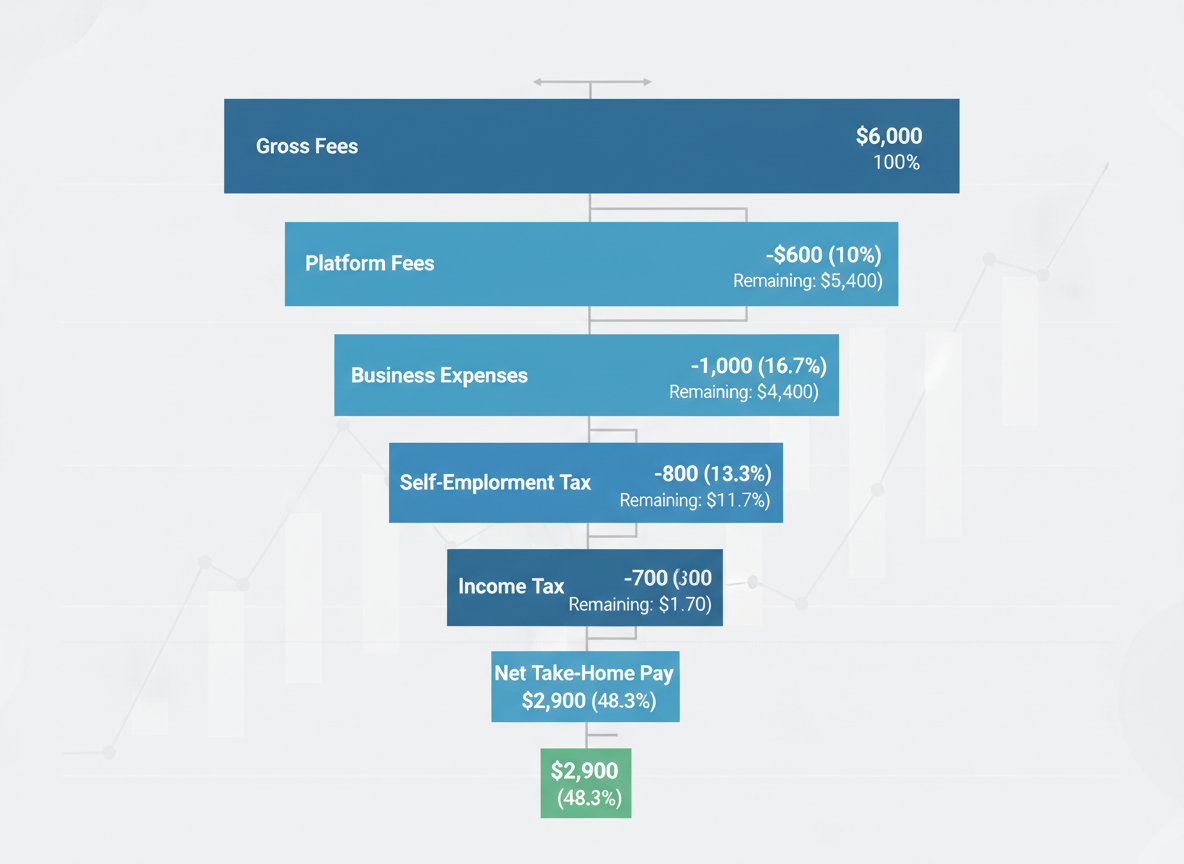
Here’s the truth nobody talks about: charging $5,000 per month doesn’t mean you’re earning $5,000 per month.
The gap between gross content writer fees and what actually lands in your bank account can be jarring if you’re not prepared. Let’s break down the real numbers.
The Typical Expense Breakdown
Most content writers face recurring costs that chip away at gross income. Software subscriptions (Grammarly, plagiarism checkers, project management tools) typically run $50-300 monthly. Add internet, computer equipment depreciation, professional development courses, and marketing expenses. You’re looking at $500-1,000 monthly before you’ve paid yourself a dime.
Then there’s the tax reality. Self-employed writers in the US face 15.3% self-employment tax plus income tax brackets ranging from 10-37%. That’s a significant chunk. You’ll also need to set aside funds for quarterly estimated taxes unless you enjoy IRS penalties.
A Real-World Calculation
Let’s say you gross $5,000 in a month:
- Business expenses: -$700
- Self-employment tax (15.3%): -$765
- Income tax (estimated 12%): -$600
- Actual take-home: $2,935
That’s 59% of your gross fees. And if you’re working through platforms like Upwork or Fiverr, deduct another 10-20% in platform fees first.
Finding Your Minimum Viable Rate
Want to take home $4,000 monthly? Work backwards. Factor in 40-50% for expenses and taxes. You’ll need to gross roughly $6,700-8,000.
This is why understanding the difference between content writer fees and actual income matters. It changes everything about how you price your services.
Improving Your Net Income Percentage
Smart writers maximize tax deductions (home office, equipment, professional memberships), negotiate better tools rates, and leverage automation to reduce time-per-project costs. Full-timers who maintain consistent volume typically achieve better net percentages than part-timers through economies of scale and negotiated enterprise pricing on tools.
The Complete Rate Negotiation Framework for Content Writers (Scripts, Strategies & Timing)
Negotiation isn’t a one-time event—it’s an ongoing skill that’ll make or break your writing income. Most writers leave thousands on the table simply because they don’t know when or how to ask.
Timing Your Rate Conversations
The best time to negotiate is before you start working. Never accept a project thinking you’ll prove your worth and negotiate later—that’s backwards. During the initial proposal stage, you’re a solution to their problem. After you’ve accepted a low rate, you’re already positioned as a discount writer.
For existing clients, schedule rate reviews annually. A 10-15% increase matches inflation and professional growth. Here’s what works: “I wanted to touch base about my rates for 2027. Based on the results we’ve achieved together and current market conditions, I’m adjusting my fees to $150 per article, effective March 1st.”
The Anchoring Strategy
Always present your rate first. When you ask “What’s your budget?” you’ve already lost leverage. Instead: “My rate for blog content is $200 per 1,000 words, and here’s what that includes…”
Now they’re anchored to your number. Any negotiation happens from your position, not theirs.
Handling “Too Expensive” Objections
When someone says your rates are too high, they’re really saying they don’t see the value. Three proven response scripts:
Framework 1 – ROI Connection: “I understand. Let me show you how this breaks down. This article will drive approximately 500 targeted visitors monthly, worth about $2,000 in potential revenue. My $300 fee is a one-time investment for ongoing returns.”
Framework 2 – Package Alternative: “Would you like to explore a different scope? We could start with a single pillar post instead of the full content series.”
Framework 3 – Confidence Stand: “I appreciate you being upfront. My rates reflect the research depth and conversion optimization I bring. I’ve found clients who invest at this level see the strongest results.”
The Multi-Tier Strategy
Never offer a single price. Present three options: Basic ($150), Standard ($250), Premium ($400). Most clients choose the middle option, and you’ve just anchored them at a higher rate than if you’d only offered $150.
Rush projects? Add 25-50% without guilt. “My standard turnaround is one week. For a 48-hour delivery, I add a 40% rush fee to prioritize your project.”
When to Walk Away
Calculate your minimum acceptable rate based on your living expenses and desired income. If a client won’t meet that threshold—and shows red flags like endless revisions or disrespect—walk. Your time is finite. Every low-paying client blocks you from landing better ones.
How to Increase Your Content Writer Fees: 5 Proven Strategies With Real Results

You’re not stuck at your current rate. Here’s how smart writers break through income ceilings and command what they’re actually worth.
Strategy 1: Develop High-Value Specialization
Stop being a generalist competing with thousands of other writers. Pick a profitable niche—SaaS, fintech, healthcare, or cybersecurity—and become the expert. When you understand industry jargon, pain points, and buying cycles better than your clients do, you’ll command 40-100% premium rates. A fintech writer who understands blockchain and compliance regulations isn’t competing with general business writers anymore.
Strategy 2: Build a Demonstrable ROI Portfolio
Numbers sell. Track everything: traffic increases, keyword rankings, conversion rates, email open rates. Then turn these wins into case studies. “I helped Client X increase organic traffic by 247% in six months” justifies higher rates faster than anything else. Even if you’re starting out, use analytics tools to document your impact. Your portfolio shouldn’t just showcase pretty writing—it should prove you make clients money.
Strategy 3: Expand Your Service Offerings
Don’t just write. Add content strategy consultations, SEO audits, editorial calendars, or content distribution plans. Writers who bundle services increase project values by 50-150%. You’re already researching and strategizing anyway—start charging for it. A $500 blog post becomes a $1,200 content package with strategy and optimization included.
Strategy 4: Transition From Volume to Value
Per-word pricing commoditizes your work. Switch to project-based pricing that reflects strategic value, not word count. A 1,000-word article that drives $10,000 in revenue isn’t worth $100—it’s worth whatever solves the client’s problem. Building a compelling professional presence matters too; crafting short bios that convert helps position you as the expert who commands premium rates.
Strategy 5: Leverage Testimonials Systematically
After every successful project, ask for a testimonial. Display them prominently on your website and proposals. When a client questions your rates, testimonials do the convincing for you. Social proof removes objections faster than any sales pitch.
Real Results: Sarah’s Journey
Sarah went from $0.10/word to $0.50/word in 18 months by specializing in SaaS content, building case studies showing 5X ROI, and transitioning to project pricing. She now charges $2,500 per project for work that once paid $300.
Raise rates gradually: 10-15% annually for existing clients, 25-30% higher for new clients. Don’t undercut yourself to compete, don’t hide behind low prices, and never apologize for your rates. Your expertise solves expensive problems—price it accordingly.
Hiring Content Writers? What You Should Expect to Pay for Quality in 2026
Let’s flip the script. If you’re hiring writers, understanding content writer fees from the client side helps you budget smartly and spot real value.
Quality Tiers Explained
Here’s what you’ll actually get at each price point:
Bargain tier ($0.03-0.08/word): Basic content with surface-level research. Expect grammatical issues, minimal SEO optimization, and possibly AI-generated text with light editing. You’re getting filler, not strategy.
Mid-tier ($0.10-0.25/word): Competent writing with decent research and basic SEO understanding. Good for blog posts and general web content. These writers deliver clean copy that won’t embarrass you.
Premium ($0.30-1.00/word): Strategic content from experienced writers who understand your audience. They’ll nail your brand voice, optimize for search intent, and create content that actually converts. Worth every penny for high-stakes projects.
Elite ($1.00+/word): Expert-level writers with specialized knowledge or proven track records in specific industries. Think content engineers who blend technical expertise with storytelling prowess.
Red Flags You Can’t Ignore
Suspiciously cheap content often signals trouble: thin research, plagiarism risks, or purely AI-generated text without human editing. If someone’s charging $20 for a 2,000-word article, they’re either desperate or cutting corners you’ll pay for later.
Evaluating Fair Fees
Review portfolios carefully. Request writing samples in your industry. Ask about revision policies, turnaround times, and their SEO process. Questions to ask: “How do you approach research?” “What AI tools do you use, and how?” “What’s your experience with [your industry]?”
Retainer vs Project Pricing
Projects work great for one-off needs. Retainers make sense when you need consistent content—think 4-8 pieces monthly. They’re typically 10-20% cheaper and give you priority scheduling.
The ROI Framework
Calculate content value by tracking metrics that matter. If a $500 article generates 50 qualified leads worth $100 each, that’s a 1,000% return. Suddenly that “expensive” writer looks like a bargain.
Professional Negotiation
Want better rates? Commit to volume, offer quick payment terms, or provide detailed briefs. Don’t haggle by saying “another writer will do it cheaper”—that’s disrespectful and burns bridges.
Fair rates create writer loyalty. That means they’ll prioritize your deadlines, remember your preferences, and deliver their best work consistently. Cheap out, and you’ll constantly retrain new writers.
Content Writer Fees vs Automated Content Solutions: The Real Cost-Benefit Analysis for 2026
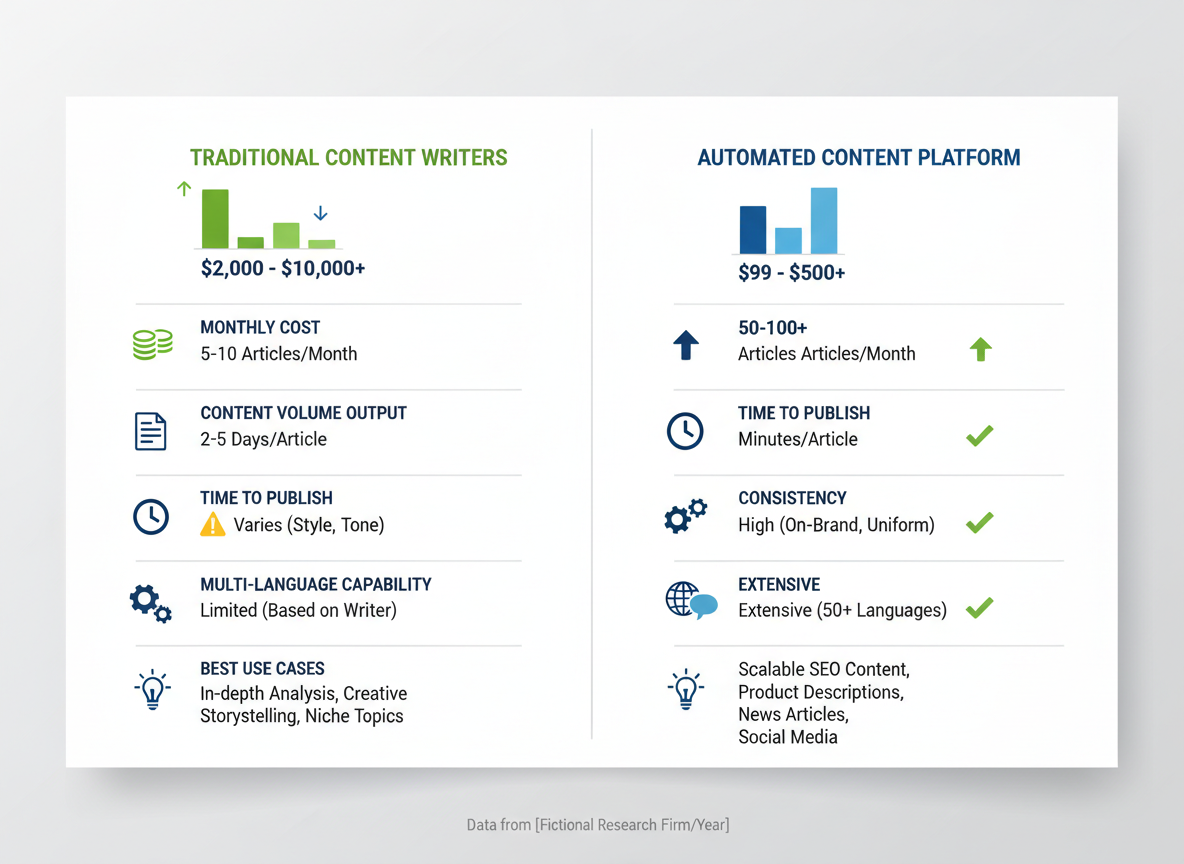
Here’s the uncomfortable truth most business owners face: hiring content writers at $2,000-10,000 monthly adds up fast, especially when you need consistent output across multiple channels.
Automation platforms have changed this equation entirely. They’re handling volume, consistency, and multi-channel distribution at a fraction of traditional content writer fees. But they’re not replacing human writers—they’re reshaping how we think about content production.
The Numbers Tell a Different Story
Traditional content writers deliver 8-20 quality pieces monthly for $2,000-10,000. Automation platforms? They can generate and publish hundreds of pieces at $97-497 monthly. Testing CG sets up an entire year of content in three minutes and auto-publishes daily across 100+ languages. That’s a different cost structure altogether.
But price isn’t everything. Human writers bring brand voice nuance, original insights from interviews, and the kind of technical accuracy that comes from deep expertise. They excel at thought leadership, complex B2B content, and reputation-sensitive pieces where every word matters.
When Each Approach Makes Sense
Choose human writers when you’re building thought leadership, creating high-stakes brand storytelling, or developing content that requires subject matter expertise and interview-based research. These strategic pieces shape perception and establish authority.
Choose automation for consistent blog publishing, social media content at scale, multi-language needs, and when you’re rapidly scaling your content operation. The ROI calculations favor automation when volume and consistency drive your strategy.
The Winning Combination
Smart teams aren’t choosing one over the other—they’re using both. They deploy automation for high-volume content needs while reserving writers for strategic pieces. AI paragraph writing tools handle the production heavy lifting, freeing writers to focus on strategy, editing, and the content that truly moves the needle.
Testing CG’s advantage lies in how it handles the 24/7 publishing grind. While your competitors pay thousands monthly in content writer fees, you’re publishing daily across multiple channels and languages for a fraction of that cost.
The future isn’t human versus machine. It’s writers becoming strategists and editors while automation handles production at scale.
Frequently Asked Questions About Content Writer Fees
How much should I charge as a beginner content writer?
Start between $0.03-0.10 per word or $25-50 per hour. I know it feels low, but here’s the strategy: land 5-10 clients quickly, build your portfolio with stellar work, then raise rates after 3-6 months. Your first clients are your training ground. Once you’ve got solid samples and testimonials, jump to $0.12-0.15 per word. Don’t stay at beginner rates longer than six months—that’s leaving money on the table.
What’s the average content writer fee per word in 2026?
Professional content writers charge $0.10-0.30 per word, with $0.15 being the sweet spot for quality blog content. Entry-level hovers around $0.05-0.10, while specialists command $0.30-0.75 or more. Geographic location matters less now than expertise and results. A technical writer in Manila charging $0.40 per word can out-earn a generalist in New York at $0.15 if they’ve got the chops.
Should I charge per word, per hour, or per project?
Per-project wins for experienced writers because you’re not penalized for efficiency. If you can nail a 2,000-word piece in three hours that takes others eight, why cap your earnings? Per-word works when starting out—it’s transparent and easy to quote. Per-hour makes sense for editing, consulting, or unpredictable revisions. My recommendation? Use per-project for 80% of your work once you’ve completed 20+ articles and can accurately estimate timeframes.
How do I calculate my content writer rates?
Take your desired annual income, add 30-40% for taxes and expenses, then divide by billable hours. If you want $60,000 annually, that’s $84,000 gross. Assuming 1,200 billable hours yearly (25 hours weekly × 48 weeks), you need $70/hour minimum. For project rates, estimate hours × hourly rate, then add 20% buffer for revisions and admin time.
What’s a fair rate for a 1000-word blog post in 2026?
$100-500 depending on what’s involved. Basic listicle with minimal research? $100-150. SEO-optimized piece with competitor analysis, keyword research, and proper content brief implementation? $250-350. In-depth thought leadership with expert interviews and original data? $400-500+. Don’t undersell complexity.
Do content writers on Upwork and Fiverr earn less?
Yes, typically 30-50% less after platform fees (20%) and rate compression from global competition. A $300 project becomes $240 after Upwork’s cut. Better alternatives? Cold outreach, LinkedIn networking, and niche job boards where clients expect (and pay) professional rates.
How much do specialized content writers charge?
Specialists earn 40-100% premiums. SEO writers: $0.20-0.40/word. Technical writers: $0.30-0.75/word. SaaS content creators: $0.25-0.60/word. Financial services writers can hit $1.00+/word. Specialization pays because you’re solving specific, valuable problems.
Should I offer package pricing?
Absolutely. Packages provide predictable income and typically generate 25-35% more revenue than one-off projects. Offer tiered monthly options: Starter (4 articles), Growth (8 articles), Premium (12+ articles with strategy calls). Clients love the simplicity, you love the stability.
How often should I raise my rates?
Increase 10-15% annually with existing clients (grandfather loyal ones if needed). Raise rates immediately with new clients when you’ve added skills, certifications, or proven results. Never apologize for rate increases tied to better deliverables.
Are AI tools affecting content writer fees?
Entry-level rates face pressure, but strategic, high-quality content commands premiums. Position yourself as the human expert who uses AI for efficiency, not replacement. Clients want content that converts, builds authority, and resonates emotionally—something AI alone can’t deliver consistently.
What expenses should I factor into my fees?
Budget 30-40% of gross income for: software subscriptions ($50-200/monthly), self-employment taxes (15.3%), equipment upgrades, marketing, professional development, and health insurance. If you’re grossing $80,000, expect $24,000-32,000 in business expenses.
How do I justify premium fees to clients?
Lead with ROI. “This $400 article will drive qualified traffic worth $2,000+ in new business.” Show portfolio results with metrics. Highlight your specialization: “I’ve written 200+ SaaS case studies that average 8% conversion rates.” Be transparent about your process—quality takes time, research, and expertise. When clients understand the value creation, price becomes secondary.

I am a full-time online marketer, for over a decade now. Helped over 100,000+ people & generated well over $12M in online sales.