

What Is a Content Engineer? (The Role Transforming Marketing in 2026)
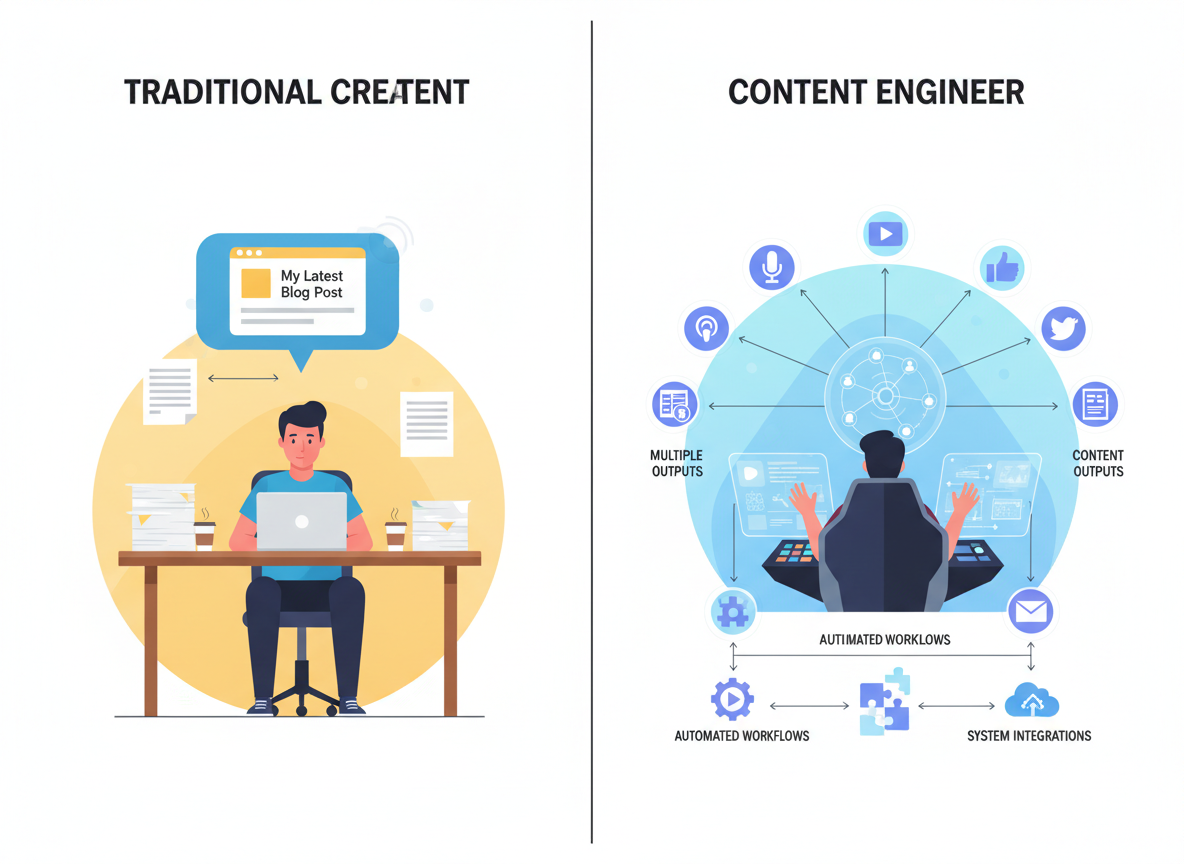
Picture this: Your competitor publishes 50 pieces of optimized content weekly while you’re still wrestling with Google Docs and ChatGPT tabs. They’re not hiring an army of writers—they’ve got content engineers.
A content engineer isn’t just another fancy title for a content creator. Think systems architect, not wordsmith. While traditional creators write one article at a time, content engineers build repeatable systems that produce hundreds of assets on autopilot. They connect APIs, design workflows, and orchestrate AI tools to transform content creation from manual labor into intelligent automation.
Here’s why marketing teams are scrambling to hire them: The content game shifted overnight. Manual creation can’t keep pace with algorithmic demands or audience expectations. You need volume and quality, across multiple channels, updated constantly. That’s impossible without engineering mindset.
The urgency isn’t theoretical—it’s existential. Brands that haven’t automated their content pipelines are watching market share evaporate while automated competitors dominate search rankings and social feeds.
This guide gives you the complete roadmap. Whether you’re transitioning into this role or building a content engineering team, you’ll learn exactly what it takes to succeed. We’ll cover everything from mastering content brief systems to building workflows that run while you sleep.
Content Engineer vs Marketing Technologist vs Marketing Ops: What’s the Difference?
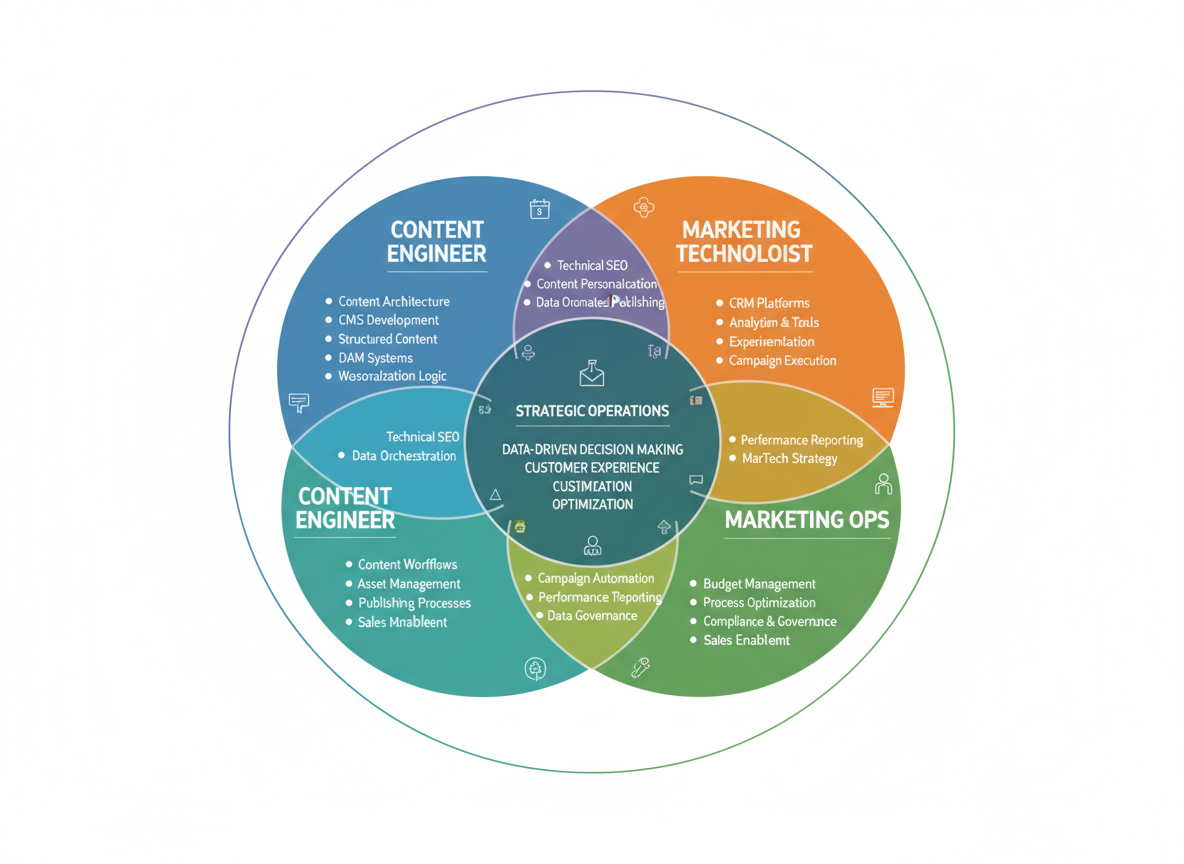
Here’s the thing: these roles sound similar, but they solve completely different problems.
Content engineers build AI-powered content systems and automation workflows. They’re the ones creating templates, training AI models for brand voice, and designing content production pipelines that scale. Think of them as architects for your content factory.
Marketing technologists manage the broader martech stack—your CRM, analytics platforms, email systems, and how they all talk to each other. They’re generalists who keep your tech infrastructure running.
Marketing Ops professionals focus on campaign execution and process optimization. They’re measuring ROI, managing budgets, and making sure your team hits deadlines. Similar to how account directors orchestrate client relationships, these folks orchestrate processes.
There’s overlap, sure. All three roles touch automation and data. But here’s why content engineers are the fastest-growing specialization: content volume demands are exploding while budgets stay flat. Companies need someone who can 10x output without 10x headcount.
You’ll need a marketing technologist when building your stack. You’ll need marketing ops when scaling campaigns. But you’ll need a content engineer yesterday if you’re drowning in content requests.
4 Core Ways Content Engineering Transforms Marketing Operations
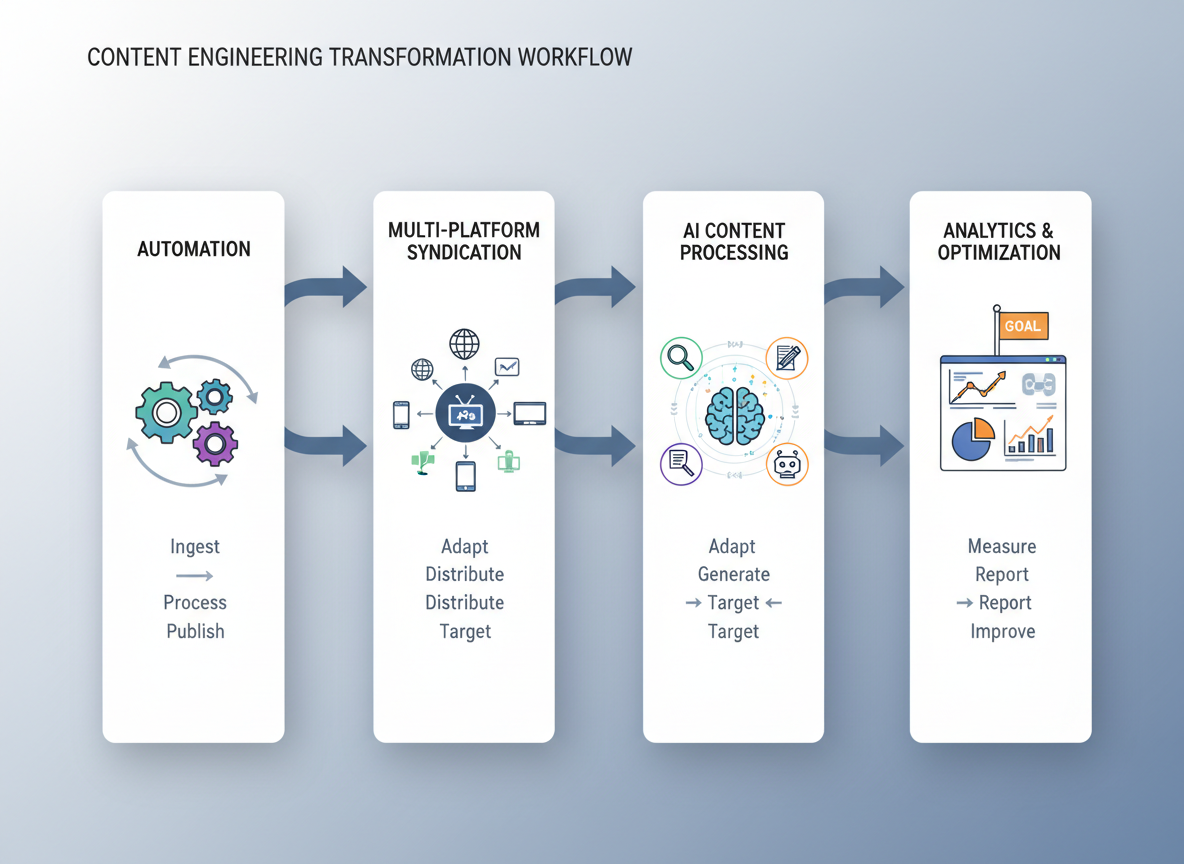
Content engineers reshape how marketing teams work by building systems that eliminate bottlenecks and multiply output. Here’s how they’re doing it:
Automation Architecture removes manual publishing tasks entirely. Instead of copying and pasting between platforms, content engineers build workflows that distribute content automatically—saving teams 15-20 hours weekly on repetitive tasks.
Multi-Channel Orchestration syndicates one piece of content across LinkedIn, Medium, email, and your blog simultaneously. You write once, publish everywhere, without lifting a finger after the initial setup.
AI Integration amplifies production capacity. Content engineers connect tools like AI product description generators into your workflow, letting your team produce 10x more content while maintaining quality standards.
Performance Optimization tracks what works and feeds that data back into your system. Content engineers build dashboards that show real-time performance and automatically adjust distribution based on results.
The impact? Teams report 300% output increases while reducing production time by 60%. Those who haven’t adopted these systems are already falling behind.
Day-to-Day Responsibilities: What Content Engineers Actually Do
A content engineer’s morning typically starts with checking automated publishing queues and scanning performance dashboards for anomalies. They’re not creating content from scratch—they’re designing the systems that make content production scalable.
Most of the day involves building and refining content pipelines. This means configuring AI tools, writing custom prompts that maintain brand voice, and testing workflow automations that move content from ideation through publication. When a marketing team wants to repurpose video scripts across multiple platforms, for example, the content engineer builds the template system that makes it happen in minutes instead of hours.
They’ll troubleshoot integration issues—why isn’t the CMS talking to the email platform?—and collaborate with writers to identify bottlenecks worth automating. The afternoon often involves analyzing performance data to optimize both the content and the systems producing it. It’s part technical problem-solving, part strategic thinking about what’ll move the needle.
Essential Technical Skills Every Content Engineer Must Master
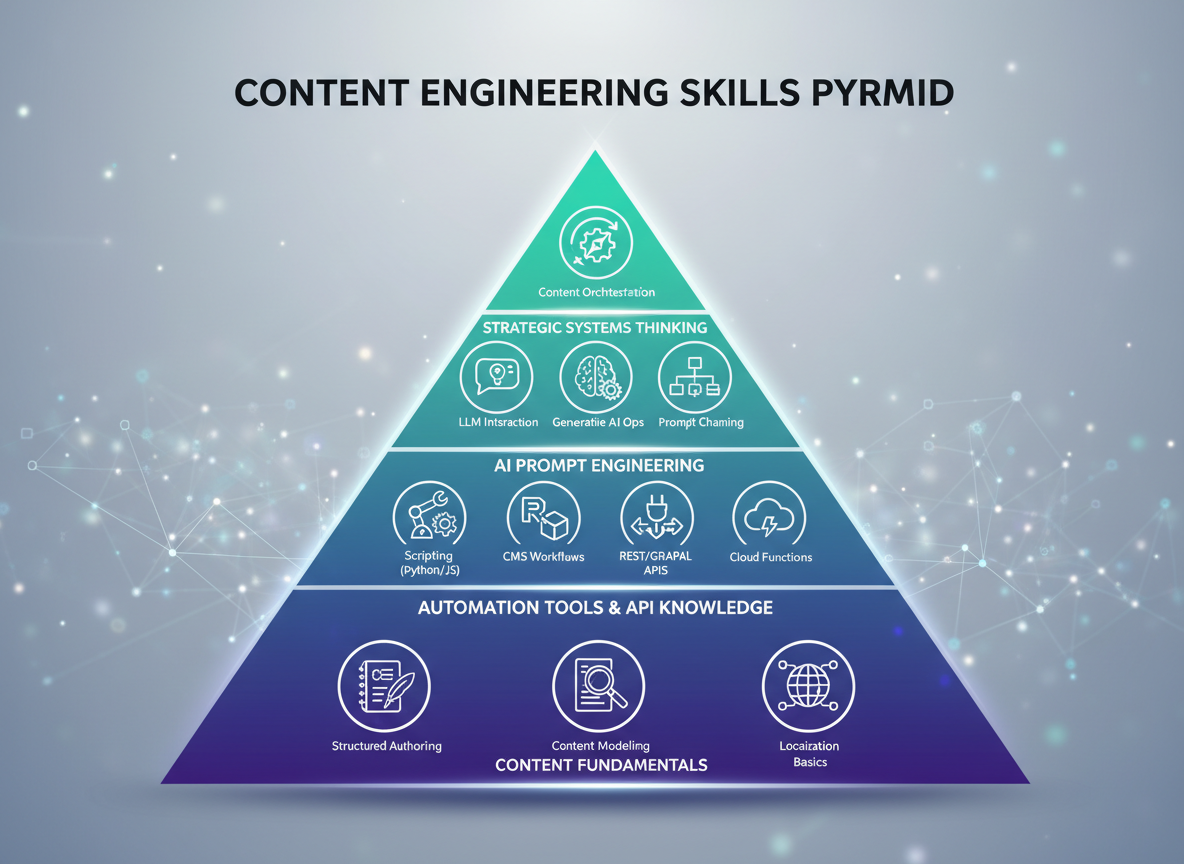
You don’t need a computer science degree, but you’ll want these skills in your toolkit.
AI prompt engineering sits at the top of the list. Content engineers know how to craft prompts that generate consistent, on-brand output—not the generic fluff that screams “AI wrote this.” They understand temperature settings, context windows, and how to chain prompts for complex projects. Tools like Jasper and ChatGPT become precision instruments in their hands.
Marketing automation platforms are your force multipliers. Zapier connects your blog to social media. Make (formerly Integromat) handles complex workflows. HubSpot orchestrates entire campaigns. Content engineers build these systems so one piece of content automatically appears everywhere it should.
API basics matter because they’re how systems talk. You’re not coding APIs from scratch—you’re understanding how to connect platforms, authenticate requests, and troubleshoot when data doesn’t flow correctly.
Content management systems extend beyond WordPress. Headless CMS platforms like Contentful and Strapi are changing how content gets distributed across channels. Content engineers navigate both traditional and modern publishing stacks.
Analytics interpretation separates busy work from business results. Google Analytics 4, content performance dashboards, and conversion tracking tell you what’s actually working.
Real Case Study: How One Content Engineer 10x’d Output While Cutting Production Time 80%
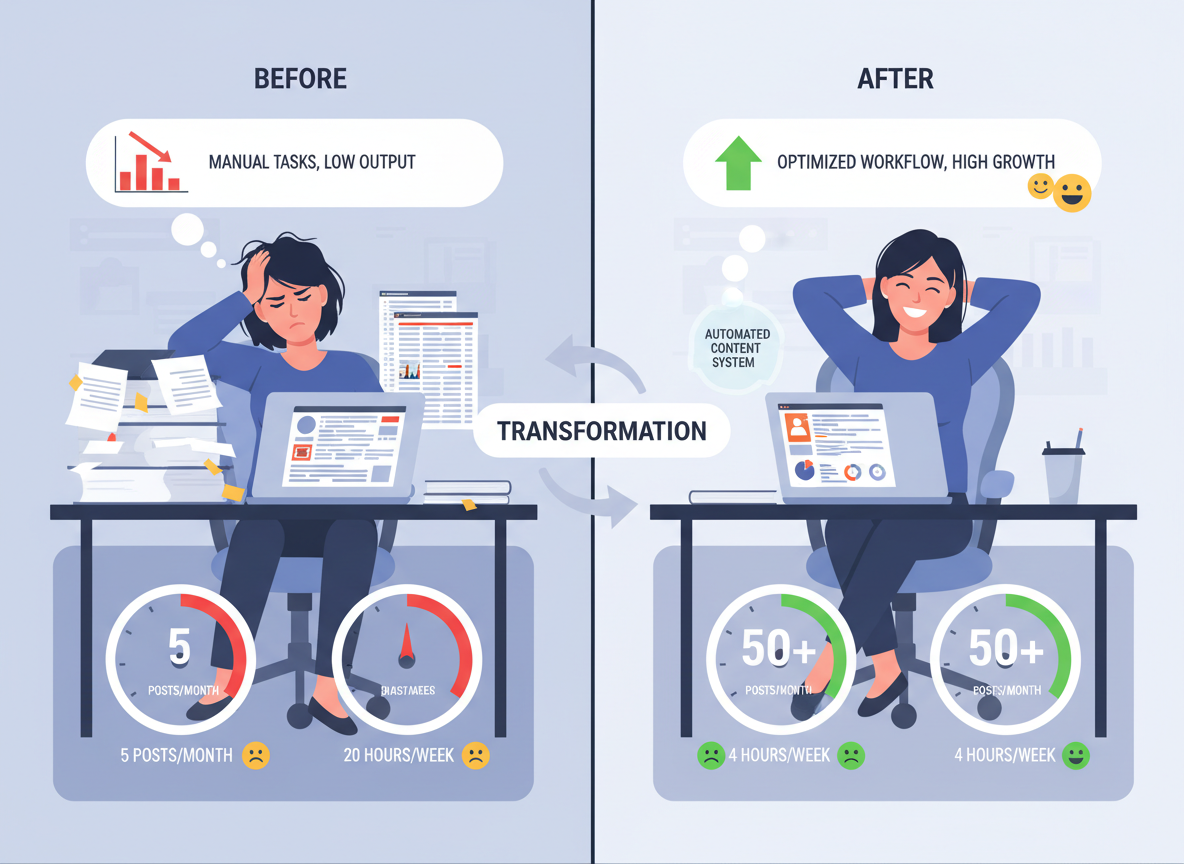
Sarah Martinez ran a real estate marketing agency that was drowning. Her team produced three blog posts weekly—each taking 6-8 hours from research to publish. They couldn’t scale without hiring more writers.
Enter content engineering.
Sarah implemented a systematic approach using video-to-blog conversion tools and automated syndication workflows. Her morning podcast recording became the content seed. Within 90 minutes, that single recording transformed into a blog post, five social media pieces, an email newsletter, and even fed into real estate advertising campaigns across platforms.
The numbers tell the story: 30 pieces of content weekly (up from 3), production time dropped from 8 hours to 90 minutes per content cluster, and engagement jumped 340% within two months.
What made the difference? Sarah stopped thinking like a writer and started thinking like an engineer—building systems instead of fighting deadlines.
Your Step-by-Step Roadmap to Becoming a Content Engineer
Phase 1 (Months 1-2): Master Foundational Automation Tools
Start with Google Sheets formulas, Zapier, and basic API connections. You’ll want to understand content fundamentals too—SEO principles, conversion copywriting, and creating effective content briefs that guide your automated workflows.
Phase 2 (Months 3-4): Learn AI Prompt Engineering
Focus on ChatGPT, Claude, and learning how to craft prompts that consistently deliver quality. Study content workflow design—mapping out how content moves from ideation through publication.
Phase 3 (Months 5-6): Build Your First Automated Pipeline
Create a practical project: an end-to-end content system that researches topics, generates outlines, produces drafts, and formats for publication. Document everything.
Consider certifications from platforms like HubSpot Content Marketing or Google Analytics. Your portfolio should showcase three projects: a keyword research automation, a content distribution workflow, and a performance tracking dashboard. Real results matter more than fancy credentials here.
Content Engineering for Solopreneurs vs Small Teams vs Enterprise: What’s Different?
Your content engineering approach needs to match your scale. Solopreneurs should focus on personal brand automation—think automated email sequences, repurposing workflows, and content calendars that run themselves. You’re building systems that multiply your output without hiring.
Small teams (2-10 people) need collaborative workflows where account directors manage client deliverables while content engineers build the systems behind them. Here, automation handles client reporting, asset organization, and cross-platform distribution.
Enterprise teams (10+) require complex approval workflows, brand compliance layers, and multi-channel orchestration across departments. You’re managing dozens of stakeholders, multiple brand identities, and intricate governance structures.
Budget-wise? Solopreneurs can start with $50-200/month in tools. Small teams typically invest $500-2,000 monthly. Enterprise operations often run $5,000+ but justify it through massive efficiency gains. The ROI threshold shifts dramatically—enterprises need documented time savings and reduced headcount costs, while solopreneurs just need to reclaim enough hours to grow revenue.
How to Build Your First Content Pipeline in 3 Simple Steps
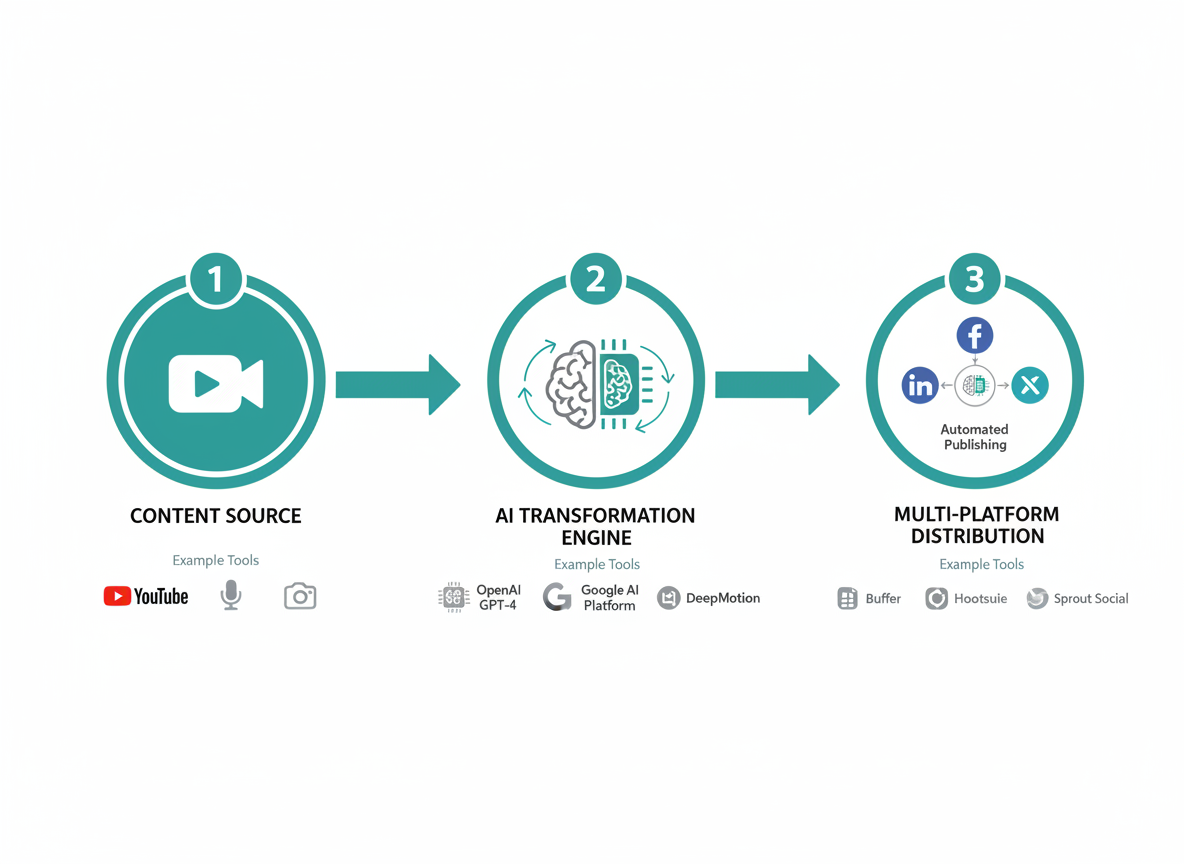
Step 1: Pick Your Content Source
Start with what you’ve already got. Choose one format—your latest podcast episode, a YouTube video, or that blog post buried three pages deep. Don’t overthink it. You’re testing the pipeline, not building the Sistine Chapel.
Step 2: Set Up AI Transformation
Connect your source to an AI tool that’ll transform it. Tools like AI product description generators show how single-source content can multiply across formats. You want something that converts your video into blog posts, social snippets, and email content without manual rewriting.
Step 3: Configure Auto-Syndication
Choose 2-3 platforms where your audience hangs out. Set up automatic posting schedules. That’s it.
The Reality Check
Most beginners try syndicating to 10 platforms at once. They burn out in week two. Others spend three days perfecting their first pipeline. Neither works.
Testing CG handles this entire process in under three minutes. Upload once, auto-publish everywhere. Your pipeline runs while you sleep, turning content engineers from aspirational job titles into something you’re actually doing.
Content Engineering Salary Ranges and Career Progression in 2026
Content engineers can expect solid compensation that reflects their hybrid expertise. Entry-level positions (0-2 years) typically range from $55K-$75K annually, while mid-level roles (2-5 years) jump to $75K-$110K. Senior content engineers and content systems architects with 5+ years command $110K-$160K or more, especially when they’ve built proprietary workflows or managed enterprise-scale implementations.
Freelance content engineers often charge $75-$200 per hour, depending on their specialization in areas like structured content architecture, API integrations, or content operations strategy. Remote work has leveled geographic pay gaps somewhat, though positions at tech hubs still pay premium rates.
The career path typically progresses from execution-focused roles to strategic positions like Content Operations Director or Chief Content Officer. Many content engineers eventually transition to consulting or launch their own agencies—and if you’re ready to make that leap, a professional letter of resignation generator can help you exit gracefully while maintaining valuable industry relationships.
Common Challenges and Pitfalls (And How to Avoid Them)
Content engineers face real hurdles that can derail even well-planned strategies. Over-automation tops the list—you’ll end up with robotic, off-brand content if you let systems run wild without human oversight. The fix? Build review checkpoints into your workflows and maintain brand voice guidelines that your tools actually reference.
Integration failures eat up time fast. When APIs change overnight or platforms update unexpectedly, your entire content pipeline can grind to a halt. Smart content engineers document their tech stack thoroughly and build buffer time into deadlines for troubleshooting.
The trickiest balance? Automation efficiency versus creative quality. You can’t sacrifice compelling storytelling for speed—your long-form ad content still needs to connect emotionally with readers.
Managing expectations matters too. Stakeholders often think AI solves everything instantly. Set realistic timelines upfront and educate teams about what automation actually delivers versus what still needs human creativity. Regular performance reports showing both wins and limitations keep everyone grounded.
KPIs and Measurement Frameworks: Proving Content Engineering ROI

You can’t improve what you don’t measure. Content engineers need clear metrics to prove their systems actually work.
Efficiency metrics tell the immediate story: How much time did automation save? What’s your cost per content piece now versus six months ago? Track output volume without sacrificing quality.
Quality metrics matter more. Watch engagement rates, conversion tracking, and brand consistency scores. If your engineered systems produce generic content, something’s broken.
System health keeps everything running—monitor uptime, error rates, and integration stability. One API failure can derail your entire workflow.
Business impact closes the loop: revenue attributed, lead generation, audience growth. Connect your engineering work to actual money.
Build a dashboard that updates automatically (because manually updating reports about automation is hilariously ironic). Your measurement framework should tie back to content brief quality and business goals.
Report monthly. Show stakeholders the ROI in language they understand: dollars saved, leads generated, hours reclaimed.
Why Testing CG Is the Ultimate Content Engineering Platform
Here’s the truth: manual content creation is bleeding your competitive advantage dry. While you’re spending weeks setting up workflows and wrestling with technical configurations, your competition is already automating.
Testing CG eliminates every technical headache that makes content engineering feel impossible. You’ll set up an entire year of automated content in three minutes—not three weeks. The platform handles daily publishing without you lifting a finger. True set-and-forget automation.
Multi-platform syndication? Done. Your content automatically flows to Facebook, LinkedIn, and Twitter/X without manual posting. Need global reach? Testing CG supports 100+ languages, letting you engineer content at a scale that’d require an entire team otherwise.
The video-to-blog conversion takes three clicks. Seriously.
While other tools like Jasper require constant prompting and oversight, Testing CG runs autonomously. Marketers are already winning with this system—scaling content output by 10x without hiring.
Your competitors figured this out months ago. Every day you wait is another day they’re pulling ahead.
Frequently Asked Questions About Content Engineers
Do I need coding skills to become a Content Engineer?
Not really. You’ll benefit more from understanding automation logic and workflows than writing code. Think of it like using a car—you don’t need to build the engine to drive it effectively.
How long does it take to transition to Content Engineer?
Most people make the shift in 4-6 months with focused learning. Start with one automation tool, master it, then expand your toolkit.
Can small businesses afford a Content Engineer?
Absolutely. Run an ROI analysis on your current content costs versus automated efficiency. Many solopreneurs engineer their own content systems and see 3-5x output increases.
What’s the difference between Content Engineer and Content Strategist?
Content strategists plan what to say. Content engineers build systems that scale those strategies. One creates the blueprint; the other builds the factory.
Is content engineering just using AI to write everything?
No. It’s about orchestrating systems, workflows, and distribution—AI writing is just one component. You’re the conductor, not just the instrument player.
What tools do Content Engineers use most?
Workflow automation platforms, content management systems, API connectors, and specialized tools like acronym generators for brand consistency. The stack varies by project needs.
Will Content Engineers replace content creators?
Never. They amplify creative output. Creators generate ideas and unique perspectives; engineers multiply their reach and impact.
How do I prove content engineering skills in an interview?
Build a portfolio showing before/after metrics. Document a case study demonstrating how you automated a content process and the measurable results you achieved.

I am a full-time online marketer, for over a decade now. Helped over 100,000+ people & generated well over $12M in online sales.