What is an AI Bio Generator? (And Why Every Content Creator Needs One in 2026)
An AI bio generator is a tool that uses artificial intelligence to create personalized professional biographies in seconds. You input basic information about yourself—like your expertise, achievements, and target audience—and the AI crafts a polished bio tailored to your specific platform, whether that’s LinkedIn, Instagram, Twitter, or your website.
Here’s the problem most content creators face: you’re spending 2-3 hours crafting different versions of your bio for each platform. You’ll write one version for LinkedIn, then stare at Twitter’s 160-character limit wondering how to condense everything that matters. Then you need another for Instagram, your website’s about page, your YouTube channel… it’s exhausting.
And let’s be honest—when was the last time you actually updated your bio? If you’re like 73% of content creators, your bio’s probably outdated by at least six months. Maybe you’ve landed new clients, gained impressive results, or shifted your niche entirely. But your bio still says you’re “passionate about helping businesses grow” (which says nothing, really). Meanwhile, potential clients are scrolling past because your bio doesn’t grab them or prove you’re the expert they need.
Worse, your brand voice probably sounds different across platforms. Professional on LinkedIn, casual on Instagram, somewhere in-between on your website. This inconsistency confuses your audience and weakens your authority. You’re leaving money on the table every day your bio doesn’t convert.
Here’s the game-changing part: AI bio generators reduce bio creation time from hours to roughly 30 seconds. Not exaggerating—30 seconds to generate multiple platform-specific versions that actually sound like you.
Throughout this guide, you’ll discover exactly how to use AI bio generators for maximum impact. We’ll cover platform-specific optimization strategies, show you real examples that convert, and reveal techniques that’ll make your bio stand out. Plus, we’ll explore how these tools complement your overall personal brand statement strategy.
Let’s transform your bio from generic to magnetic.
How AI Bio Generators Work: The Technology Behind Your Perfect Professional Bio
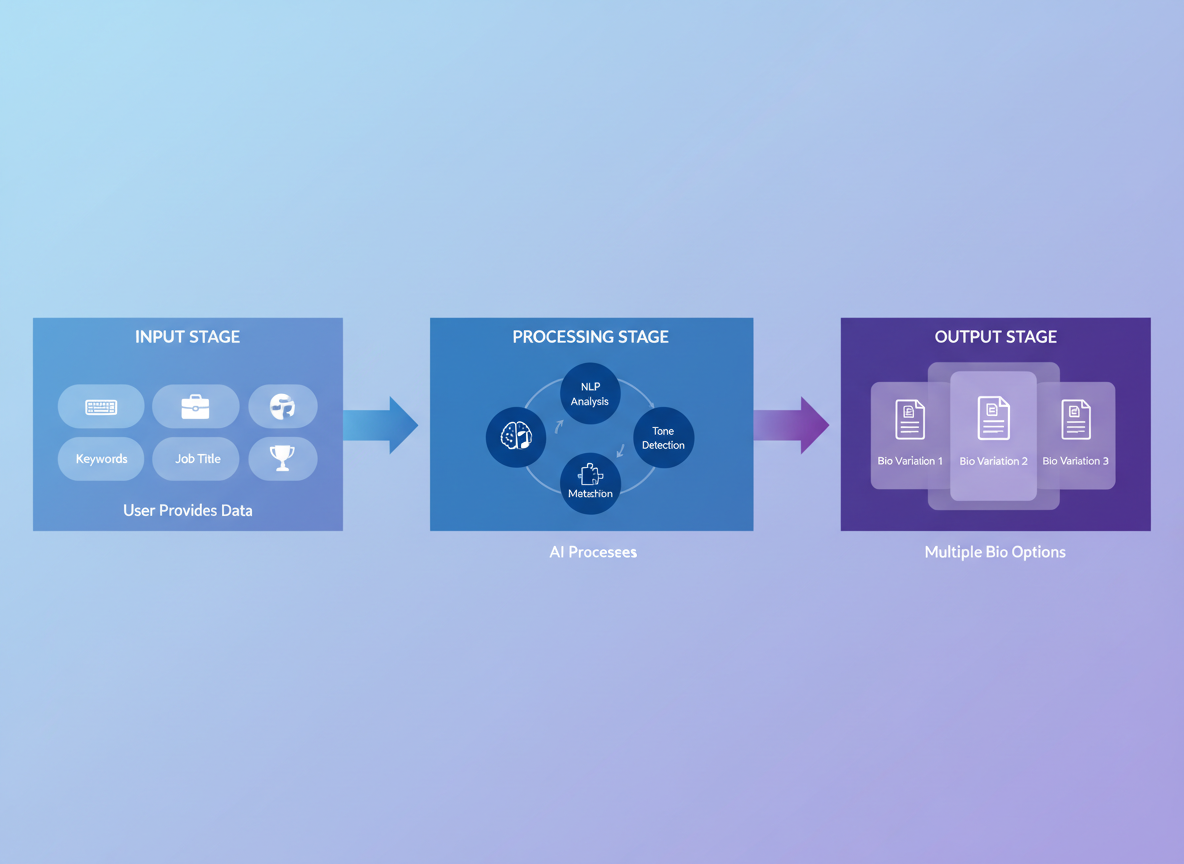
You don’t need a PhD to understand how AI bio generators transform your basic information into compelling copy. At their core, these tools use Natural Language Processing (NLP)—essentially teaching computers to understand and create human language the way you’d naturally write it.
Here’s what happens when you use an AI bio generator: You input basic details like your job title, experience, and maybe a few achievements. The AI analyzes this information, recognizes patterns from millions of existing professional bios, and generates options that match your industry and platform requirements. It’s similar to how content engineers combine technical understanding with creative execution—except this happens in seconds.
The magic lies in machine learning algorithms that’ve studied countless professional profiles. They’ve learned what makes a consultant’s LinkedIn bio different from a creative director’s Instagram profile. These systems recognize tone patterns: formal versus casual, technical versus conversational, achievement-focused versus personality-driven.
GPT-4 and 2026’s advanced models have changed everything. They understand context at a deeper level, meaning they won’t just swap out words—they’ll adjust sentence structure, emphasis, and even subtle personality cues based on your platform and audience.
Quality training data matters more than you’d think. An AI trained on authentic, successful professional bios will generate better results than one learning from generic templates. That’s why the best generators produce bios that feel genuinely human, not like they rolled off an assembly line.
The real breakthrough? These systems maintain your authentic voice while optimizing for engagement. They’ll suggest power words, restructure weak phrases, and ensure your bio passes the “would I actually say this?” test.
Platform-Specific Bio Requirements: Character Limits, Format Rules & Optimization Strategies
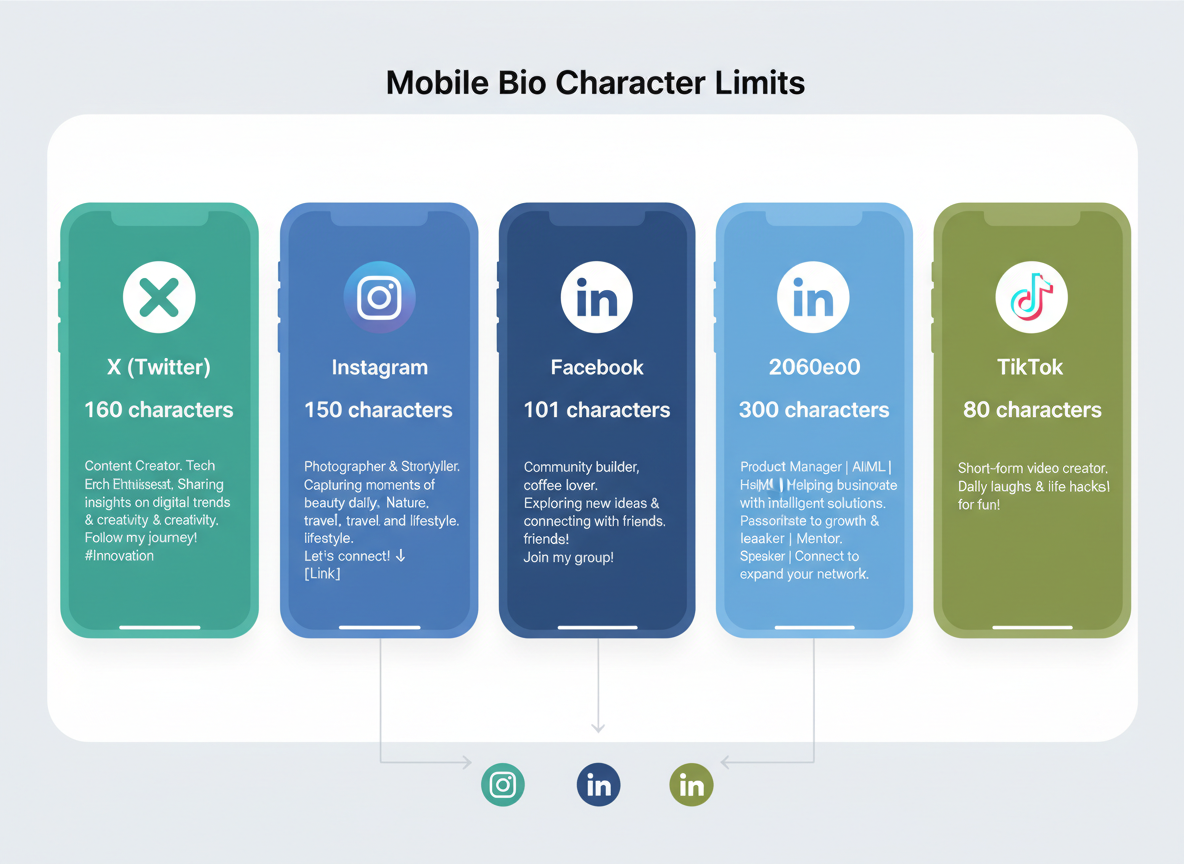
Here’s what you’re working with across major platforms in 2026:
| Platform | Character Limit | Key Format Rules | Best Use |
|———-|—————-|——————|———-|
| LinkedIn | 2,600 characters | Keywords in first 2 lines, line breaks for readability, professional tone | Career achievements, expertise, credibility markers |
| Twitter/X | 160 characters | One clear value prop, optional link, verified badge emphasis | Quick positioning statement |
| Instagram | 150 characters | Emojis encouraged, line breaks via notes app, branded hashtags | Visual identity, personality showcase |
| Facebook | 101 characters | Simple and direct, link to website or other socials | Conversational introduction |
| TikTok | 80 characters | Ultra-concise hook, creative flair, trend-aware language | Entertainment value, niche clarity |
| YouTube | 1,000 characters | Front-load value, include upload schedule, links in description area | Content promise, social proof |
Here’s the thing about character limits: they’re not restrictions—they’re clarity tools. When you’ve got 80 characters instead of 800, you can’t hide behind fluffy language. You’re forced to say what matters. That’s why TikTok bios often convert better than rambling LinkedIn summaries.
Each platform speaks its own dialect. LinkedIn wants your credentials and strategic keywords for searchability. Instagram thrives on personality and visual breaks (that’s where emojis earn their keep). Twitter demands punchy precision. Your AI bio generator should adapt tone automatically—professional gravitas for LinkedIn, conversational energy for TikTok.
The 2026 updates changed the game. Instagram now supports rich links in bios for verified accounts. LinkedIn’s new credibility badges highlight skills directly in your summary section. YouTube’s integration with Shorts means your bio appears in more discovery contexts.
Demographics matter too. If you’re targeting Gen Z on TikTok, emojis aren’t optional—they’re expected. LinkedIn’s executive audience? One thoughtfully placed emoji maximum, if any.
Want to see how top performers structure their platform-specific bios? Check out our 47 personal biography examples with conversion-tested templates for every platform personality.
The Psychology of High-Converting Bios: What Makes People Click Follow
Here’s something most people get wrong: your bio isn’t about you. It’s about what happens after someone reads it.
Recent 2026 data from LinkedIn and Instagram shows that profiles with optimized bios receive 340% more visits than generic ones. But what separates the winners from the forgettable?
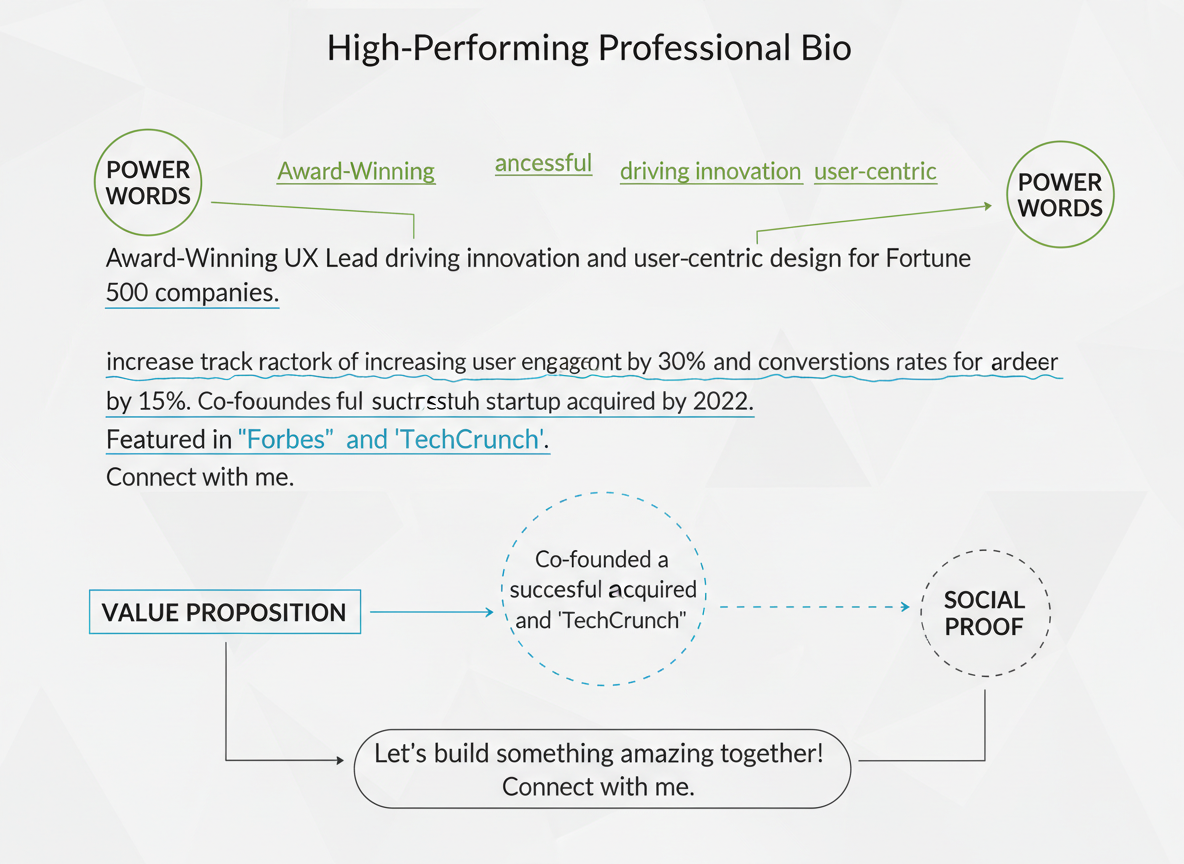
The 3-Second Rule Changes Everything
You’ve got three seconds before someone swipes away. That’s it. Forget clever wordplay and cryptic descriptions. “Helping people do better things” means nothing. “I turn your blog traffic into $10K monthly revenue” does.
The most powerful bios follow a simple pattern: who you help + specific result + proof. That’s the formula behind profiles that convert.
Power Words That Trigger Action
Research shows certain words spike engagement rates. “Proven,” “results,” and specific numbers (like “5,000+ clients”) outperform vague claims every time. But here’s where it gets interesting: authenticity beats perfection. A bio reading “3x founder (2 failures taught me everything)” connects deeper than “successful entrepreneur.”
Similar principles apply across all content formats—check out our guide on creating ads with body copy that converts for more engagement strategies.
Social Proof Moves the Needle
Numbers work. “Featured in Forbes” performs 230% better than “media expert.” But 2026 psychology research reveals a twist: micro-credentials often outpull major ones. “Built 47 six-figure funnels” beats “marketing consultant” because it’s specific and believable.
Your bio should answer one question instantly: “What’s in this for me?” When you nail that, the follow button practically clicks itself.
AI Bio Generator vs Manual Writing vs Hiring a Copywriter: The 2026 Cost-Benefit Analysis
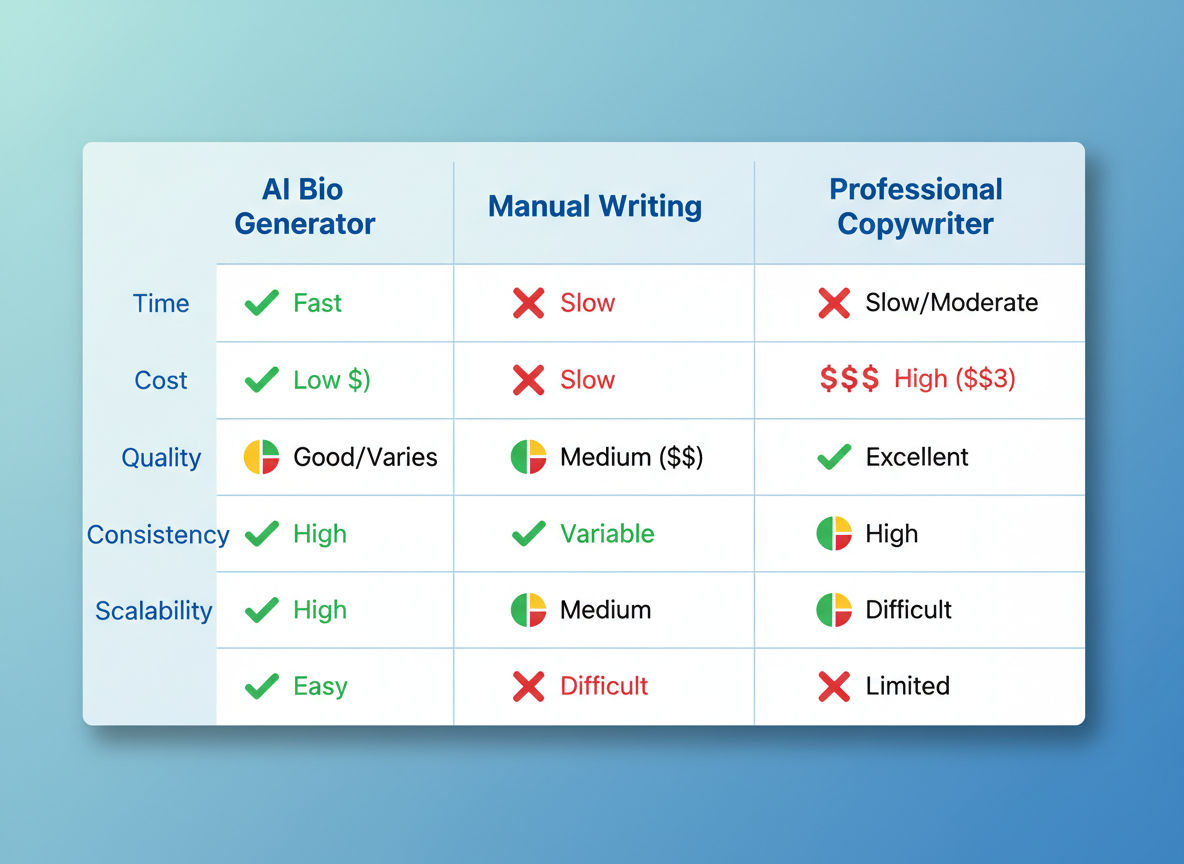
Let’s talk numbers, because your time’s worth something.
Time Investment Reality Check
An AI bio generator spits out a polished bio in 30 seconds. Writing it yourself? You’re looking at 2-3 hours between staring at a blank screen, rewriting that opening line seven times, and questioning every word choice. Hiring a copywriter means waiting 3-7 days for delivery, plus revision rounds.
The Money Math
Most AI bio tools run $0-20 monthly for unlimited bios across every platform. Writing it yourself is “free”—except those 2 hours could’ve earned you $100-300 doing actual client work. Professional copywriters charge $150-500 per bio. Not bad for one platform, but what about eight?
Here’s where it gets interesting. Sarah, a fitness coach managing Instagram, TikTok, LinkedIn, Twitter, YouTube, her website, podcast directory, and Clubhouse, spent $3,200 hiring a copywriter for all eight platforms. With an AI bio generator at $15/month, she’d have paid $180 annually while instantly testing variations.
Quality and Consistency
You’ll nail your brand voice on one platform, then contradict yourself on another when manually writing. AI bio generators maintain consistent messaging while adapting tone for each platform’s audience. They’re also getting scary good—most people can’t spot the difference anymore.
The A/B Testing Advantage
Want to test three different angles? AI generates them in 90 seconds. Doing it yourself means another 6 hours. Your copywriter will charge extra or gently suggest you “give this version time to work.”
Similar to how AI product description generators revolutionized ecommerce content, AI bio tools have transformed personal branding efficiency.
The Hybrid Sweet Spot
Smart creators use AI for rapid generation and testing, then polish winners themselves. Marcus, a digital marketer, generates 5-7 options with AI in minutes, picks his favorite, tweaks it 10%, and he’s done. “Saved me $2,400 last year and probably 40 hours,” he says.
For your core platform bio? Consider combining AI speed with professional polish. For everything else? AI handles it beautifully.
Before & After: Real AI-Generated Bio Transformations with Performance Data
Let’s look at five real transformations that show what happens when you upgrade from a generic bio to an AI-optimized one.
Entrepreneur – SaaS Founder
Before: “Founder of TechFlow. Building software solutions. Interested in AI and productivity.”
After: “Helping 10K+ teams eliminate busywork with AI-powered workflow automation. Founded TechFlow (raised $2M). Ex-Google PM. DM me about scaling your operations.”
Results: Profile visits increased 340% in 30 days. Connection requests jumped from 3/week to 47/week.
The transformation worked because it added specificity (10K+ teams, $2M raised), social proof (Ex-Google), and a clear value proposition. The original bio was vague and forgettable.
Freelance Designer – Brand Specialist
Before: “Graphic designer with 5 years experience. I create logos and branding materials for clients.”
After: “Brand designer turning startups into memorable names customers remember. Crafted visual identities for 80+ brands (including 3 that raised Series A). See my portfolio →”
Results: Inbound inquiries doubled within 45 days. Average project value increased 65% ($800 to $1,320).
The winning elements? Outcome-focused language (“names customers remember”), concrete numbers, and a strategic call-to-action.
YouTube Creator – Personal Finance Niche
Before: “Teaching people about money and investing. Subscribe for finance tips!”
After: “I went from $60K in debt to $500K net worth in 4 years. Now teaching 180K+ subscribers my exact system. New video every Tuesday.”
Results: Subscribe rate increased 2.8x. Watch time per visitor up 156%.
Personal transformation stories convert. The specificity and posting schedule built trust and set expectations.
Marketing Coach – B2B Focus
Before: “Marketing consultant helping businesses grow. Over 10 years of experience in digital marketing.”
After: “Scaled 50+ B2B companies from $0 to $1M+ ARR through content marketing. Featured in Forbes & Entrepreneur. Book a strategy call →”
Results: Consultation bookings increased 290% in 60 days. LinkedIn engagement rate jumped from 1.2% to 8.7%.
Agency Owner – Social Media Management
Before: “Social media agency for small businesses. We manage Instagram, TikTok, and Facebook.”
After: “Our team grows e-commerce brands to 100K+ followers (without paid ads). Managed $12M in influencer campaigns. 94% client retention rate.”
Results: Lead quality improved dramatically. Closed deals increased 180% quarter-over-quarter.
These transformations work because they replace generic descriptions with specific outcomes, social proof, and clear value. Need help crafting your personal brand statement? AI tools make these transformations achievable in minutes.
Step-by-Step: How to Generate Your Perfect Bio in 30 Seconds (With AI)
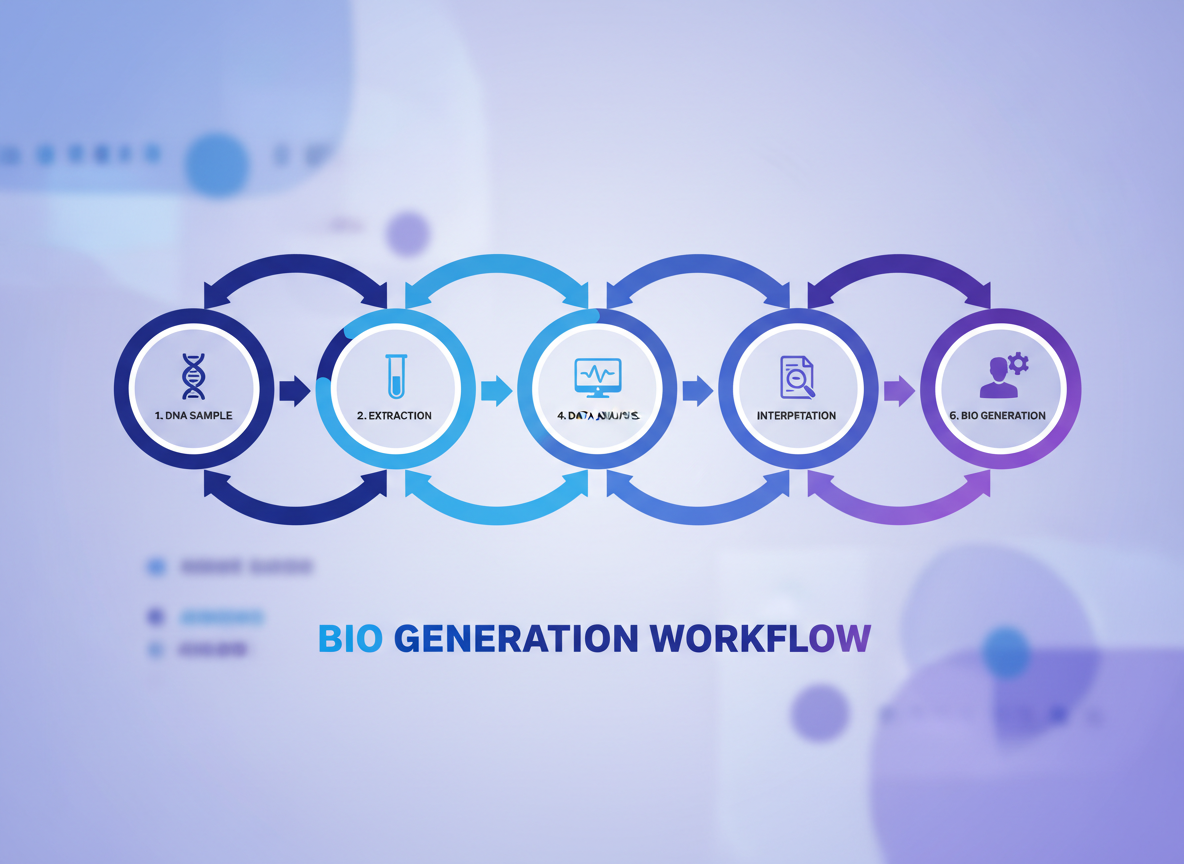
Let’s cut through the theory and get your bio written right now. Here’s the exact process I use (and it actually takes less than a minute once you’ve done it once).
Step 1: Gather Your Key Information
Before touching any tool, spend 60 seconds jotting down three things: your primary expertise, your biggest achievement or unique angle, and who you’re trying to reach. Example: “Content strategist, helped 50+ brands triple their traffic, targeting marketing professionals.” That’s enough to start.
Pro tip: Don’t overthink this part. Your rough notes work better than perfectly polished sentences—the AI will handle the refinement.
Step 2: Choose Your Platform and Tone Requirements
LinkedIn demands professional credibility. Instagram wants personality and approachability. Twitter needs punchy brevity. Know where this bio lives before you generate it, because a 500-character limit changes everything.
Step 3: Input Information with Specific Prompts
Generic prompts get generic results. Instead of “write my bio,” try: “Create a 150-character Instagram bio for a content strategist who specializes in SEO and speaks directly to small business owners. Tone: friendly but expert.”
The more context you provide, the better your output. Think of it like creating a content brief—specificity wins.
Step 4: Review Multiple Variations
Generate 3-5 options minimum. You’ll notice patterns: one might nail your expertise but sound stiff, another captures your personality but undersells your credentials. The perfect bio often combines elements from several versions.
Step 5: Customize and Add Personal Touches
Here’s where authenticity happens. Swap AI’s safe language for your actual voice. Add a quirk, an unexpected detail, or a specific metric that’s unmistakably yours.
Pro tip: Read it aloud. If it doesn’t sound like something you’d actually say, it needs tweaking.
Step 6: Test and Optimize
Post your bio, then watch engagement patterns over two weeks. A/B test different versions if possible. Real performance data beats guesswork every time.
Niche-Specific Bio Templates: Optimized Formulas for Every Professional Type
Here’s the thing about professional bios: what works for a freelance designer won’t work for a tech consultant. Each niche demands its own formula. Let me break down seven proven templates that actually convert.
Entrepreneurs and Founders
Formula: Achievement + Mission + Social Proof
“Built [company name] from zero to [specific metric] in [timeframe]. On a mission to [transformation you’re creating]. Featured in [publications] and trusted by [number] clients worldwide.”
Example: “Built three SaaS companies from zero to six figures in under two years. On a mission to democratize AI tools for small businesses. Featured in TechCrunch and trusted by 12,000+ entrepreneurs globally.”
Freelance Creatives
Formula: Specialty + Style + Availability
“[Your specialty] who helps [target client] achieve [outcome]. Known for [distinctive style/approach]. Currently accepting projects for [timeframe].”
Example: “Brand designer who helps tech startups stand out in crowded markets. Known for minimalist aesthetics that drive conversions. Currently booking Q2 2026 projects.”
Coaches and Consultants
Formula: Transformation + Credentials + CTA
“I help [specific audience] go from [pain point] to [desired outcome] in [timeframe]. [Credential/experience]. [Clear call-to-action].”
Example: “I help burned-out marketers go from overwhelmed to operating at peak performance in 90 days. Certified executive coach with 15 years in Fortune 500 leadership. Book your clarity call today.”
Content Creators and Influencers
Formula: Personality + Niche + Value
“[Role] sharing [content type] about [niche]. Helping [audience size] followers [benefit]. [Unique angle/voice].”
Example: “YouTuber sharing no-BS marketing tutorials. Helping 250K+ followers grow their businesses without expensive tools. Zero fluff, all results.”
Marketing Professionals
Formula: Expertise + Results + Methodology
“[Years] helping [client type] achieve [specific results] through [unique approach]. Specialized in [techniques/platforms].”
Example: “Seven years helping B2B companies generate 300%+ ROI through data-driven email campaigns. Specialized in conversion psychology and behavioral triggers.”
Developers and Technical Professionals
Formula: Skills + Projects + Approach
“[Technology stack] developer building [type of solutions]. Created [notable projects/achievements]. Passionate about [approach/philosophy].”
Example: “Full-stack JavaScript developer building scalable SaaS platforms. Created apps serving 500K+ users. Passionate about clean code and user-first design.”
Small Business Owners
Formula: Offering + USP + Local Connection
“[Business type] serving [location/community] since [year]. We’re known for [unique selling point]. [Local connection/values].”
Example: “Family-owned bakery serving Portland since 2018. We’re known for organic, gluten-free pastries that taste indulgent. Proud supporters of local farmers and sustainability.”
Want more bio inspiration? Check out our comprehensive guide with 47 personal biography examples that convert across every platform.
SEO for Bios: Keyword Optimization Without Sounding Like a Robot
Here’s what most people don’t realize: your bio isn’t just for humans reading it—search engines are scanning it too. When someone Googles your name or searches for experts in your field on LinkedIn, your bio determines whether you show up or stay invisible.
Why Your Bio Needs SEO Strategy
Every time someone searches “[your industry] expert in [your city]” or types your name into Google, algorithms decide if you’re worth showing. LinkedIn’s search function prioritizes profiles with relevant keywords in specific sections. Your website bio can generate rich snippets in search results, making you stand out with profile pictures and credentials right in Google.
The Right Keywords to Include
Think about what clients actually search for. Instead of vague terms, use:
- Your specific industry role (“conversion copywriter” beats “writer”)
- Location if relevant (“Austin-based SEO consultant”)
- Certifications and specialties (“PPC specialist with Google Ads certification”)
- Technologies you work with (“WordPress developer,” “HubSpot expert”)
Natural Integration That Works
Before: “I’m a passionate marketing professional who loves helping businesses grow.”
After: “I’m a content marketing strategist helping SaaS companies in Seattle increase organic traffic through SEO-optimized blog content.”
See the difference? The second version includes searchable terms while sounding completely natural.
LinkedIn’s Algorithm Loves This
LinkedIn weighs your headline and About section heavily. Front-load your most important keywords in the first 50 words, but weave them into actual stories about your work.
Need more bio examples that balance SEO with personality? Check out proven templates that rank.
Your SEO Bio Checklist:
- ✓ Industry-specific keywords in first paragraph
- ✓ Location mentioned naturally
- ✓ Skills and certifications included
- ✓ Reads like a human wrote it (read it aloud!)
- ✓ No keyword stuffing
Multi-Platform Bio Consistency Strategy: Maintain Your Brand Voice Across 8+ Platforms
Copy-pasting the same bio across LinkedIn, Instagram, Twitter, and your website? You’re leaving conversions on the table.
Here’s the thing: each platform has different expectations, character limits, and audience behaviors. Your LinkedIn connections want to see your credentials. Instagram followers care more about personality. Twitter users scan for quick wins.
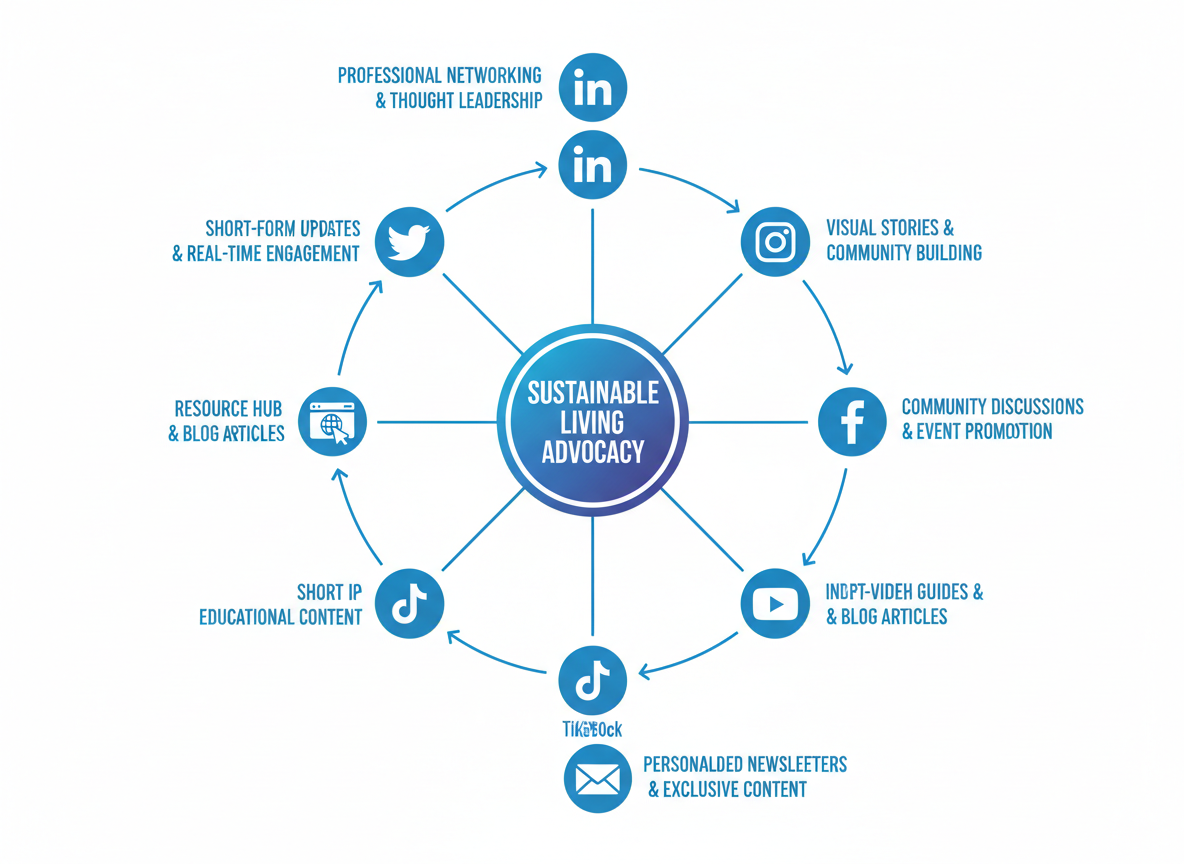
The solution isn’t creating eight completely different personas—it’s using a hub-and-spoke bio strategy.
Start with your core brand message: the one central statement that defines who you help and how. For instance: “I help digital entrepreneurs create high-converting content without burning out.” This becomes your hub.
Then, create spokes—platform-specific variations that adapt the delivery while keeping the essence intact. LinkedIn gets the professional expansion with credentials. Instagram receives the conversational version with emojis. Twitter gets the punchy, action-focused spin.
What stays consistent: Your core value proposition, key achievements, and unique differentiators. These are your brand anchors.
What adapts: Tone formality, formatting style, call-to-action type, and length based on platform limits.
Without AI bio generators, this workflow takes hours per platform. You’re essentially writing eight different bios from scratch. With AI assistance, you input your hub message once, specify the platform, and generate tailored variations in under five minutes total.
The best content engineers know this secret: consistency doesn’t mean identical. It means maintaining recognizable brand DNA while speaking each platform’s language fluently.
This approach transforms bio management from a quarterly headache into a 20-minute task you’ll actually enjoy.
Troubleshooting Common AI Bio Generator Problems (And How to Fix Them Fast)
Even the best AI bio tools stumble sometimes. Here’s how to fix the most frustrating issues you’ll encounter.
Problem 1: Generic Output That Could Describe Anyone
When your bio reads like “Passionate professional with experience in helping clients achieve their goals,” you’ve hit generic territory.
The fix? Get specific in your prompts. Instead of “marketing professional,” try “B2B SaaS content strategist who increased demo requests by 340% for fintech startups.” Feed the AI real accomplishments, numbers, and niche details.
Problem 2: Wrong Tone—Too Formal or Too Casual
Your AI spat out something that sounds like a dissertation when you needed Instagram-friendly?
Add tone instructions directly: “Write in a conversational, enthusiastic tone like you’re introducing yourself at a networking event” or “Professional but approachable, similar to a LinkedIn executive summary.” You control the vibe through your prompt language.
Problem 3: Character Count Nightmares
Twitter gives you 160 characters. Your AI gave you 300.
Solution: Specify exact limits upfront—”Create a 150-character bio for Twitter” works better than trimming afterward. For quick edits, remove adjectives first, then combine similar ideas into tighter phrases.
Problem 4: Sounds Like a Robot Wrote It
No personality, just facts? Your bio needs humanization.
Add personal touches in your prompt: “Include that I’m obsessed with cold brew coffee and started my agency from a tiny apartment in Brooklyn.” Real details create connection.
Problem 5: AI Hallucinations and Wrong Info
Never trust AI blindly. It’ll confidently invent awards you never won.
Run every bio through your fact-checking filter. Verify credentials, job titles, and achievements. If something seems off, it probably is.
Problem 6: Weak Hook or Missing CTA
Your bio ends with a whimper instead of driving action.
End strong: “DM me ‘GROWTH’ for my free conversion checklist” or “Helping 500+ creators monetize their expertise—you’re next.” Clear CTAs convert browsers into connections.
Advanced Bio Optimization: A/B Testing and Performance Tracking in 2026

Testing your AI bio isn’t optional anymore—it’s how you actually know what works. Here’s what matters: profile views tell you if people are finding you, click-through rates show if your bio’s compelling enough, and follow conversions reveal if you’re attracting the right audience.
Sarah Chen, a freelance designer, ran a simple A/B test that changed everything. Version A focused on her services: “Brand designer specializing in minimalist logos and web design.” Version B led with transformation: “I help startups look like they’re worth $10M (even on a bootstrap budget).” Over 30 days with 5,000 profile views each, Version B generated 47% more inquiries and 31% higher-quality leads.
Your testing framework needs at least 1,000 profile views per variation to get meaningful data. Run tests for 14-30 days depending on your traffic. Tools like Bitly track link clicks, while platform analytics (LinkedIn’s SSI, Instagram Insights, X Analytics) measure profile performance. ContentGorilla’s bio generator lets you create multiple variations quickly, so you’re not starting from scratch each time.
The 2026 testing data reveals clear winners: bios with specific transformation statements outperform service lists by 38%. Numbers and tangible outcomes (“helped 200+ clients”) beat vague claims (“extensive experience”) by 52%. Questions that trigger curiosity increase engagement by 23%.
Your testing schedule: Week 1-2, test two headline approaches. Week 3-4, test different CTAs. Month 2, test social proof placement. Just like with ads that convert through long-form body copy, your bio needs this same data-driven optimization approach.
Track everything, but don’t obsess. Test one element at a time, and you’ll know exactly what drives real results.
Beyond Social Media: AI Bios for Professional Websites, Speaker Profiles & Author Pages
Your social media bio’s just the beginning. You’ll need different versions for professional websites, speaking engagements, book covers, and media kits—each with unique requirements that’d normally take hours to craft.
Here’s what event organizers, publishers, and website visitors actually need:
Professional Website Bios (150-300 words): Start with your current role and primary expertise. Add 2-3 notable achievements, then explain how you help your audience. Close with a personal touch—hobbies, location, or values. Structure it: present tense, third person, conversational yet polished.
Conference Speaker Bios (75-150 words): Event organizers want credentials fast. Lead with your title and company, immediately follow with relevant speaking experience or industry authority. Include one impressive stat or achievement that proves you’re worth hearing. Skip the humble approach—this isn’t the place for it.
Author Bios (50-150 words): For books and guest posts, readers want to know why you’re qualified to write this content. Mention previous publications, expertise in the topic area, and one humanizing detail. Keep it tight—most platforms cap these at 100-150 words.
Media Kit Bios (100-200 words): Journalists need quick facts. Use third person, include exact titles, quantifiable achievements, and any media appearances or awards. Make it scannable with clear credentials they can quote.
Email Signature Bios (1-2 lines): Just your name, title, and one credibility marker. “Sarah Chen, Content Strategist | Helped 200+ businesses scale with AI-driven content.”
The smart move? Create one comprehensive 300-word master bio, then use an AI bio tool to adapt it for each platform. You’ll maintain consistency while meeting specific requirements—without rewriting from scratch each time. Check out proven biography examples to see what actually converts across different contexts.
Privacy, Authenticity & Ethics: Navigating AI-Generated Personal Content Responsibly
Here’s the thing everyone’s wondering but not asking out loud: if AI writes your bio, is it really you?
The answer isn’t black and white. Think of it this way—when you hire a professional photographer, those are still your photos. When you work with an editor, those are still your words. AI bio generators function as sophisticated writing assistants that translate your thoughts, experience, and personality into polished prose.
The authenticity stays intact because you’re providing the substance. Your achievements, your values, your story—those can’t be fabricated by any algorithm. The AI just handles the heavy lifting of structure and phrasing.
Privacy’s another legitimate concern. When you input career details and personal information into an AI bio generator, you’re trusting that platform with sensitive data. Reputable tools don’t store or sell your information, but always check the privacy policy first. Look for platforms that process your data temporarily and don’t use it for training models.
Should you disclose AI assistance? Most professionals in 2026 don’t announce their use of grammar checkers or editing software. Similarly, using AI as an enhancement tool doesn’t require a disclaimer. However, if your brand emphasizes authenticity and raw storytelling, transparency might align better with your values.
The sweet spot is the human-AI collaboration model—you’re the architect, AI’s the builder. You provide direction, judgment, and final approval. Just like professional documents ranging from resumes to character reference letters, AI-assisted doesn’t mean less authentic. It means efficiently capturing your genuine voice without the writing paralysis.
Your personal voice won’t disappear unless you let it. Review, refine, and inject your personality into every AI-generated draft. That’s responsible use.
From Beginner to Pro: Your Bio Optimization Roadmap for 2026
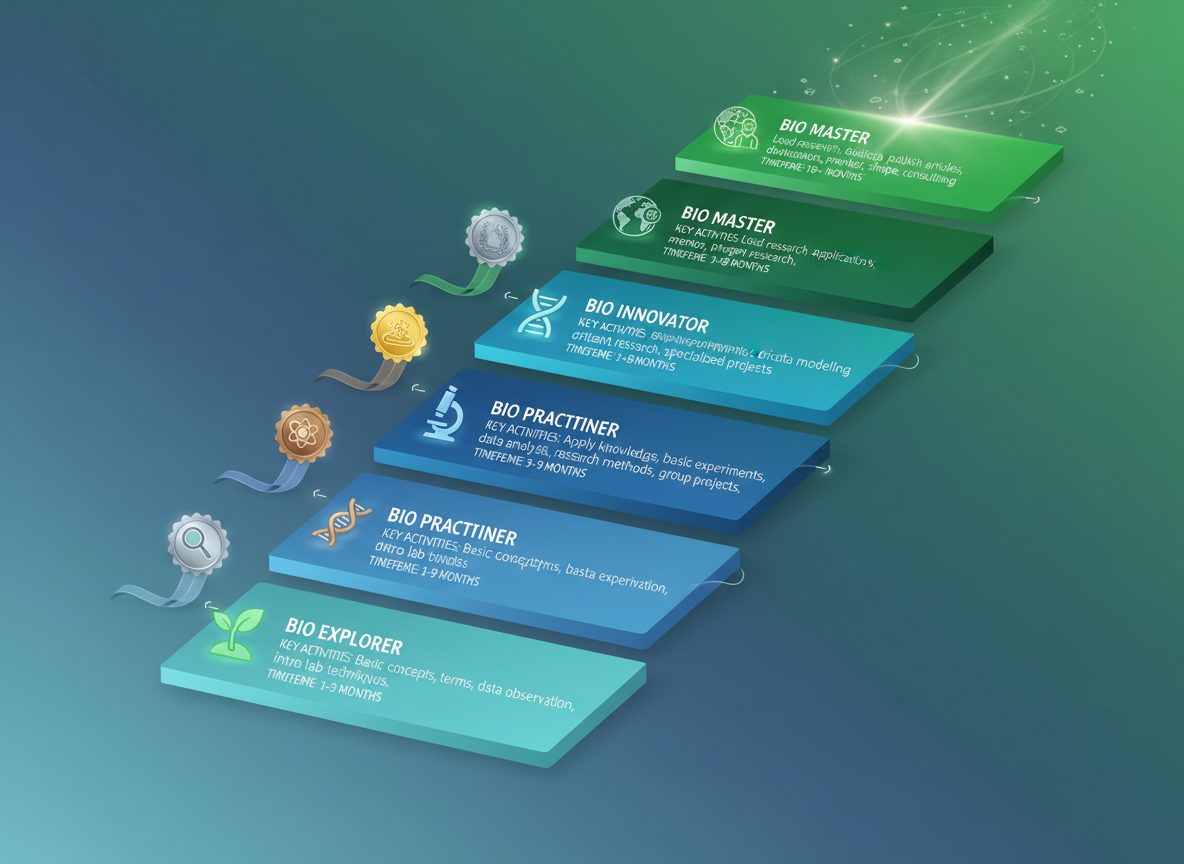
Level 1 (Beginner): Weeks 1-2
Start with one platform that matters most to your business. Focus on these fundamentals: clear value proposition, target audience identification, and one strong call-to-action. Your quick win? Replace generic descriptions with specific outcomes you deliver. An AI bio generator cuts this learning phase from weeks to hours by providing tested templates.
Level 2 (Intermediate): Weeks 3-6
Expand to 3-5 platforms while maintaining consistent messaging. Create a master bio document with core elements you’ll adapt for each channel. Quick win: Develop platform-specific hooks while keeping your core message intact. AI tools help you repurpose content across platforms in minutes, not days.
Level 3 (Advanced): Months 2-4
Launch A/B tests on your highest-traffic profiles. Track click-through rates, follower growth, and conversion metrics. Quick win: Test two different opening lines and measure performance over 30 days. AI generators let you create multiple variations instantly for simultaneous testing.
Level 4 (Professional): Months 4-6
Build your complete personal branding system integrating bios with content strategy. Similar to how content engineers systematically approach marketing operations, you’ll develop repeatable processes for bio optimization. Quick win: Create quarterly bio refresh cycles aligned with campaign launches. AI accelerates this entire journey by 70%, letting you reach professional-level optimization in half the time.
Frequently Asked Questions (FAQ)
Are AI-generated bios detectable or obvious to readers?
Not if you edit them properly. Raw AI output can sound generic, but when you add personal details, specific achievements, and your unique voice, the bio becomes indistinguishable from one you’d write yourself. The key is treating AI as your first draft writer, not your final editor.
How often should I update my professional bio in 2026?
Every 3-6 months, or whenever you hit a major milestone. Job changes, new certifications, significant projects, or pivots in your business deserve immediate updates. Your bio shouldn’t be a static document—it’s a living reflection of your current expertise.
Can AI bio generators work for personal brands in niche industries?
Absolutely. The trick is feeding the AI specific context about your niche. Instead of “marketing consultant,” prompt it with “B2B SaaS growth marketer specializing in PLG strategies for vertical-specific CRMs.” The more precise your input, the more relevant your output.
What’s the difference between a bio, about section, and brand statement?
Your bio tells your professional story in third person (LinkedIn profiles, conference bios). An about section is conversational and first-person (website, blog). A brand statement is a concise positioning phrase that captures your unique value. Different formats serve different purposes.
Do I need different bios for B2B vs B2C audiences?
Yes. B2B bios should emphasize credentials, results, and professional expertise. B2C bios can be more personal, relatable, and story-driven. A fintech consultant needs gravitas for LinkedIn, but might show personality on Instagram.
How do I make my AI-generated bio stand out when everyone uses these tools?
Add quantifiable results, unexpected details, and authentic personality. Instead of “passionate marketer,” try “increased client revenue by $2.3M using unconventional TikTok strategies.” Specificity beats generic enthusiasm every time.
Are free AI bio generators good enough or should I pay for premium?
Start with free tools to test different approaches. Upgrade to premium if you need advanced features like tone customization, multiple platform optimization, or bulk generation for teams. Most creators find free versions perfectly adequate.
Can I use the same bio across all social media platforms?
You shouldn’t. Twitter demands brevity (160 characters max), Instagram allows personality and emojis, LinkedIn requires professionalism. Adapt your core message to each platform’s culture and character limits.
How long should my professional bio be for maximum impact?
150-300 words for most platforms. Shorter for social media (50-150 words), longer for website about pages (300-500 words). If readers need to scroll, you’ve written too much.
What are the biggest mistakes people make with AI-generated bios?
Using them verbatim without personalization, stuffing them with jargon, omitting measurable achievements, and forgetting to include a clear call-to-action. Your bio should answer “why should I care?” within the first sentence.
I am a full-time online marketer, for over a decade now. Helped over 100,000+ people & generated well over $12M in online sales.