

Introduction: Why Understanding Account Director Roles Matters for Your Career Growth
Here’s something that’ll surprise you: 67% of account executives can’t clearly explain what separates them from account directors. That confusion? It’s costing them promotions they’ve been chasing for years.
If you’re reading this, you’ve probably felt stuck watching colleagues leap ahead while you’re grinding away, wondering what they know that you don’t. The truth is, account directors aren’t just senior account managers with fancier titles. They’re strategic client relationship managers who own revenue outcomes, shape company direction, and command six-figure salaries.
The problem gets messier when you’re trying to figure out where you fit. Is an account manager the same as an account executive? Where does an account director actually sit in the hierarchy? These overlapping titles create a fog that keeps talented professionals from mapping their next move.
Throughout this guide, we’ll break down exactly what account directors do, how much they earn (with real salary data), which skills separate good from great, and the specific steps you need to take to land that role in 2026. We’ll also show you how building a strong personal brand statement can accelerate your path upward.
Let’s clear the confusion and build your roadmap.
What Is an Account Director? (Complete Definition & Overview)
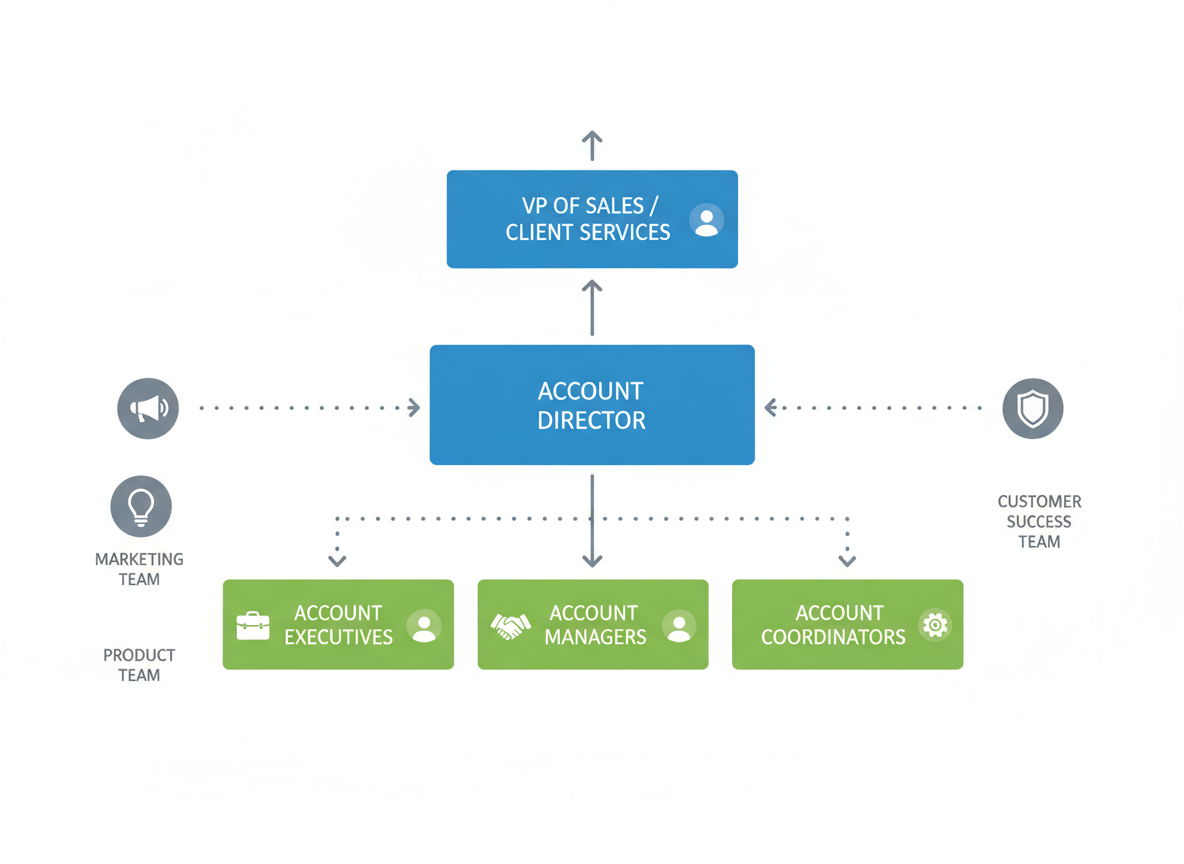
An account director is a senior-level professional who manages strategic client relationships and drives revenue growth for their organization. Unlike account executives who focus on day-to-day client needs, account directors operate at 30,000 feet—developing long-term strategies, steering team direction, and ensuring clients stay happy (and profitable) year after year.
Think of them as the architects of client success. They’re not handling every email or project detail. Instead, they’re mapping out quarterly business reviews, identifying upsell opportunities, and making sure their team delivers results that keep clients renewing and expanding their contracts.
Organizationally, account directors sit between the trenches and the C-suite. They typically report to a VP of Sales or Client Services while managing account executives and account managers. This positioning gives them enough authority to make strategic decisions without getting buried in operational tasks.
You’ll find account directors thriving in agencies, B2B SaaS companies, and professional services firms—anywhere complex client relationships drive revenue. They usually oversee a focused portfolio of 5-15 major accounts rather than juggling dozens of smaller clients. This concentrated approach lets them develop deep expertise in each client’s business and industry.
The distinction matters: account directors own strategy and team leadership. Their reports handle execution. It’s this strategic oversight that makes them essential for organizations serious about client retention and growth.
For a deeper look at responsibilities, compensation, and career progression, check out our complete guide on what is an account director.
Account Director vs Account Executive: Side-by-Side Comparison
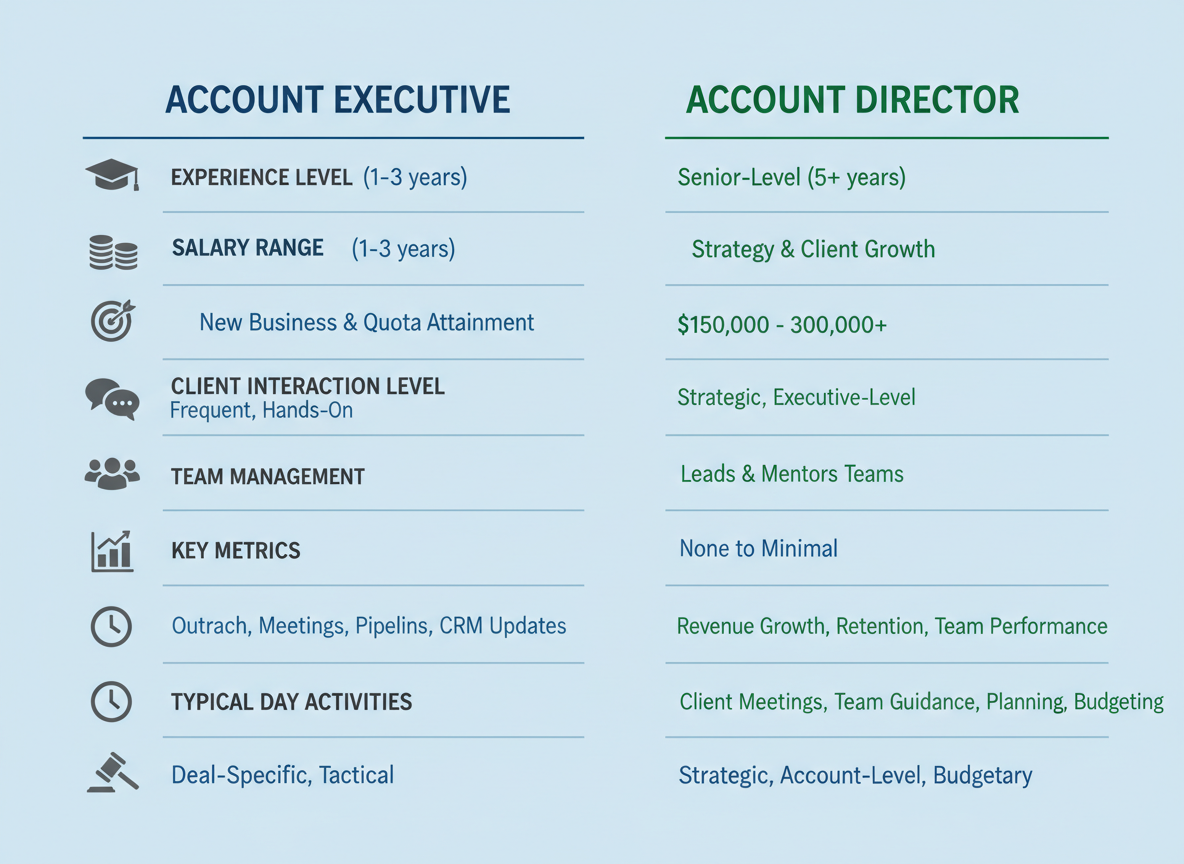
Understanding the gap between these two roles helps you plan your career trajectory and set realistic expectations.
Experience Requirements
Account executives typically start with 0-3 years of experience, often fresh from college or switching careers. Account directors? You’re looking at 5-8+ years minimum, with proven track records managing complex client relationships.
Compensation
Here’s where things get interesting. Account executives earn $45,000-$85,000 annually, while account directors command $85,000-$150,000. That’s nearly double the earning potential, but you’ve got to put in the work to get there.
Strategic Focus
Account executives spend their days executing sales plans and hitting quotas. They’re in the trenches closing deals and managing transactional relationships. Account directors operate at a higher altitude—they’re crafting strategic roadmaps, identifying growth opportunities, and shaping long-term account direction.
Client Relationships
When you’re an account executive, you’ll connect with day-to-day contacts and middle managers. As an account director, you’re sitting across from C-suite executives, discussing their business challenges and presenting solutions that impact their bottom line.
Team Dynamics
Account executives work as individual contributors, responsible for their own performance. Account directors manage teams, mentor junior staff, and coordinate cross-functional resources to deliver results.
Success Metrics
Executives live and die by individual quotas and pipeline metrics. Directors get measured on client retention rates, overall account growth, and team performance. You’re juggling multiple KPIs simultaneously.
Authority Level
Need budget approval for a client pitch? Account directors make that call. Account executives implement tactical plans that directors approve. It’s the difference between setting strategy and executing it.
Core Responsibilities of Account Directors in 2026
Account directors wear multiple hats, but their responsibilities boil down to keeping high-value clients happy while driving revenue growth. Here’s what fills their days.
Strategic account planning sits at the heart of everything. You’ll build 12-24 month roadmaps that align your clients’ business goals with your company’s solutions. These aren’t just documents gathering digital dust—they’re living strategies that evolve as markets shift.
Executive-level relationship management means you’re interfacing directly with C-suite stakeholders. You’ll need to speak their language, understand their quarterly pressures, and position yourself as a trusted advisor rather than just another vendor.
Team leadership occupies significant bandwidth. You’re managing and mentoring account executives, coaching them through complex deals, and removing roadblocks so they can succeed. Your team’s wins are your wins.
Revenue forecasting requires both art and science. You’ll identify upsell opportunities, spot cross-sell potential, and develop expansion strategies that feel natural rather than pushy. It’s about timing and trust.
Cross-functional collaboration keeps everything running smoothly. You’ll coordinate with sales, marketing, product teams, and customer success to deliver seamless client experiences. When silos exist, you break them down.
You’ll also handle contract negotiations for high-value deals, manage crisis situations when things go sideways, and gather market intelligence to stay ahead of industry trends. Each responsibility feeds into one overarching goal: sustainable client growth.
Day-to-Day Activities: How Account Directors Actually Spend Their Time
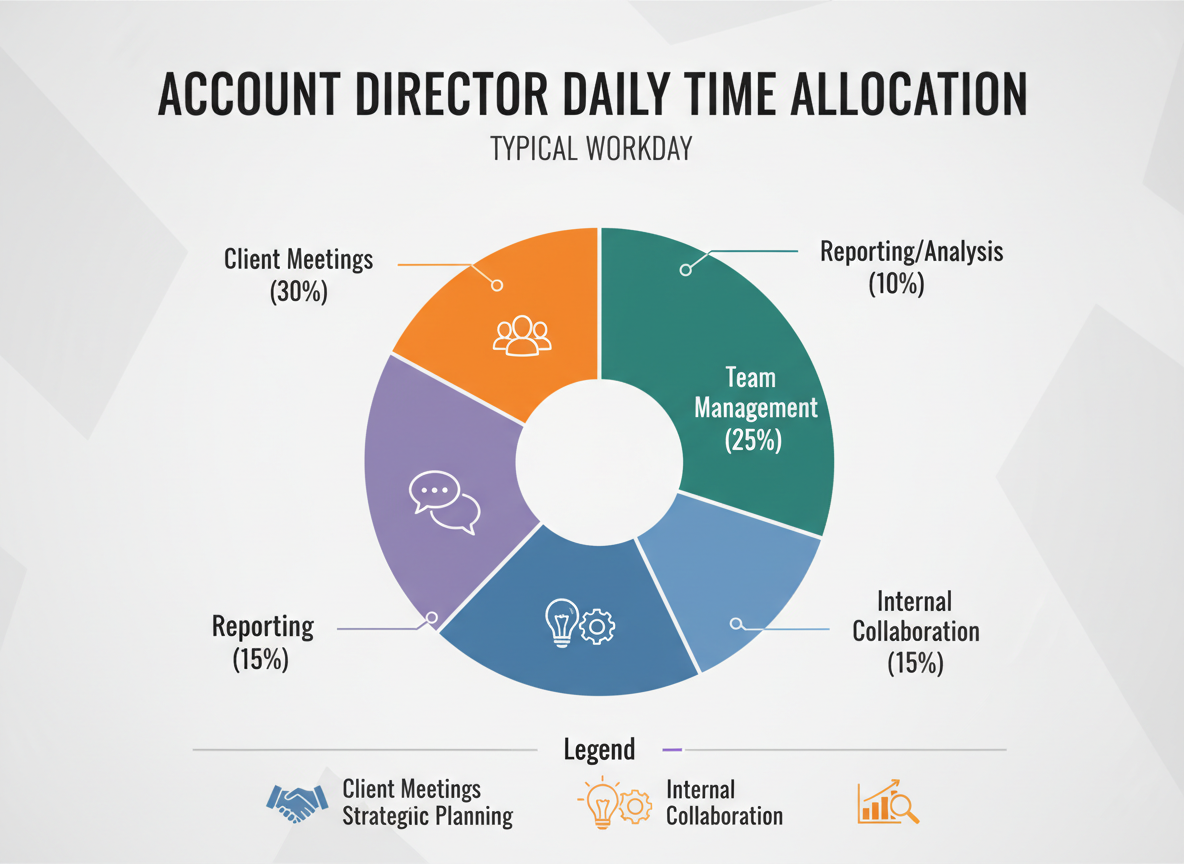
Forget the polished LinkedIn posts. Here’s what account directors really do all day.
The Reality of Time Allocation
Most account directors split their time like this:
- 30% in client meetings (presentations, strategy sessions, problem-solving)
- 25% managing their teams (coaching, deal reviews, performance conversations)
- 20% strategic planning (account growth strategies, risk mitigation)
- 15% internal meetings (pipeline reviews, leadership updates)
- 10% reporting and analysis (forecasting, health scores, documentation)
A Typical Tuesday for Sarah, Account Director at a SaaS Company
7:30 AM: Coffee in hand, Sarah scans her team’s pipeline. Three deals are stuck. One client’s health score dropped from 85 to 72 overnight.
9:00 AM: Emergency strategy call with her team about that declining client. They schedule an intervention meeting for Thursday.
10:30 AM: Quarterly business review with her biggest account. She’s presenting their ROI data and proposing an expansion into two new departments.
1:00 PM: Back-to-back 1-on-1s with account managers. One needs coaching on a difficult renewal conversation. Another wants to discuss career development.
3:30 PM: Leadership meeting. She’s defending why she needs another headcount on her team.
Quarter-end? Multiply the intensity by three. Sarah’s calendar becomes a war room of negotiation calls, renewal meetings, and revenue forecasting sessions that stretch past 7 PM.
Essential Skills and Qualifications for Account Directors
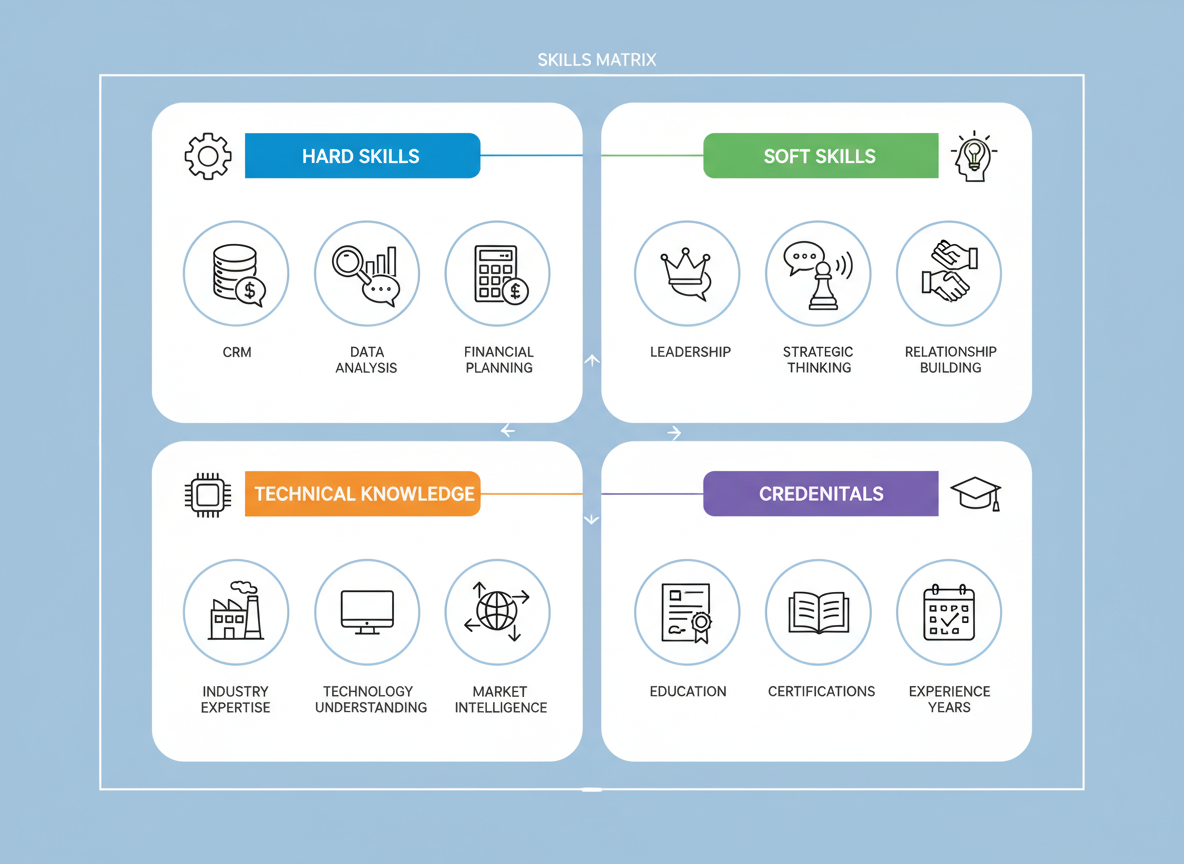
Breaking into an account director role requires more than just client management experience. You’ll need a strategic blend of credentials, technical know-how, and people skills that set you apart.
Educational Foundation
Most organizations want a bachelor’s degree minimum, though MBA holders often move up faster. That said, I’ve seen brilliant account directors without advanced degrees who built their expertise through hands-on experience. What matters more is how you apply what you’ve learned.
Experience Requirements
Expect to put in 5-10 years before reaching account director level. This typically means working your way through coordinator, manager, and senior manager positions. Each step builds the relationship depth and strategic thinking you’ll need.
Hard Skills That Matter
You can’t wing it with CRM platforms anymore. Salesforce and HubSpot proficiency are table stakes. Financial acumen matters too—you’ll be forecasting revenue, analyzing margins, and negotiating contracts worth hundreds of thousands.
Soft Skills That Separate the Best
Leadership tops the list. You’re managing teams and guiding clients simultaneously. Executive presence opens doors at the C-suite level, while conflict resolution keeps relationships intact when things get messy.
Looking Ahead to 2026
AI-assisted account planning is becoming standard practice. Account directors who leverage automation tools and data-driven insights consistently outperform those relying on gut instinct alone. Remote team leadership has shifted from “nice to have” to essential—your ability to build trust across screens directly impacts team performance.
Certifications like CSAM (Certified Strategic Account Manager) add credibility, though they’re not mandatory everywhere.
Career Progression Roadmap: From Account Executive to Account Director
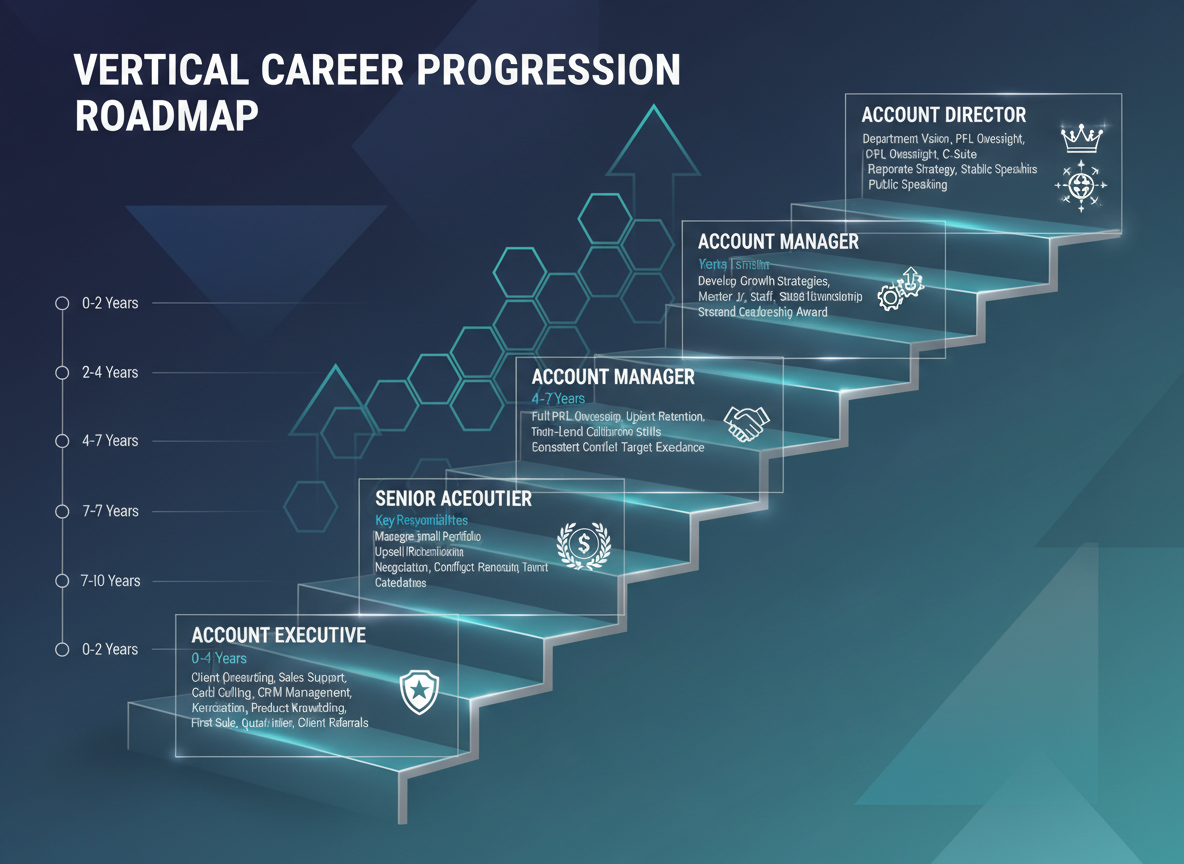
Here’s the reality: most account directors didn’t start there. They climbed through a fairly predictable ladder, though the timeline varies based on performance and opportunity.
Stage 1 (Years 1-2): The Foundation
As an account executive, you’re learning the fundamentals. Hit your quotas. Build genuine client relationships. Get comfortable with CRM systems and sales processes. Your goal? Consistency. If you can’t close deals regularly here, you won’t advance.
Stage 2 (Years 3-4): Standing Out
Senior account executives don’t just meet targets—they crush them. You’re handling the trickier clients, mentoring new hires, and starting to think beyond individual deals. This is where you prove you can handle pressure and complexity.
Stage 3 (Years 5-6): The Leadership Test
As an account manager or team lead, you’re managing smaller accounts independently. You’re creating strategic account plans, not just reacting to requests. Can you think three moves ahead? Can you spot opportunities before clients do?
Stage 4 (Years 6-8): Earning the Director Title
Account directors prove themselves through measurable results. You’ve grown strategic accounts by significant percentages. You’re comfortable presenting to C-suite executives. You’ve built a team that trusts your judgment.
Critical Milestones That Matter
Watch for these career-defining moments: your first major account win (typically six figures or more), your first direct report, your first strategic account plan that actually drove growth, and your first presentation to an executive board.
Alternative Routes
The path isn’t always linear. Some people jump from agency to corporate roles, cutting years off the timeline. Others switch industries entirely, leveraging transferable skills. Developing a strong personal brand statement can accelerate lateral moves that position you for faster advancement.
Salary Expectations and Compensation Packages for Account Directors
Let’s talk money. If you’re eyeing the account director role, you’ll want to know what’s realistic for your wallet.
Entry-level account directors typically pull in $75,000 to $95,000 as a base salary. Once you’ve built solid experience and proven results, mid-level directors can expect $90,000 to $120,000. Senior account directors? They’re looking at $115,000 to $150,000 or more, especially at larger firms.
But here’s where it gets interesting—that base salary is just the beginning. Total compensation often includes bonuses and commissions that add another 20-40% to your earnings. A director making $100,000 base could realistically pocket $120,000 to $140,000 annually.
Geography matters more than you’d think. Coastal markets like NYC, San Francisco, and LA pay 25-40% above national averages. Meanwhile, SaaS and tech companies lead the pack in compensation, outpacing traditional agencies and industries.
Company size plays a role too. Enterprise organizations typically offer 15-30% more than small-to-medium businesses. You’ll also see additional perks like equity options, car allowances, expense accounts, and professional development budgets.
Compared to account executives earning $50,000-$75,000, the director role offers substantial financial progression. Looking ahead to 2026, we’re seeing stronger emphasis on retention bonuses and long-term incentive plans—companies know keeping talented account directors is worth the investment.
Industry-Specific Variations: How Account Director Roles Differ Across Sectors
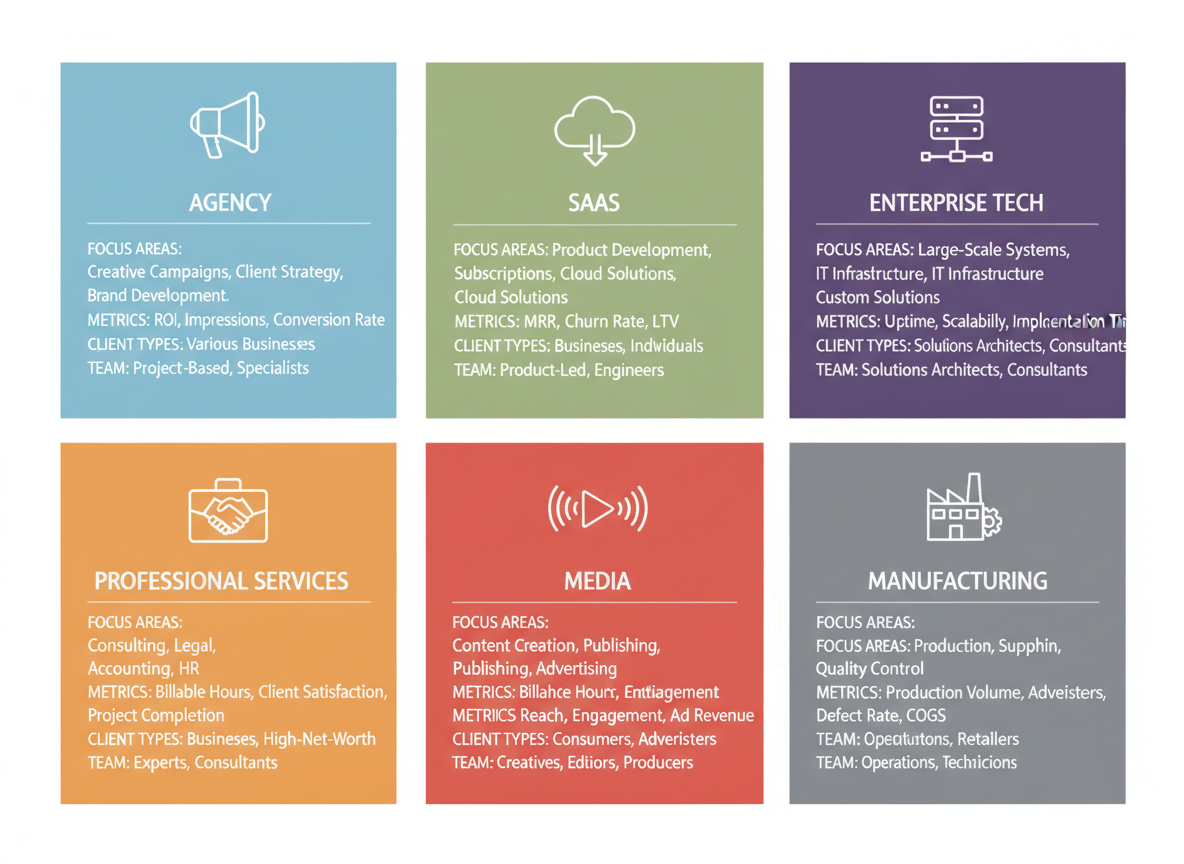
The account director title might look identical on LinkedIn, but what you actually do day-to-day varies dramatically by industry.
In advertising and marketing agencies, you’re juggling six to twelve clients simultaneously while overseeing creative strategy and campaign execution. You’ll bounce between brand positioning meetings and last-minute creative reviews, often working against tight deadlines that can shift with a single client email.
B2B SaaS account directors focus heavily on product adoption metrics and subscription renewals. You’ll need enough technical chops to discuss API integrations and data migration, working closely with customer success teams to prevent churn. Your conversations center on ROI, feature adoption rates, and demonstrating ongoing value.
Enterprise technology roles involve marathon sales cycles that span 12-18 months. You’re coordinating with solution architects, navigating procurement committees, and managing stakeholder maps that resemble organizational charts.
In professional services, you’re expected to contribute thought leadership—writing white papers, speaking at conferences, and bringing subject matter expertise that justifies premium pricing.
Media and publishing account directors blend content strategy with advertising sales, tracking audience analytics while helping clients navigate digital transformation.
Manufacturing and industrial sectors require deep technical product knowledge and supply chain coordination, with relationship cycles measured in years rather than quarters.
Transitioning between industries? Focus on transferable skills like stakeholder management and strategic planning while quickly developing sector-specific knowledge through certifications and networking.
Key Performance Indicators (KPIs) and Success Metrics for Account Directors
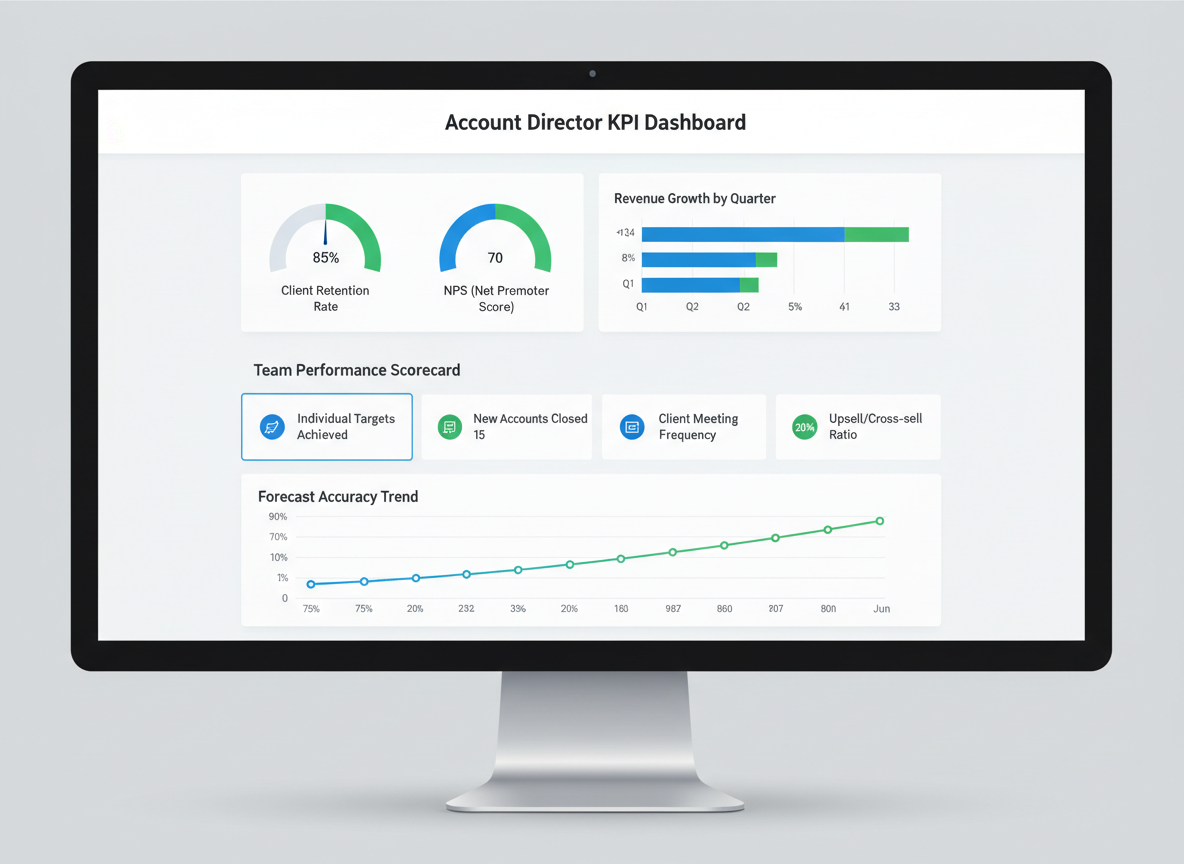
Here’s what separates high-performing account directors from those struggling to prove their value: they track the right numbers.
Your success hinges on client retention rates—industry benchmarks sit between 85-95%. Drop below that, and you’re firefighting instead of strategizing. Top performers push closer to 95%, building relationships so solid that clients wouldn’t dream of leaving.
Net revenue retention (NRR) tells the real story of your impact. Targets typically fall between 110-130%, meaning you’re not just keeping accounts—you’re growing them. If you’re hitting 115% NRR, you’ve expanded existing accounts by 15% through upsells, cross-sells, and strategic initiatives.
Customer satisfaction scores matter, too. Track NPS (Net Promoter Score), CSAT scores, and relationship health metrics monthly. These early warning systems catch problems before they become churn events.
Unlike account executives focused on individual quotas, you’re measured on team performance: your AEs’ quota attainment rates, pipeline health, and skill development. You’re building a machine, not chasing personal deals.
Revenue forecasting accuracy within 5-10% variance separates strategic account directors from guessers. You’ll also track strategic initiative completion—quarterly business reviews conducted, executive relationships forged, account plans executed.
Track client retention and NRR weekly. Review team performance and satisfaction scores monthly. Evaluate strategic initiatives quarterly. This rhythm keeps you proactive, never reactive.
Team Structure and Management: How Many Account Executives Report to Directors?
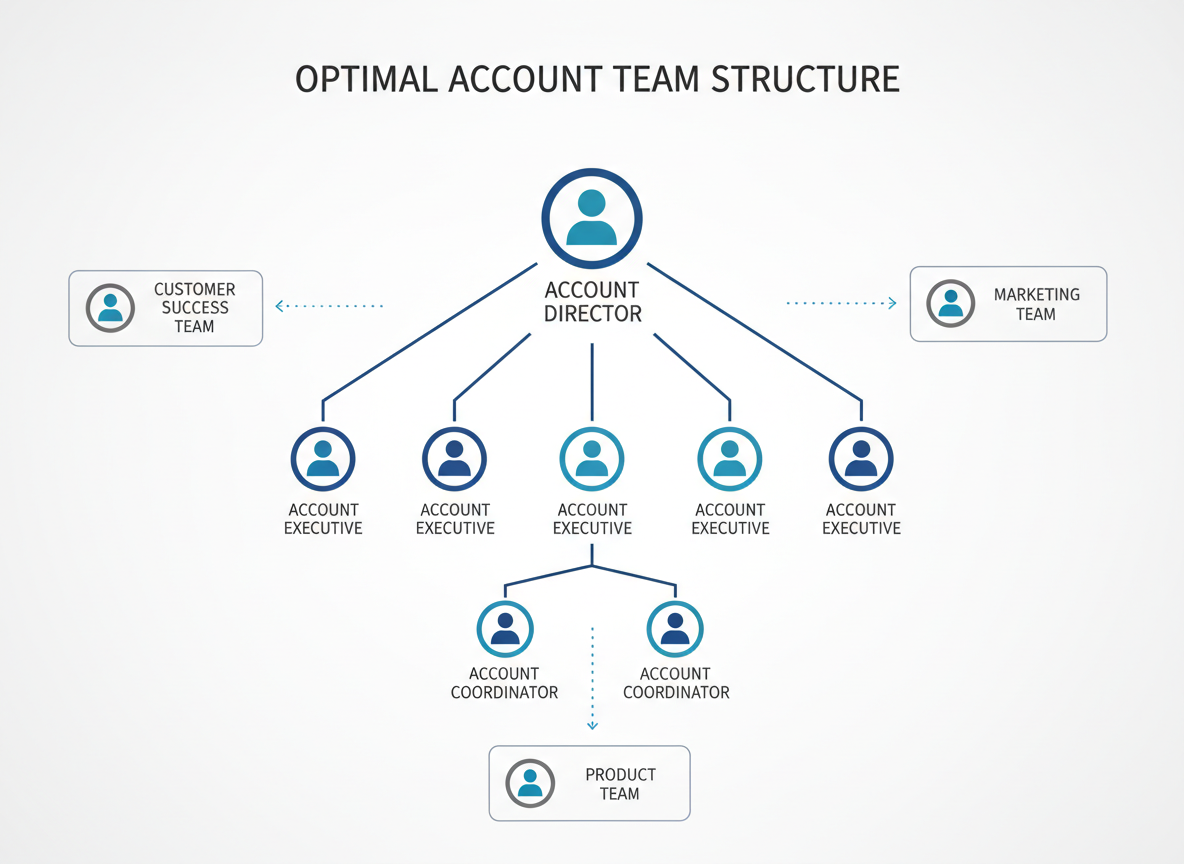
Here’s what you’ll typically see across industries: account directors usually manage between 3-8 account executives. But that range shifts depending on where you work.
Agency environments lean toward the higher end, with directors managing 5-7 account executives. The fast pace and project diversity make this workable. SaaS companies prefer 4-6 direct reports, balancing product complexity with growth targets. Enterprise organizations keep it tighter at 3-5, where strategic accounts demand more director involvement.
The organizational models vary too. Pod structures group teams around client segments or verticals, while horizontal specialization splits teams by function. You’ll also find support roles like account coordinators handling administrative work, customer success managers ensuring retention, and sales engineers providing technical expertise.
Matrix reporting adds another layer. Account executives might have a solid line to their director but dotted lines to product managers or marketing leads for specialized campaigns.
Remote work’s changed the game in 2026. Directors now manage slightly smaller teams (averaging one less direct report) because virtual oversight requires more intentional communication.
When should you hire another director instead of expanding your existing team? Watch for these signs: account executives waiting days for feedback, directors skipping strategic work to handle firefighting, or complexity per account jumping significantly. If your average deal size exceeds $250K, cap teams at four account executives per director.
Common Challenges Account Directors Face (and How to Overcome Them)
Challenge 1: Balancing strategic work with firefighting
You’ll spend entire days putting out fires if you’re not careful. The fix? Build delegation frameworks that empower your Account Executives to handle tier-one issues. Create clear escalation paths so your team knows exactly when to loop you in versus solving problems themselves.
Challenge 2: Managing up and down simultaneously
Account directors live in the sandwich layer. Establish consistent communication cadences—weekly check-ins with your team, biweekly touchpoints with leadership. Map your stakeholders and customize your communication style for each relationship.
Challenge 3: Maintaining client relationships during team transitions
Staff changes terrify clients. Implement structured succession planning with 30-day shadow periods where new team members join calls and gradually take ownership before the official handoff.
Challenge 4: Forecasting accuracy with multiple accounts
Your revenue predictions need to be reliable. Use data-driven pipeline management tools and build in 15-20% buffers for unexpected delays. Track historical close rates by account size and industry.
Challenge 5: Developing underperforming team members
Don’t let struggling performers linger. Create structured coaching schedules and document everything through formal performance improvement plans with measurable milestones.
Challenge 6: Proving ROI and strategic value
Numbers tell your story. Track metrics religiously and build comprehensive business cases for every recommendation. Use Quarterly Business Reviews to showcase your impact consistently.
Challenge 7: Remote team management and culture building
Virtual teams need intentional connection. Establish team rituals, leverage collaboration tools effectively, and document processes clearly so everyone stays aligned.
Common mistakes to avoid: Micromanaging kills morale, losing direct client contact makes you irrelevant, and neglecting team development creates a talent vacuum.
Technology Stack and Tools Account Directors Need in 2026
The modern account director’s effectiveness hinges on their tech stack. You can’t manage strategic relationships with sticky notes and gut feelings anymore.
CRM platforms remain the foundation. Salesforce, HubSpot, and Microsoft Dynamics centralize every client interaction, deal stage, and revenue forecast in one place. Without a solid CRM, you’re flying blind.
Account planning tools like Planhat, Kapta, and Prolifiq transform relationship management into strategic mapping. These platforms help you visualize org charts, track stakeholder relationships, and identify expansion opportunities before your competitors do.
For communication, Slack, Microsoft Teams, and Zoom aren’t optional—they’re your digital office. Account directors juggle internal teams, clients across time zones, and vendors simultaneously.
Data analytics platforms (Tableau, Power BI, Looker) turn raw numbers into executive-ready dashboards. You’ll spot trends, prove ROI, and make data-backed recommendations that clients can’t ignore.
Customer success tools like Gainsight, ChurnZero, and Totango provide health scoring that predicts churn before it happens. You’ll know which accounts need attention this week.
The game-changer? AI-powered assistants. Tools like Gong and Chorus analyze sales calls, while automation handles meeting notes and follow-ups. Content creation tools streamline proposals and presentations—similar to how Jasper Images revolutionizes visual content creation.
Project management platforms (Asana, Monday.com, Notion) keep strategic initiatives on track across multiple accounts.
Here’s the reality: automation reclaims 10-15 hours weekly from administrative tasks. That’s time you’ll reinvest in strategic thinking, relationship building, and revenue growth.
Remote vs In-Office: How Location Impacts Account Director Effectiveness
Here’s the reality: 68% of account director roles in 2026 are now hybrid or fully remote. That’s a massive shift, and it’s reshaping how account directors work.
Remote setups bring real perks. You’ll get geographic flexibility, skip brutal commutes, and gain better schedule control. Companies can now hire top talent from anywhere, which means you’re competing globally—but also accessing opportunities you couldn’t before.
The challenges? Building genuine team connections gets harder. Client relationships can feel transactional when you’re always on Zoom. Those spontaneous hallway conversations that solve problems in thirty seconds? Gone. And work-life boundaries blur when your bedroom becomes your boardroom.
In-office work still wins for face-to-face mentoring, relationship building, and cultural immersion. You can’t replicate the energy of a whiteboard session or reading body language during a tense client meeting.
The sweet spot? Hybrid models with intentional design. Set core collaboration days, make virtual processes your default, and be strategic about in-person time.
One catch: remote roles in high-cost markets sometimes pay 10-15% less than their in-office counterparts. Companies adjust compensation based on location arbitrage. Factor that into your salary negotiations.
When Should Companies Hire an Account Director? (Decision Framework for Employers)
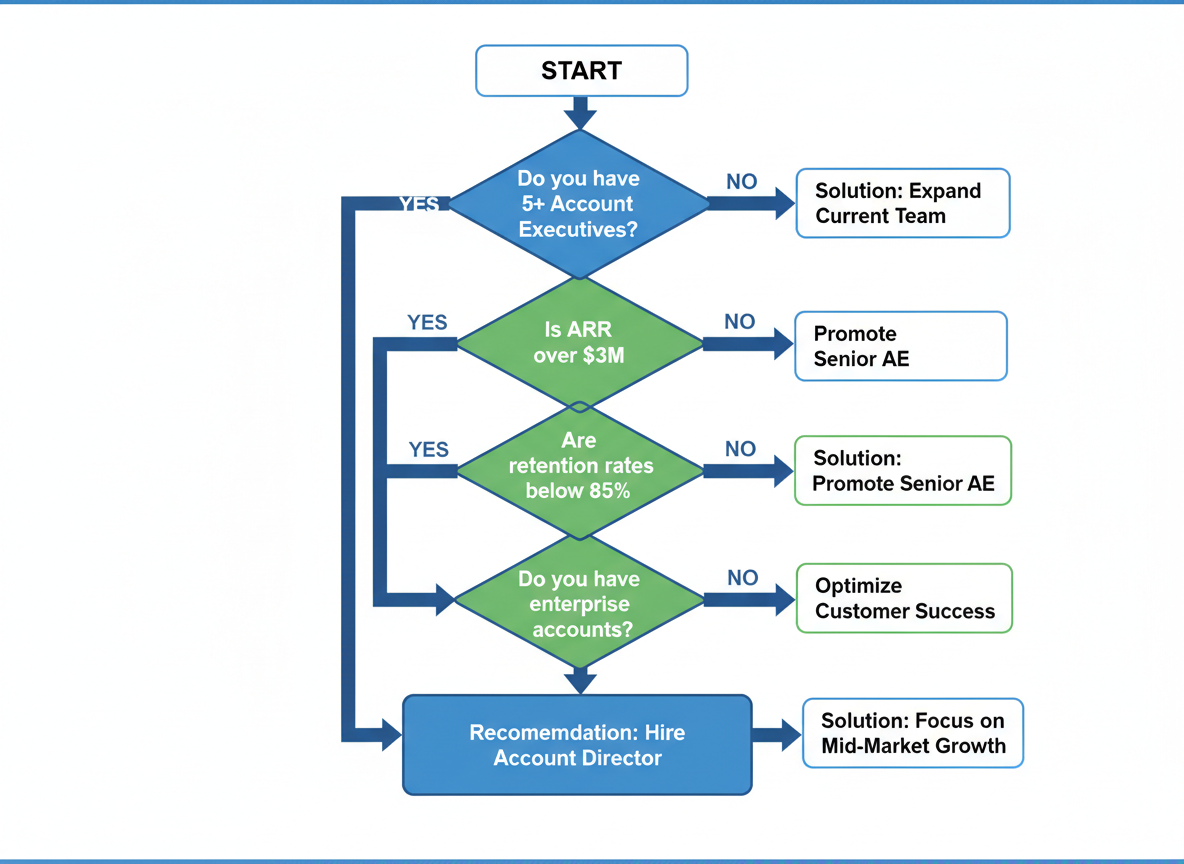
Here’s the reality: you don’t need an account director from day one. But waiting too long can cost you more than the salary.
The clearest signal? Your account executive team has grown to five or more people, and you’re drowning in coordination chaos. When client retention starts slipping below 85%, that’s your wake-up call. Strategic planning shouldn’t fall entirely on you as the founder, yet there’s nobody else equipped to handle it.
Revenue tells part of the story. Most companies hit this inflection point between $3-5 million in annual recurring revenue. Below that threshold, you’re better off investing in additional AEs. Above it, the math shifts—an account director’s $120K salary becomes cheap insurance against churn that could cost you millions.
Watch your team dynamics too. If you’ve got senior account executives ready to step up but nowhere to go, you’ll lose them. Complex enterprise accounts need someone thinking three moves ahead, not just managing day-to-day fires.
The alternative? Fractional account directors work surprisingly well for companies testing the waters. They bring strategic oversight without the full commitment. Promoting from within usually beats external hires—your top performer already knows your clients and systems.
Red flags during interviews include candidates who can’t articulate clear strategic wins or explain how they’ve actually developed team members. You need a leader, not another seller with a fancier title.
Building Skills Toward Account Director Level: Templates and Action Plan
You can’t wing your way into becoming an account director. It takes deliberate practice, strategic planning, and honest self-reflection.
Start with a self-assessment framework. Rate yourself 1-10 on these 20 director competencies: strategic planning, financial acumen, team leadership, client negotiation, crisis management, revenue forecasting, contract negotiation, presentation skills, executive presence, conflict resolution, business development, performance management, cross-functional collaboration, change management, data analysis, industry expertise, mentorship capability, stakeholder management, budget oversight, and innovation thinking.
Got gaps? Good. That’s your roadmap.
Create 90-day improvement sprints focused on your weakest areas. If strategic thinking scored low, spend the next quarter building business cases for current clients, analyzing competitor positioning, and presenting market opportunity reports to senior leadership.
Don’t wait for permission to lead. Volunteer to mentor junior team members, run training sessions on your area of expertise, or spearhead internal initiatives. These experiences prove you’re ready for director-level responsibility.
Build your executive presence through deliberate practice. Join Toastmasters, record yourself presenting, and study how seasoned account directors command a room. Your personal brand statement should reflect director-level authority.
Network strategically through industry associations, LinkedIn thought leadership, and conference speaking opportunities. Find mentors who’ve made the jump and sponsors who’ll advocate for your promotion when the time comes.
Document everything. Your promotion pitch needs quantifiable proof you’re already operating at director level—even without the title.
Real-World Insights: What Account Directors Wish They Knew Earlier
Talk to experienced account directors and you’ll hear the same regrets. “Strategic thinking matters more than tactical excellence,” says Marcus Chen, who leads enterprise accounts at a SaaS firm. “I spent years perfecting campaign execution when I should’ve been learning to see three moves ahead.”
The biggest identity crisis? Moving from star performer to team builder. “Your job is to make your team successful, not to be the best individual performer,” admits Sarah Mitchell, who struggled through her first year. That shift hits harder than most expect.
Here’s what catches people off guard: relationships trump everything. “Invest heavily in executive relationships—they determine account longevity more than product quality,” notes David Park, a 12-year veteran. Politics aren’t optional; they’re the game.
The data piece surprised many too. Gut instinct got them promoted, but data-driven decision making keeps accounts growing. Build those analytical skills early.
Work-life balance? It’s manageable, but you’ll need boundaries. Most directors found they couldn’t out-work the role—they had to out-strategize it.
Want to position yourself effectively as you climb? Check out these personal biography examples that showcase strategic leadership. The transition from doing to leading isn’t automatic. Prepare for it.
Leveraging AI and Automation to Maximize Account Director Impact
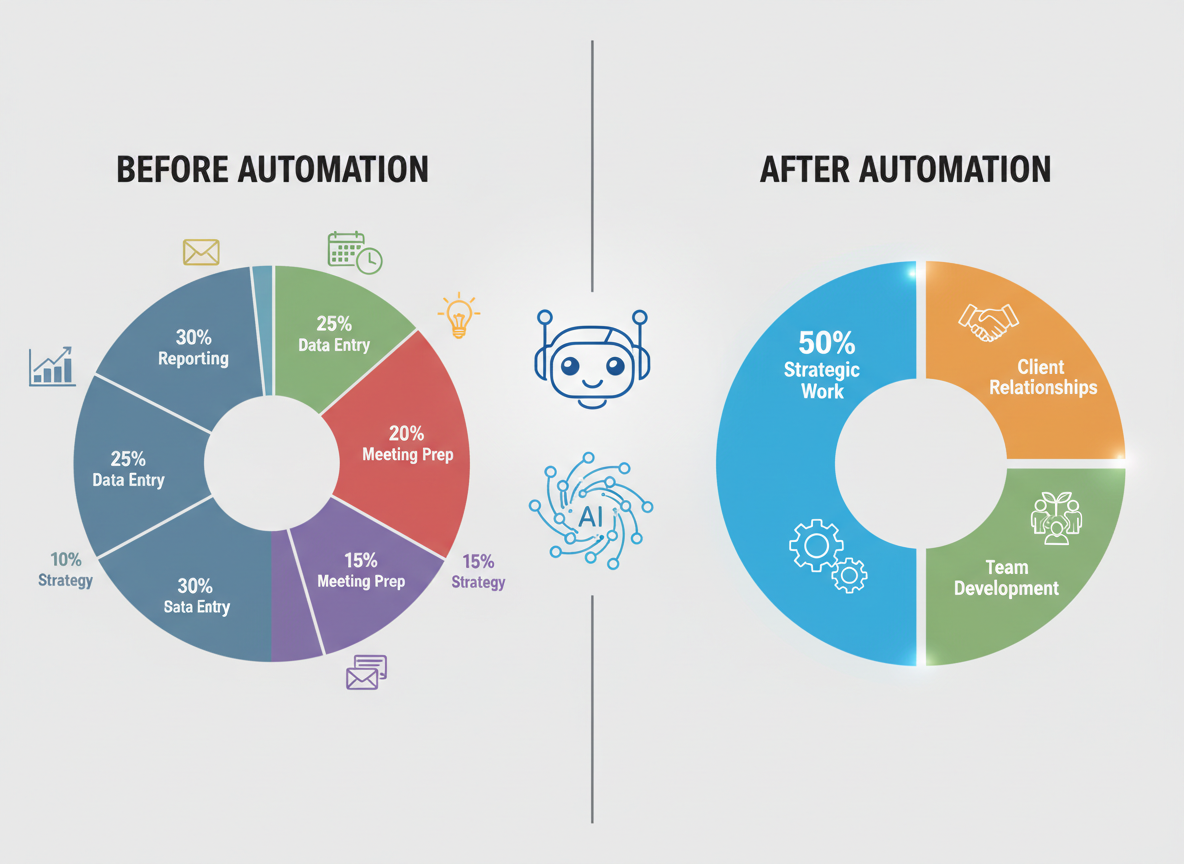
Smart account directors aren’t drowning in admin work anymore—they’re letting AI handle the grunt work while they focus on what actually moves the needle.
The numbers tell the story: automation can reclaim 10-15 hours weekly from your schedule. Think about what you could do with an extra two full workdays each week.
Here’s what you can hand off to AI right now: data entry, meeting transcription, follow-up emails, and report generation. These tasks eat your time but don’t require your strategic brain.
The real power comes from AI-powered client insights. Modern tools track sentiment analysis, engagement patterns, churn prediction, and client health scoring—giving you early warning signals before problems blow up.
Testing CG’s platform transforms how account directors manage client communication. Automated content publishing keeps clients updated without the manual hassle. Multi-channel syndication means your message reaches everyone simultaneously. The video-to-blog conversion feature? That’s perfect for turning client case studies into shareable content that builds credibility.
For strategic planning, AI assistants now handle market research, competitive intelligence, and trend analysis—the foundation work that used to take days.
The catch? You’ve got to preserve the human touch where it matters. Automate the repetitive stuff, but personally handle relationship building, negotiation, and strategic conversations.
Your role isn’t disappearing—it’s evolving toward pure strategy and relationship management. That’s where you belong anyway.
Conclusion: Your Path to Becoming a Successful Account Director
Account directors aren’t just client managers—they’re strategic leaders who drive client success while building high-performing teams. Unlike account executives who focus on day-to-day execution, you’ll operate at the C-suite level, shaping business strategies and managing multiple accounts worth millions.
The career path is clear. Build your strategic thinking, develop leadership capabilities, master financial acumen, and cultivate executive presence. Each milestone brings you closer to the role—and the compensation reflects it, with top account directors earning $150K+ annually.
Here’s what matters right now: organizations are desperately seeking strategic account leaders who can navigate complex client relationships and deliver measurable results. The demand will only grow through 2026.
You’ve got the roadmap. Start with one action this week—maybe it’s volunteering to lead your next client presentation, or analyzing the P&L of your current accounts. Small steps compound into significant advancement.
Your move to account director isn’t about luck. It’s about deliberate skill-building and strategic positioning. The opportunity’s waiting—claim it.
Frequently Asked Questions (FAQ)
What’s the main difference between an account director and account executive?
Account directors work on strategic planning and leadership, while account executives handle day-to-day tactical execution. Think of it this way: account executives close deals and manage individual relationships, whereas account directors orchestrate entire account portfolios and mentor teams. You’re moving from individual contributor to strategic leader.
How long does it take to become an account director?
Most professionals reach account director level in 5-8 years. You’ll typically spend 2-3 years as an account executive, another 2-3 years as senior account executive or account manager, then move into director-level roles. Fast-trackers with exceptional performance can shorten this timeline.
What salary can account directors expect in 2026?
Account directors typically earn $85,000-$150,000+ annually, with top performers in SaaS and enterprise software exceeding $200,000 when you include bonuses and equity. Location matters—major tech hubs pay 20-30% more than smaller markets.
Do I need an MBA to become an account director?
No. Most companies value demonstrated results over degrees. An MBA can accelerate your trajectory, but 7 years of proven account growth often carries more weight than a graduate degree.
How many account executives typically report to one account director?
Usually 3-8, depending on account complexity and industry. Enterprise software directors might manage fewer direct reports with larger accounts, while agency directors often oversee bigger teams handling multiple clients.
What are the most important skills for account directors?
Strategic thinking tops the list, followed by leadership capability, executive presence, data analysis, and relationship management. You’ll need to pivot between big-picture planning and tactical problem-solving daily.
Can you become an account director without sales experience?
It’s possible through account management or customer success pathways, but sales background gives you credibility and deeper understanding of revenue cycles. Many successful directors started in sales.
What industries pay account directors the most?
SaaS, technology, and enterprise software consistently offer the highest compensation. Healthcare tech, fintech, and cybersecurity also command premium salaries due to complexity and deal sizes.
Is the account director role remote-friendly?
Absolutely. About 68% of account director positions now offer hybrid or fully remote arrangements. You’ll need strong digital communication skills and the right tech stack to succeed remotely.
What tools do account directors need to be successful?
CRM platforms (Salesforce, HubSpot), account planning software, analytics dashboards, communication tools like Slack or Teams, and increasingly, AI assistants for research and reporting. The right tools amplify your strategic impact.

I am a full-time online marketer, for over a decade now. Helped over 100,000+ people & generated well over $12M in online sales.